


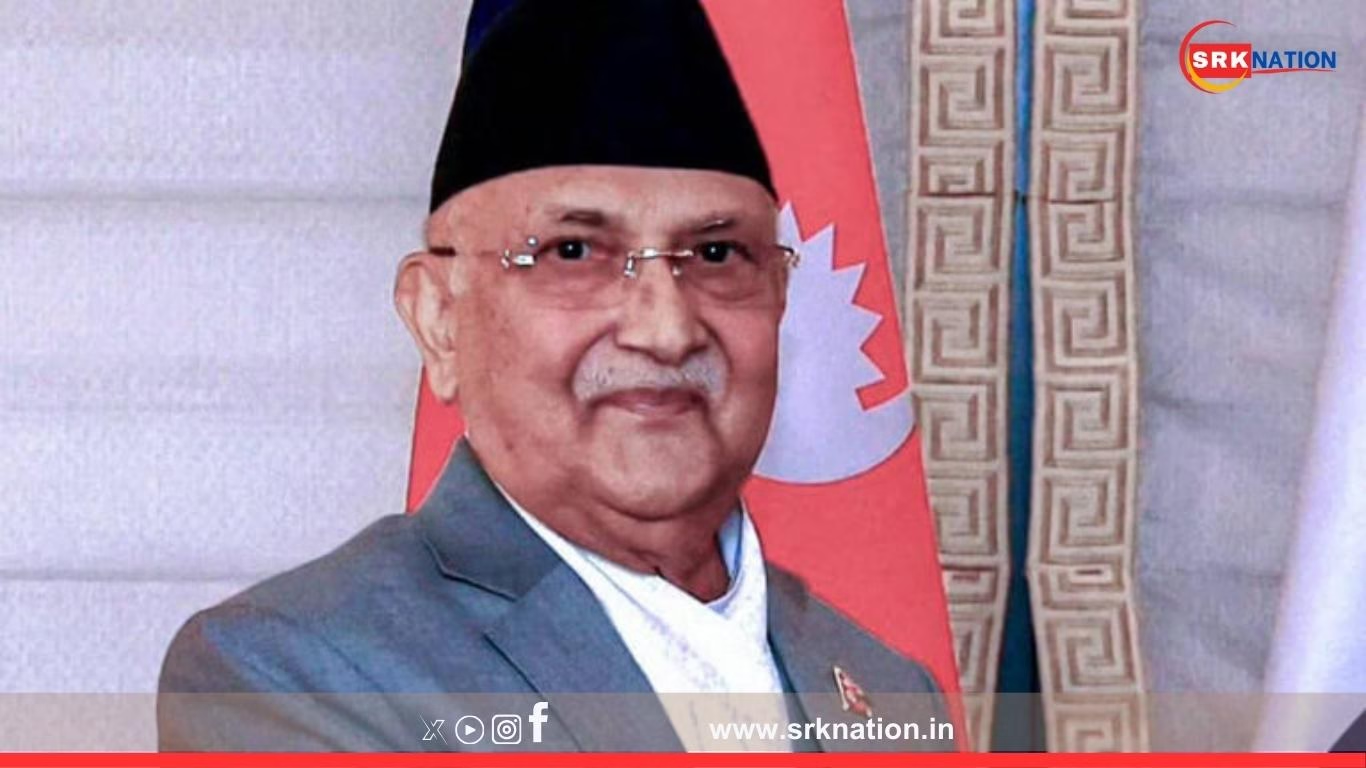
In his first public statement since stepping down as Prime Minister, Nepal’s former leader K.P. Sharma Oli has reignited diplomatic tensions by indirectly criticizing India and warning of a “major attack” on Nepal’s sovereignty. The remarks, delivered via a Facebook post on Nepal’s Constitution Day (September 19, 2025), come just days after Oli resigned following youth-led protests that turned violent, leaving dozens dead and prompting a political transition.
Oli’s statement referenced the 2015 border blockade—widely blamed on India—and highlighted his administration’s pivot toward China as a strategic counterbalance. While he did not name India directly, his comments were widely interpreted as a veiled rebuke, reigniting nationalist sentiments and drawing attention to Nepal’s fragile geopolitical positioning.
—
Timeline of Oli’s Statement and Political Fallout
| Date | Event |
|---|---|
| September 8 | Gen Z protests erupt across Nepal; 72 dead including 3 policemen |
| September 9 | Oli resigns amid mounting pressure |
| September 19 | Oli issues first public statement on Constitution Day |
| September 19 | Sushila Karki sworn in as Nepal’s first female interim PM |
Oli spent nine days under military protection before relocating to a private residence. His statement marks a re-entry into public discourse, with implications for Nepal’s foreign policy and internal stability.
—
Key Highlights from Oli’s Constitution Day Statement
| Theme | Oli’s Remarks |
|---|---|
| Sovereignty Threat | “We are under a major attack on our Constitution at this time.” |
| 2015 Blockade Reference | “The constitution was issued overcoming the blockade and the challenges arising over the country’s sovereignty.” |
| China Engagement | “We had made a transport deal with the northern neighbouring country.” |
| Gen Z Protest Violence | “Infiltration took place… Conspirators instigated violence, killing our youth.” |
| National Symbols Attacked | “Singha Durbar is burnt… Nepal’s map is burnt, trying to erase the country’s sign.” |
Oli’s rhetoric blends nationalist urgency with accusations of external interference and internal subversion.
—
2015 Blockade: A Flashpoint in Nepal-India Relations
| Aspect | Details |
|---|---|
| Duration | September 2015 – February 2016 |
| Cause | Ethnic minority protests over new constitution |
| Impact | Fuel, medicine, and essential goods blocked at southern border |
| India’s Position | Denied involvement; blamed Nepalese protesters |
| Oli’s Response (2015–16) | Raised issue at UN; signed Transit and Transport Agreement with China |
The blockade catalyzed Nepal’s shift toward China, with Oli’s government investing in northern infrastructure to reduce dependence on India.
—
Oli’s China Strategy: Diversifying Nepal’s Connectivity
| Initiative | Description |
|---|---|
| 2016 Transit Agreement | Enabled Nepal to access Chinese ports for trade |
| Northern Infrastructure | Roads and transport links built to reduce reliance on Indian routes |
| Diplomatic Messaging | Emphasized “sovereign development” and “strategic autonomy” |
| Long-Term Goal | Balance Nepal’s foreign relations between India and China |
Oli’s tenure marked a significant recalibration of Nepal’s foreign policy, with China emerging as a key partner in infrastructure and trade.
—
Gen Z Protests and Oli’s Resignation
| Date | Event |
|---|---|
| September 8 | Youth-led protests erupt over corruption and social media ban |
| September 9 | Oli resigns after violent clashes and storming of government offices |
| September 10–18 | Oli held under military protection |
| September 19 | Issues statement condemning violence and infiltration |
Oli claimed that peaceful protests were hijacked by “conspirators,” leading to the use of automatic weapons not issued to police forces. He called for an investigation into the deaths of at least 19 protesters.
—
Political Transition: Sushila Karki Takes Charge
| Attribute | Details |
|---|---|
| Name | Sushila Karki |
| Role | Interim Prime Minister of Nepal |
| Sworn In | September 19, 2025 |
| Historical Significance | First woman to hold Nepal’s top executive post |
| Mandate | Stabilize governance, oversee electoral roadmap |
Karki’s appointment follows weeks of unrest and is seen as a move to restore public trust and institutional integrity.
—
Public Reaction and Diplomatic Implications
| Stakeholder | Response |
|---|---|
| Nepalese Youth | Mixed reactions; some support Oli’s sovereignty stance, others blame his governance |
| Indian Officials | No formal response to Oli’s statement as of September 20 |
| Chinese Media | Highlighted Oli’s pro-China policies and infrastructure deals |
| Civil Society | Called for transparency in protest investigations and foreign policy clarity |
Oli’s statement has reignited debates on Nepal’s sovereignty, foreign alignment, and the role of youth in political change.
—
Conclusion: Oli’s Sovereignty Warning Rekindles Nepal’s Geopolitical Debate
K.P. Sharma Oli’s post-ouster statement is more than a political reflection—it’s a strategic message aimed at reshaping Nepal’s narrative on sovereignty, foreign dependence, and national identity. By invoking the 2015 blockade and highlighting his China-centric policies, Oli has positioned himself as a defender of Nepalese autonomy, even as his resignation underscores the limits of populist governance.
As Nepal enters a new phase under interim leadership, the echoes of Oli’s tenure—and his warnings—will continue to shape the country’s domestic and diplomatic trajectory.
—
Disclaimer: This article is based on publicly available news reports, verified political statements, and historical records. It is intended for informational purposes only and does not constitute diplomatic, legal, or political advice. All developments are subject to official confirmation and evolving geopolitical conditions.