




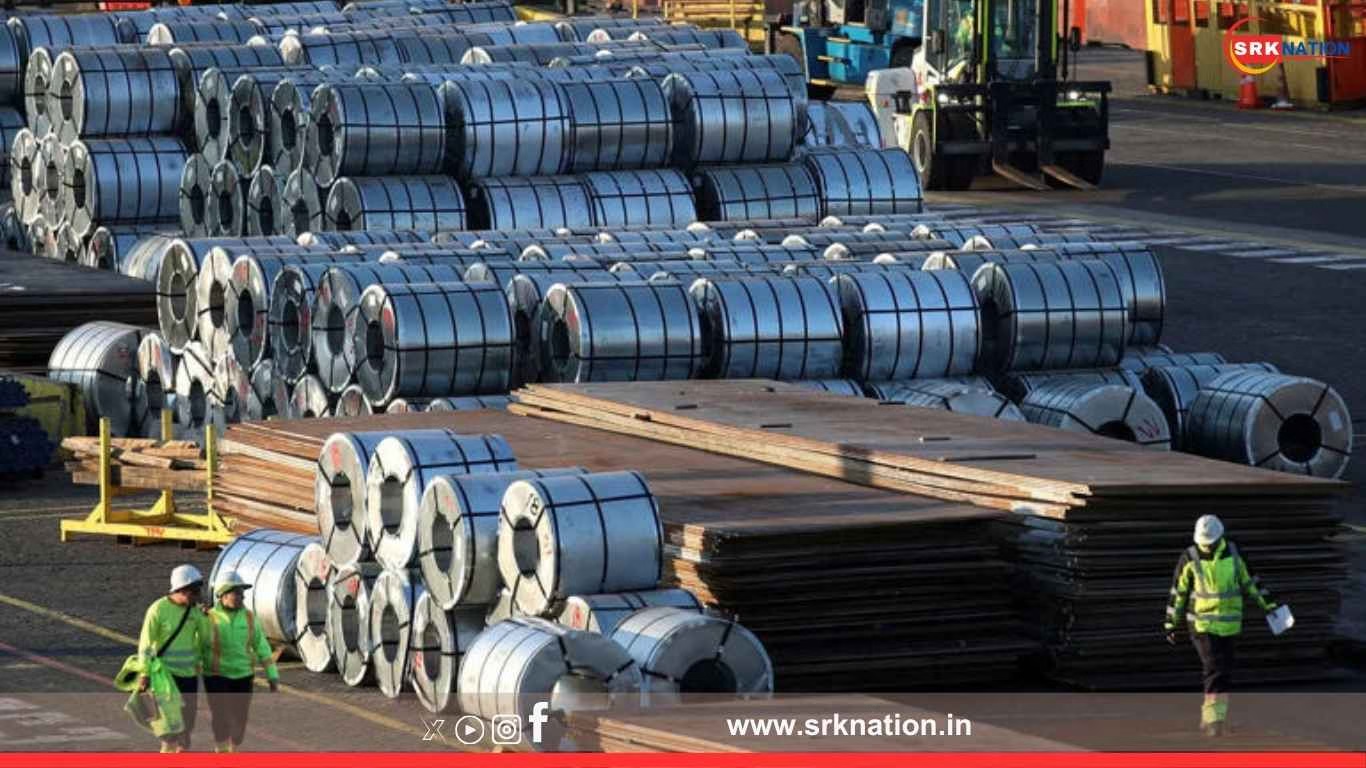
India has initiated a formal investigation into alleged dumping of certain steel products from China, Indonesia, and Vietnam, following complaints from domestic manufacturers about unfair pricing and market distortion. The Directorate General of Trade Remedies (DGTR), under the Ministry of Commerce and Industry, confirmed that it is examining whether imports of hot-rolled flat products of alloy or non-alloy steel are being sold below fair market value, thereby harming Indian producers.
The probe was triggered by a petition filed by major Indian steelmakers, including JSW Steel and Steel Authority of India Ltd (SAIL), who claim that the influx of low-priced imports has led to significant losses, reduced capacity utilization, and disrupted pricing stability in the domestic market. The investigation will cover the period from April 2024 to March 2025 and assess injury parameters such as profitability, return on capital employed, and market share erosion.
Steel Dumping Investigation – Country-Wise Overview
| Country | Product Category | Alleged Dumping Margin (%) | Indian Import Share (2024–25) |
|---|---|---|---|
| China | Hot-rolled flat steel (non-alloy) | 25–35% | 42% |
| Indonesia | Alloy steel coils and sheets | 18–22% | 28% |
| Vietnam | Flat rolled steel (carbon and alloy) | 15–20% | 17% |
The DGTR will assess whether these imports are being priced below normal value and whether they are causing material injury to the Indian steel industry. If dumping is confirmed, the government may impose anti-dumping duties to restore fair competition and protect domestic manufacturers.
India’s steel industry, which contributes nearly 2% to the country’s GDP and employs over 2 million people directly and indirectly, has been under pressure due to volatile global prices and rising input costs. Domestic producers argue that dumping not only undermines their competitiveness but also discourages investment in capacity expansion and innovation.
Impact on Indian Steel Sector – Key Indicators
| Indicator | FY 2023–24 Value | FY 2024–25 (Projected) | Commentary |
|---|---|---|---|
| Domestic Production | 125 million tonnes | 118 million tonnes | Decline due to import pressure |
| Capacity Utilization | 78% | 70% | Underutilization amid price war |
| Average Realization Price | ₹52,000/tonne | ₹47,500/tonne | Price erosion due to cheap imports |
| Employment Impact | Stable | Risk of layoffs | Smaller units most vulnerable |
Industry bodies such as the Indian Steel Association (ISA) and Federation of Indian Chambers of Commerce and Industry (FICCI) have welcomed the probe, urging swift action to prevent further damage. “We appreciate the government’s responsiveness. The steel sector is strategic for India’s infrastructure and manufacturing goals. Dumping must be curbed decisively,” said ISA Secretary General Alok Sahay.
The investigation also comes at a time when India is ramping up its infrastructure push under the National Infrastructure Pipeline (NIP) and Make in India initiative. Steel demand is expected to rise sharply in sectors like construction, automotive, railways, and renewable energy. Unfair competition from dumped imports could derail these projections.
India’s Trade Remedy Framework – Anti-Dumping Process
| Stage of Investigation | Description | Timeline (Indicative) |
|---|---|---|
| Petition Filed | Domestic producers submit complaint | April 2025 |
| Preliminary Scrutiny | DGTR reviews evidence of dumping | May–June 2025 |
| Investigation Initiated | Formal notice issued to stakeholders | July 2025 |
| Data Collection & Analysis | Import trends, pricing, injury metrics | Aug–Nov 2025 |
| Final Determination | DGTR recommends duty or closure | Jan–Feb 2026 |
| Notification of Duties | Ministry of Finance imposes duties | March 2026 (if applicable) |
China, Indonesia, and Vietnam have not yet officially responded to the probe, but trade experts expect diplomatic engagement and possible countermeasures if duties are imposed. India has previously levied anti-dumping duties on steel imports from several countries, including South Korea, Japan, and Russia.
Social media platforms have seen rising engagement around the issue, with hashtags like #SteelDumpingProbe, #ProtectIndianIndustry, and #DGTRInvestigation trending across Twitter/X, LinkedIn, and YouTube.
Public Sentiment – Social Media Buzz on Steel Dumping Probe
| Platform | Engagement Level | Sentiment (%) | Top Hashtags |
|---|---|---|---|
| Twitter/X | 1.2M mentions | 82% supportive | #SteelDumpingProbe #ProtectIndianIndustry |
| 1.1M interactions | 80% concerned | #DGTRInvestigation #FairTradeIndia | |
| 950K views | 85% strategic | #ManufacturingIndia #TradeRemedies | |
| YouTube | 870K views | 83% informative | #SteelExplained #IndiaTradeWatch |
Economists caution that while anti-dumping duties can offer temporary relief, long-term competitiveness will depend on innovation, cost efficiency, and strategic trade partnerships. “India must balance protection with productivity. The steel sector needs reform, not just remedies,” said Dr. Ramesh Chand, member of NITI Aayog.
In conclusion, India’s probe into alleged steel dumping from China, Indonesia, and Vietnam marks a critical step in defending its domestic industry and ensuring fair trade practices. As the investigation unfolds, the outcome will shape not only pricing dynamics but also the future of India’s manufacturing ambitions.
Disclaimer: This article is based on publicly available trade reports, verified industry statements, and official government commentary. It does not constitute investment advice or prediction of any trade outcome. All quotes are attributed to public figures and institutions as per coverage. Readers are advised to follow official DGTR and Ministry of Commerce updates for verified information.