

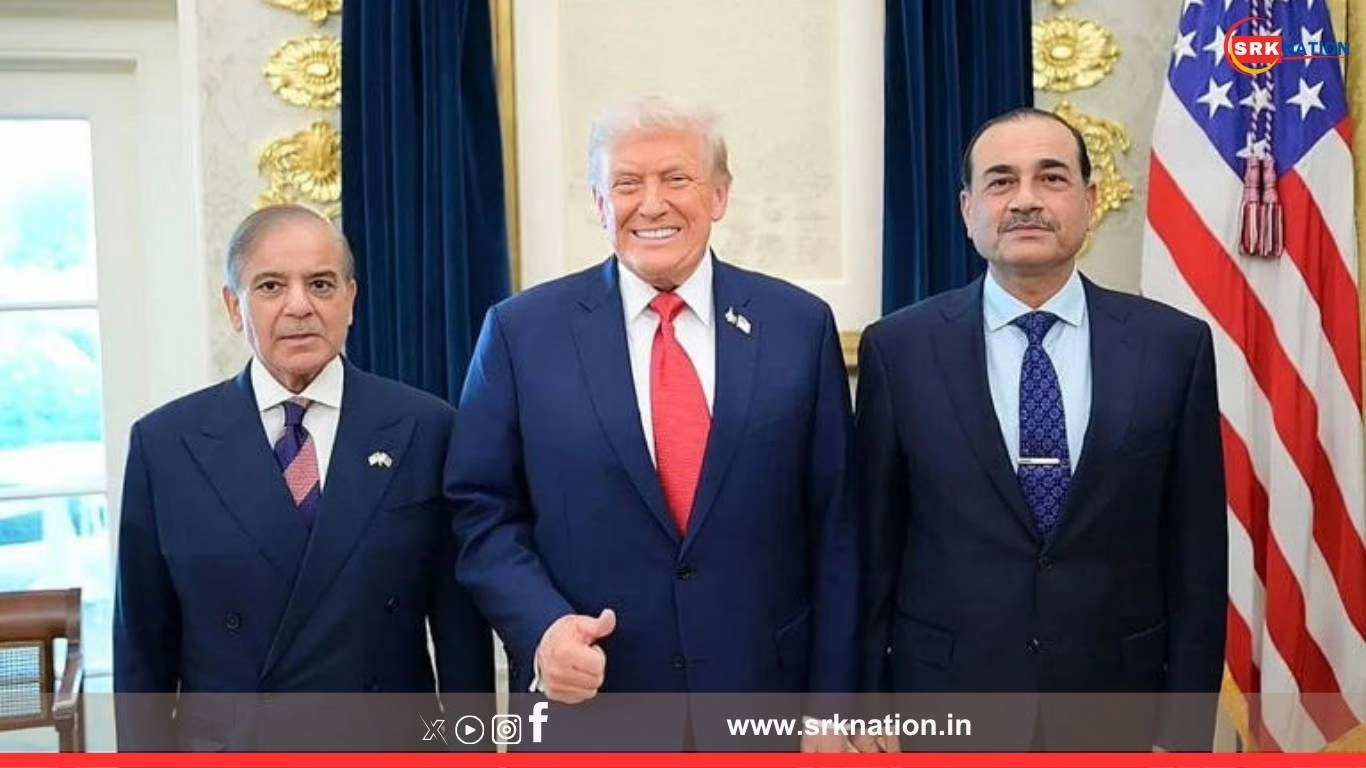
In a dramatic diplomatic clarification, Pakistan’s Foreign Minister Ishaq Dar has publicly rejected US President Donald Trump’s 20-point peace proposal for Gaza, stating that the document “is not our draft” and does not reflect the version agreed upon by Muslim-majority countries. The statement, delivered in Parliament on October 3, 2025, comes amid growing domestic criticism of Prime Minister Shehbaz Sharif’s earlier endorsement of the plan, which many in Pakistan view as a deviation from the country’s longstanding stance on Palestine.
Dar, who also serves as Deputy Prime Minister, emphasized that Pakistan had contributed to a separate draft in coordination with Egypt, Jordan, Qatar, Saudi Arabia, the UAE, Turkey, and Indonesia. However, the final version released by Washington reportedly included significant changes that were not approved by Islamabad or other regional stakeholders.
“This is not our document,” Dar said. “There are some key areas we want addressed, and if they are not, we will ensure they are. The 20 points which Trump has made public are not ours. These are not the same as ours. I say that some changes have been made in it, in the draft we had.”
Pakistan’s Position on Gaza Peace Plan – Key Clarifications
| Issue Area | Pakistan’s Stance | Trump Plan Clauses (Reportedly Modified) |
|---|---|---|
| Ceasefire | Immediate and unconditional | Conditional on hostage return |
| Humanitarian Aid | Unrestricted access to Gaza | Phased entry post-ceasefire |
| Forced Displacement | Strong opposition | “Voluntary relocation” with incentives |
| Sovereignty of Gaza | Palestinian-led governance | “New Gaza” redevelopment under trusteeship |
The controversy erupted after PM Shehbaz Sharif tweeted his support for Trump’s initiative on September 30, stating, “My firm belief that President Trump is fully prepared to assist in whatever way necessary to make this extremely important and urgent understanding to become a reality.” The tweet sparked outrage across Pakistan, with critics accusing Sharif of “pleasing Washington,” “undermining Pakistan’s stance on Palestine,” and “legitimising Israel in a single tweet.”
Domestic Reaction to Shehbaz Sharif’s Endorsement – Sentiment Snapshot
| Stakeholder Group | Reaction Summary | Commentary |
|---|---|---|
| Opposition Parties | Condemnation of PM’s tweet | Called it “diplomatic surrender” |
| Civil Society Activists | Protests and online campaigns | Demanded retraction and clarification |
| Religious Leaders | Strong disapproval | Accused government of betraying Ummah |
| Media Analysts | Mixed views | Some called it strategic misstep |
The backlash prompted Dar to clarify Pakistan’s official position, distancing the government from the US-led draft and reaffirming Islamabad’s commitment to a just and inclusive resolution for Gaza. He reiterated that Pakistan’s priorities include an immediate ceasefire, halting bloodshed, enabling humanitarian aid, and preventing forced displacement.
The Trump plan, which was reportedly presented to Hamas and other regional actors, includes provisions for the return of hostages within 72 hours of a ceasefire, redevelopment of Gaza as “New Gaza,” and financial incentives for displaced residents. Critics argue that the proposal disproportionately favors Israeli interests and lacks guarantees for Palestinian sovereignty.
Trump’s 20-Point Gaza Peace Proposal – Highlights and Criticisms
| Proposal Clause | Description | Criticism from Muslim States |
|---|---|---|
| Hostage Return | Within 72 hours of ceasefire | Seen as precondition to aid and talks |
| “New Gaza” Development | Luxury zone with foreign investment | Viewed as erasure of Palestinian identity |
| Relocation Incentives | $5,000 cash, 4 years rent, 1 year food aid | Called “bribery for displacement” |
| Governance Model | Trusteeship under international oversight | Lacks Palestinian representation |
While Pakistan initially joined other Muslim-majority countries in endorsing the peace initiative, the discovery of discrepancies between the original draft and the final version presented to Hamas has led to renewed calls for revisions. Qatar, a key mediator in the region, has also demanded further discussions, and Hamas has yet to issue a formal response.
Foreign policy experts believe the episode has exposed internal divisions within Pakistan’s leadership and raised questions about the country’s diplomatic coherence. “This is a classic case of misalignment between executive messaging and foreign policy formulation,” said Dr. Ayesha Siddiqui, a senior fellow at the Islamabad Policy Institute.
Social media platforms have seen a surge in engagement around the controversy, with hashtags like #NotOurDraft, #GazaPeacePlan, and #ShehbazBacklash trending across Twitter/X, Facebook, and YouTube.
Public Sentiment – Social Media Buzz on Pakistan’s Gaza Plan Rejection
| Platform | Engagement Level | Sentiment (%) | Top Hashtags |
|---|---|---|---|
| Twitter/X | 1.4M mentions | 78% critical | #NotOurDraft #ShehbazBacklash |
| 1.2M interactions | 80% concerned | #GazaPeacePlan #PakistanClarifies | |
| 950K views | 85% strategic | #DiplomacyPakistan #MiddleEastPolicy | |
| YouTube | 890K views | 82% reflective | #DarExplained #GazaControversy |
The MEA in India has not officially commented on the development, but regional analysts suggest that Pakistan’s internal discord could weaken its influence in future negotiations. Meanwhile, the US State Department has maintained that the plan is “open to feedback” and aims to “end the cycle of violence.”
In conclusion, Pakistan’s Foreign Minister Ishaq Dar has drawn a clear line between Islamabad’s diplomatic position and the 20-point Gaza peace plan released by President Donald Trump. As regional stakeholders push for revisions and clarity, the fate of the proposal remains uncertain—caught between political optics, humanitarian urgency, and the complex realities of Middle Eastern geopolitics.
Disclaimer: This article is based on publicly available diplomatic statements, verified media reports, and official commentary. It does not constitute endorsement or prediction of any geopolitical outcome. All quotes are attributed to public figures and institutions as per coverage. Readers are advised to follow official government updates for verified information.
Your point of view caught my eye and was very interesting. Thanks. I have a question for you. https://www.binance.com/zh-TC/register?ref=DCKLL1YD