




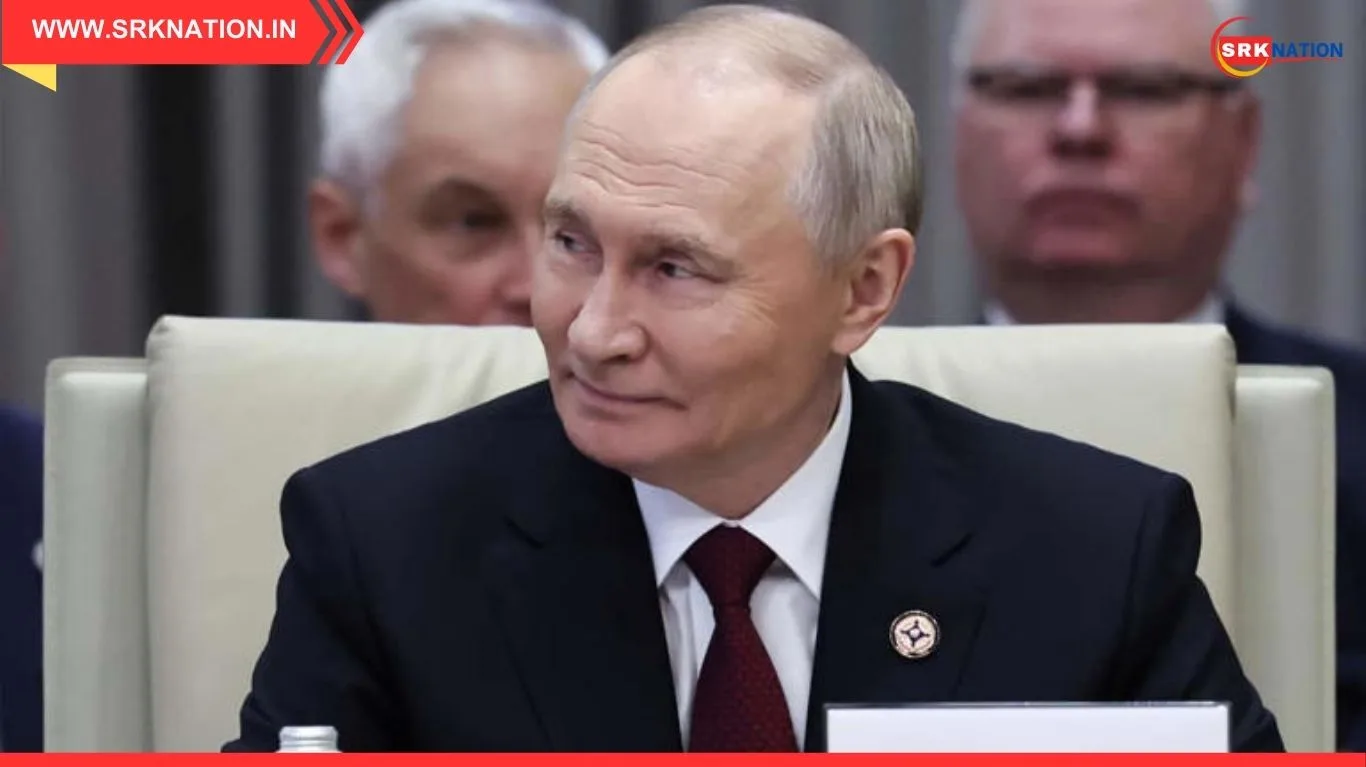
Russian President Vladimir Putin has sharply responded to U.S. President Donald Trump’s recent remarks urging India to halt imports of Russian oil. Putin questioned the fairness of such demands, asking why India should be pressured when the United States itself continues to engage in energy trade that suits its national interests. His statement has reignited debates on global energy politics, India’s strategic autonomy, and the broader implications of sanctions on Russia amid ongoing geopolitical tensions.
Putin’s comments highlight the complexities of international energy markets, where countries balance economic needs with diplomatic pressures. India, one of the world’s largest energy consumers, has significantly increased its imports of discounted Russian crude since the Ukraine war began, citing affordability and energy security. Trump’s call for India to stop these imports was framed as a moral and strategic necessity, but Putin’s counterargument underscores the double standards often perceived in global politics.
Key Highlights
- Putin questions Trump’s call for India to halt Russian oil imports.
- Russian President asks: “If the U.S. can pursue its interests, why can’t India?”
- India continues to import Russian crude citing affordability and energy security.
- Debate intensifies over sanctions, global energy trade, and strategic autonomy.
- Analysts see Putin’s remarks as a defense of Russia’s energy diplomacy.
Background of the Dispute
Since the Ukraine war, Western nations have imposed sanctions on Russia, targeting its energy exports. However, Russia has redirected much of its oil trade to Asia, with India and China emerging as major buyers. India’s imports of Russian crude have surged, helping it stabilize domestic fuel prices.
Trump’s recent statement criticized India’s reliance on Russian oil, suggesting that it undermines global efforts to isolate Moscow. Putin’s response, however, framed the issue as one of fairness and sovereignty, arguing that nations should be free to pursue policies that serve their people.
Statistical Overview of India’s Oil Imports
| Year | Russian Oil Imports (Million Barrels) | Share of India’s Total Imports | Key Drivers |
|---|---|---|---|
| 2021 | 12 | 2% | Limited trade pre-war |
| 2022 | 65 | 15% | Discounts post-sanctions |
| 2023 | 120 | 25% | Energy security needs |
| 2024 | 135 | 28% | Stable supply chains |
| 2025 | 140+ (est.) | 30% | Continued affordability |
Putin vs Trump on Oil Imports
| Factor | Trump’s Position | Putin’s Counter | Impact on India |
|---|---|---|---|
| Moral responsibility | India should align with sanctions | Sovereignty matters | India asserts autonomy |
| Energy security | Risk of dependency on Russia | Affordable supply is essential | India balances needs |
| Global politics | Isolate Russia economically | Double standards by U.S. | India caught in crossfire |
| Strategic autonomy | Align with Western allies | Independent decision-making | India strengthens multipolar stance |
India’s Position
India has consistently defended its decision to import Russian oil, emphasizing that it prioritizes affordability and energy security for its citizens. Indian officials argue that the country cannot be expected to bear the brunt of geopolitical conflicts at the expense of its economy.
India’s stance reflects its broader foreign policy of strategic autonomy, where it seeks to balance relations with the U.S., Russia, and other global powers without being drawn into exclusive alignments.
Expert Views
Energy analysts note that India’s imports of Russian oil have helped stabilize global markets by absorbing surplus supply. They argue that India’s role is pragmatic rather than ideological, driven by economic necessity. Political experts, meanwhile, highlight that Putin’s remarks are aimed at reinforcing Russia’s narrative of fairness and sovereignty in global trade.
Public Reactions
Public opinion in India largely supports the government’s stance, with many citizens viewing affordable fuel as a priority. Social media discussions reflect skepticism about Western double standards, with users pointing out that the U.S. continues to pursue its own energy interests while pressuring others.
International Reactions
Western governments have expressed concern over India’s continued imports, but most acknowledge that sanctions cannot be enforced globally. China’s support for Russia’s energy trade further complicates the situation, as it demonstrates that major economies are willing to defy Western pressure.
Historical Context
Energy politics has long been a tool of diplomacy. During the Cold War, oil and gas trade shaped alliances and rivalries. The current dispute over Russian oil imports reflects similar dynamics, where economic needs intersect with geopolitical strategies.
Extended Analysis
Putin’s remarks highlight the broader issue of global inequality in energy politics. While Western nations expect others to align with sanctions, they often continue to pursue policies that serve their own interests. India’s position reflects the challenges faced by developing economies, which must balance global expectations with domestic needs.
The dispute also underscores the rise of multipolarity in global politics. India’s refusal to bow to pressure demonstrates its growing confidence as a major power capable of charting its own course.
Conclusion
The clash between Trump’s call for India to halt Russian oil imports and Putin’s sharp counter—“If the U.S. can, why can’t India?”—captures the essence of global energy politics. It reflects the tension between moral arguments and economic realities, sovereignty and sanctions, autonomy and alliances. For India, the path forward lies in balancing affordability, energy security, and diplomatic relations, while asserting its right to make independent decisions in a complex world.
Disclaimer
This article is based on publicly available political updates, expert commentary, and media reports. It is intended for informational and editorial purposes only, offering insights into Putin’s remarks, Trump’s position, and India’s role in global energy politics.