






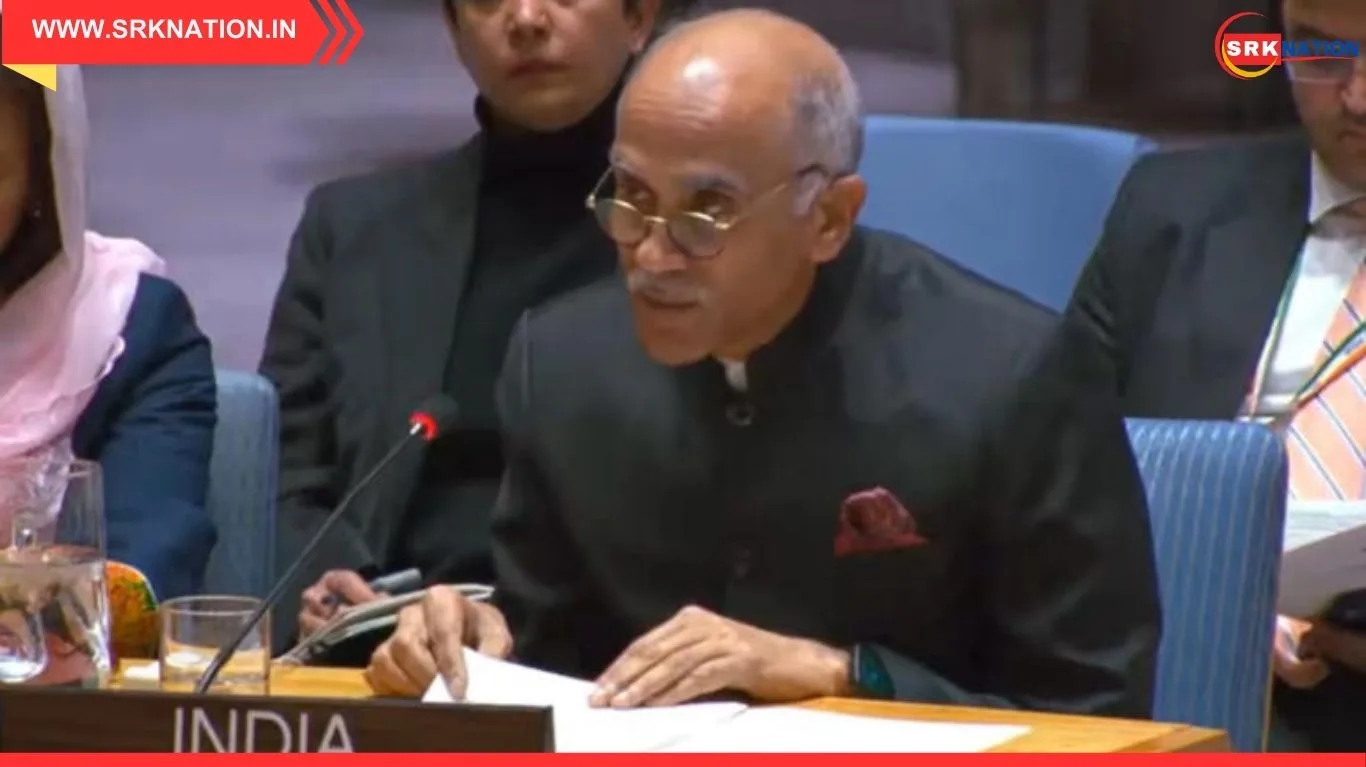
India delivered one of its strongest diplomatic rebukes in recent years at a United Nations Security Council (UNSC) session, condemning Pakistan’s recent airstrikes inside Afghanistan that killed civilians, including women, children, and even local cricketers. India described the attacks as “acts of war”, a grave breach of international law, and a direct threat to regional stability. The remarks were delivered by Parvathaneni Harish, India’s Permanent Representative to the UN, who warned that Pakistan’s actions risk destabilizing an already fragile region and violate the UN Charter.
The condemnation comes amid renewed clashes along the Afghanistan–Pakistan border, barely two months after both sides agreed to a ceasefire. The situation escalated following a Pakistani airstrike on Kabul in early October, which triggered Afghan retaliation even as Afghan Foreign Minister Amir Khan Muttaqi was visiting India.
India’s statement at the UN has drawn global attention, not only for its sharp tone but also for its detailed criticism of Pakistan’s alleged “trade and transit terrorism”, a reference to Islamabad’s repeated closure of key access routes for Afghanistan—moves India says violate WTO norms and amount to coercive economic warfare.
✅ Key Highlights
- India denounces Pakistan’s airstrikes in Afghanistan as acts of war and violations of international law.
- India warns that attacks killing Afghan civilians threaten regional stability.
- Pakistan accused of “trade and transit terrorism” for blocking Afghan access routes.
- Clashes between Afghan and Pakistani forces have intensified despite a recent ceasefire.
- India reaffirms support for Afghanistan’s sovereignty and territorial integrity.
✅ Background: Why India’s Statement Matters
India has historically maintained strong ties with Afghanistan, supporting its reconstruction, democratic institutions, and humanitarian needs. Pakistan’s airstrikes—conducted inside Afghan territory—represent a dangerous escalation in a region already grappling with instability, economic collapse, and humanitarian crises.
India’s intervention at the UNSC signals:
- A firm stance against cross-border aggression.
- A call for adherence to international law.
- A warning that civilian casualties cannot be justified under any circumstances.
The strikes reportedly killed multiple civilians, including children and local athletes, prompting widespread condemnation from Afghan authorities and international observers.
✅ Statistical Overview of the Crisis
| Category | Details | Impact |
|---|---|---|
| Civilian Casualties | Women, children, local cricketers killed | Humanitarian outrage |
| Border Clashes | Renewed fighting despite ceasefire | Regional instability |
| Pakistan’s Actions | Airstrikes + closure of Afghan trade routes | Violates WTO norms |
| India’s Position | Strong condemnation at UNSC | Diplomatic pressure on Pakistan |
| Afghanistan’s Status | Landlocked, dependent on cross-border trade | Severe economic strain |
✅ Impact of India’s UN Statement
| Factor | Impact on Afghanistan | Impact on Pakistan | Impact on Regional Stability |
|---|---|---|---|
| Civilian Protection | Strengthens global support | Increases scrutiny | Highlights humanitarian risks |
| International Law | Reinforces Afghan sovereignty | Raises legal questions | Encourages diplomatic oversight |
| Trade & Transit Issues | Exposes Pakistan’s restrictions | Weakens Pakistan’s global standing | Affects regional supply chains |
| India’s Role | Positions India as responsible actor | Counters Pakistan’s narrative | Promotes multilateral dialogue |
| Long-term Outlook | Potential for UN intervention | Diplomatic isolation risk | Pressure for ceasefire compliance |
✅ What India Said at the UN
India’s envoy Parvathaneni Harish made several strong points:
1. Pakistan’s strikes violate the UN Charter
India said the attacks represent a serious breach of international law, especially given the civilian casualties.
2. Civilian protection must be paramount
India urged the UNSC to ensure that innocent civilians are protected in conflict zones, especially in Afghanistan, which is already facing deep humanitarian crises.
3. Pakistan’s economic coercion is unacceptable
India accused Pakistan of blocking essential trade routes for Afghanistan, calling it “trade and transit terrorism” and a violation of WTO norms.
4. India supports Afghanistan’s sovereignty
India reaffirmed its commitment to Afghanistan’s independence, territorial integrity, and long-term stability.
✅ Pakistan’s Actions Under Scrutiny
Pakistan’s airstrikes have raised several concerns:
- Violation of Afghan airspace
- Civilian casualties
- Escalation of border tensions
- Economic pressure through trade route closures
Both sides have accused each other of violating the ceasefire, but Pakistan’s decision to conduct airstrikes deep inside Afghan territory has drawn the strongest criticism.
✅ Global Reactions
While India’s statement was the most forceful, several countries have expressed concern over:
- Rising instability along the Durand Line
- Civilian casualties
- The humanitarian impact on Afghanistan
- The risk of a broader regional conflict
International observers warn that continued escalation could destabilize South Asia and complicate global counterterrorism efforts.
✅ Historical Context
India and Pakistan have long been at odds over Afghanistan’s political landscape. India has invested billions in Afghan infrastructure and governance, while Pakistan has sought strategic depth in the region.
The latest airstrikes echo past patterns of cross-border tensions, but the civilian casualties and timing—amid a fragile ceasefire—make this episode particularly volatile.
✅ Extended Analysis
The situation reflects deeper geopolitical themes:
1. Afghanistan’s Vulnerability
As a landlocked nation, Afghanistan depends heavily on Pakistan for trade routes. Any closure or restriction has immediate humanitarian consequences.
2. Pakistan’s Strategic Calculus
Pakistan’s actions may be driven by internal security concerns, but the airstrikes risk international backlash.
3. India’s Diplomatic Positioning
India’s strong statement positions it as a defender of international law and civilian rights.
4. UN’s Role
The UNSC may be compelled to intervene diplomatically if tensions escalate further.
5. Regional Stability
Any conflict between Pakistan and Afghanistan risks spilling over into neighboring countries, affecting trade, security, and humanitarian operations.
✅ Conclusion
India’s denunciation of Pakistan’s airstrikes on Afghan civilians at the UN marks a significant diplomatic moment. By calling the attacks “acts of war”, India has placed global attention on Pakistan’s actions and their implications for regional peace.
As Afghanistan struggles with economic collapse and humanitarian crises, any escalation threatens to deepen instability. India’s call for adherence to international law, protection of civilians, and respect for Afghan sovereignty underscores the urgent need for restraint and dialogue.
The coming weeks will determine whether the UNSC takes further action and whether Pakistan adjusts its approach amid mounting international pressure.
✅ Disclaimer
This article is based on publicly available news reports, UN statements, and expert commentary. It is intended solely for informational and editorial purposes, offering insights into India’s denunciation of Pakistan’s airstrikes in Afghanistan and the broader geopolitical implications.