








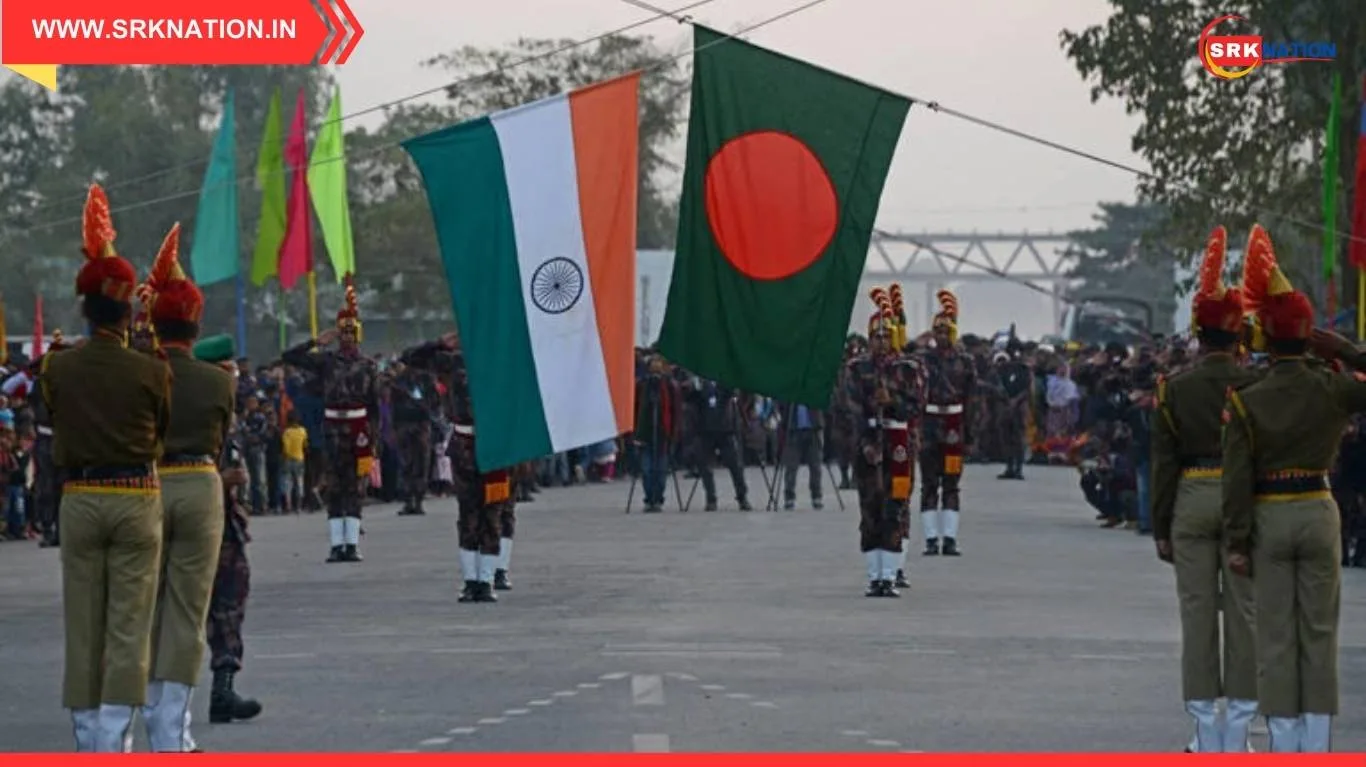
India has strongly reiterated its historical and strategic ties with Bangladesh, invoking the legacy of 1971 after Dhaka summoned the Indian envoy over remarks linked to Prime Minister Sheikh Hasina. New Delhi emphasized that its relationship with Bangladesh is not “transient” but deeply rooted in shared sacrifices and cooperation during the Liberation War of 1971. The diplomatic exchange underscores the sensitivity of India-Bangladesh relations, particularly in the context of evolving political dynamics in Dhaka.
Background of the Diplomatic Exchange
- Bangladesh summoned the Indian envoy following comments perceived as interference in its internal political matters.
- India responded by highlighting the enduring nature of bilateral ties, rooted in the 1971 Liberation War when India played a pivotal role in supporting Bangladesh’s independence.
- The invocation of 1971 legacy reflects India’s emphasis on historical solidarity and long-term partnership.
- The incident comes amid heightened political debates in Bangladesh and regional scrutiny of India’s role.
India’s Position
| Aspect | Details | Implication |
|---|---|---|
| Invocation of 1971 Legacy | India recalled its role in Bangladesh’s independence | Reinforces historical solidarity |
| Not Transient | India stressed ties are long-term, not temporary | Counters perception of interference |
| Strategic Partnership | Emphasis on economic, cultural, and security cooperation | Highlights depth of relationship |
| Diplomatic Response | Calm but firm reiteration of ties | Seeks to ease tensions |
Bangladesh’s Concerns
- Dhaka expressed unease over remarks linked to Prime Minister Sheikh Hasina, viewing them as external commentary on domestic politics.
- The summoning of the envoy reflects Bangladesh’s sensitivity to sovereignty and political autonomy.
- Bangladesh’s leadership has historically balanced ties with India while asserting independence in decision-making.
- The incident highlights the delicate balance between historical gratitude and contemporary political realities.
Historical Context: 1971 Liberation War
- India played a crucial role in supporting Bangladesh’s independence from Pakistan in 1971.
- The war saw millions of refugees entering India, prompting humanitarian and military intervention.
- India’s support helped shape Bangladesh’s emergence as a sovereign nation.
- The legacy of 1971 remains central to India-Bangladesh relations, often invoked during diplomatic challenges.
Current State of India-Bangladesh Relations
| Area of Cooperation | India’s Role | Bangladesh’s Role | Current Status |
|---|---|---|---|
| Trade & Economy | Major export partner | Growing import demand | Expanding bilateral trade |
| Connectivity | Infrastructure projects, transit routes | Regional hub for logistics | Improving steadily |
| Security & Border | Joint patrols, intelligence sharing | Cooperation in counter-terrorism | Ongoing collaboration |
| Energy | Power exports, renewable projects | Import of electricity | Strengthening ties |
| Culture & People-to-People | Shared heritage, educational exchanges | Strong diaspora links | Deep cultural bonds |
Expert Opinions
- Political analysts: Stress that invoking 1971 is a reminder of India’s foundational role in Bangladesh’s independence.
- Diplomatic commentators: Suggest that India’s response aims to reaffirm ties without escalating tensions.
- Historians: Note that the legacy of 1971 continues to shape perceptions of India in Bangladesh.
- Public sentiment: Mixed, with some emphasizing gratitude for 1971 and others focusing on sovereignty concerns.
Comparative Analysis: India’s Diplomatic Approach
| Country/Region | Strategy | Outcome |
|---|---|---|
| Bangladesh | Invocation of 1971 legacy | Reinforces historical ties |
| Nepal | Emphasis on cultural and geographic proximity | Mixed reactions |
| Sri Lanka | Focus on economic and security cooperation | Strengthened ties |
| Myanmar | Engagement on border security | Complex dynamics |
India’s invocation of historical legacies is a recurring theme in its South Asian diplomacy, particularly with Bangladesh.
Challenges Ahead
- Sovereignty Concerns: Balancing historical ties with respect for Bangladesh’s political autonomy.
- Political Sensitivities: Managing perceptions of interference in domestic affairs.
- Regional Competition: Addressing influence from other powers in South Asia.
- Public Perception: Ensuring that historical solidarity is not seen as overshadowing contemporary realities.
Opportunities for Strengthening Ties
- Economic Cooperation: Expanding trade and investment to reinforce mutual benefits.
- Cultural Diplomacy: Promoting shared heritage to deepen people-to-people ties.
- Security Collaboration: Enhancing joint efforts against terrorism and border challenges.
- Regional Integration: Leveraging connectivity projects to strengthen South Asian cooperation.
Broader Regional Context
- South Asia remains a region of complex political dynamics, with historical legacies shaping contemporary diplomacy.
- India’s invocation of 1971 reflects its broader strategy of emphasizing historical solidarity in regional relations.
- Bangladesh’s balancing act between gratitude for 1971 and assertion of sovereignty mirrors challenges faced by other neighbors.
- The incident underscores the importance of nuanced diplomacy in maintaining long-term partnerships.
Public Sentiment in Bangladesh
- Citizens express mixed views, with older generations recalling India’s role in 1971 with gratitude.
- Younger generations emphasize sovereignty and independence in contemporary politics.
- Political debates often highlight India’s influence, both positively and critically.
- The summoning of the envoy reflects broader public sensitivities about external commentary.
Conclusion
India’s invocation of the 1971 legacy after Dhaka summoned its envoy over remarks linked to Prime Minister Sheikh Hasina underscores the enduring nature of bilateral ties. By emphasizing that relations are “not transient,” India seeks to reaffirm historical solidarity while navigating contemporary political sensitivities. The incident highlights the delicate balance between gratitude for shared history and respect for sovereignty, shaping the future trajectory of India-Bangladesh relations.
Disclaimer
This article is intended for informational purposes only and does not constitute diplomatic or political advice. Bilateral relations between India and Bangladesh are subject to evolving circumstances, domestic politics, and regional dynamics. Readers are encouraged to follow official updates for accurate information. The author and publisher are not responsible for any decisions made based on this article.