




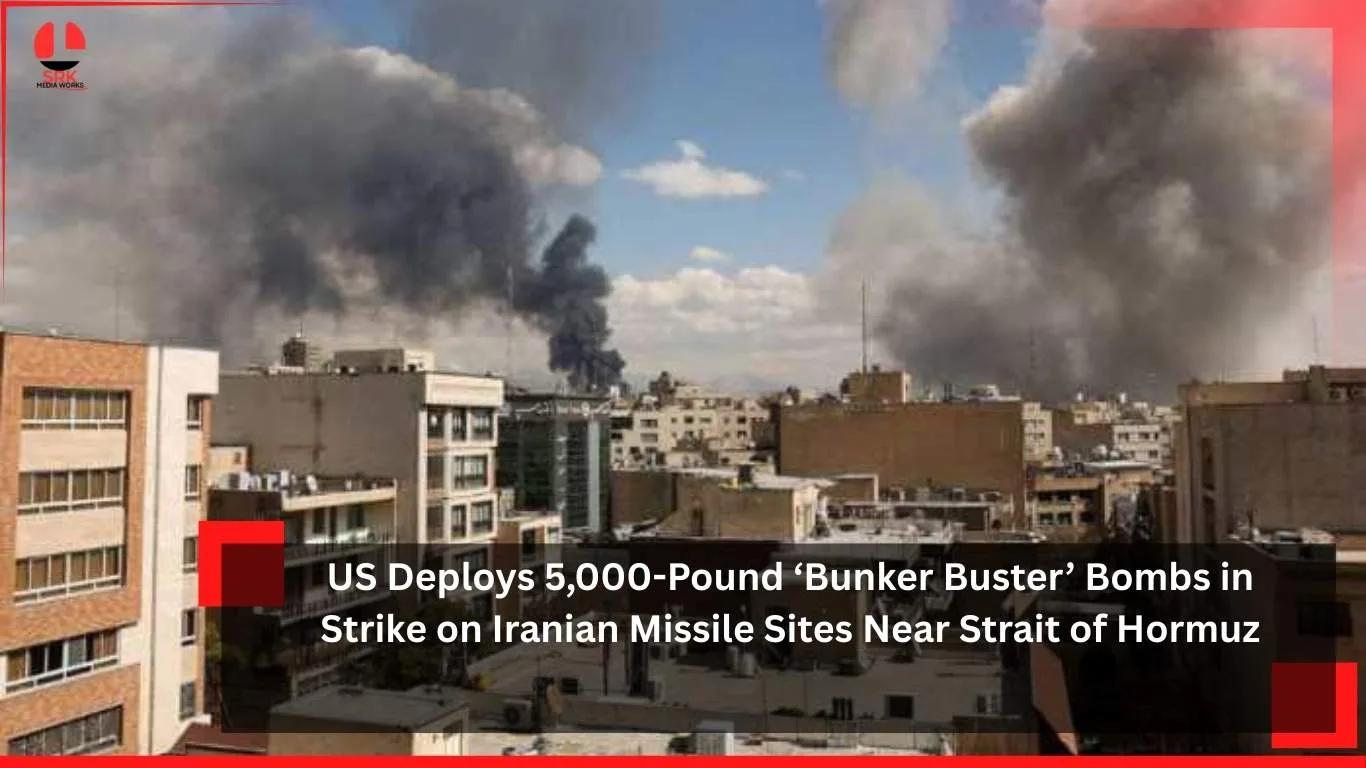
The United States military has carried out a significant strike targeting Iranian missile sites near the strategic Strait of Hormuz, employing 5,000-pound “bunker buster” bombs designed to penetrate fortified underground facilities. This operation underscores the escalating tensions in the region and highlights Washington’s determination to neutralize perceived threats to global energy supply routes and maritime security.
Background of the Strike
The Strait of Hormuz is one of the world’s most critical maritime chokepoints, with nearly 20% of global oil trade passing through its narrow waters. Any disruption in this region has immediate consequences for global energy markets. Iran has long maintained missile installations and military infrastructure near the strait, raising concerns among international observers about potential threats to shipping lanes.
The US strike, involving precision-guided bunker buster bombs, was aimed at disabling hardened missile sites believed to be capable of targeting vessels transiting the strait. These bombs, weighing 5,000 pounds, are specifically engineered to penetrate reinforced bunkers and underground facilities before detonating, making them highly effective against fortified targets.
Why the Use of Bunker Busters Matters
The deployment of bunker buster bombs signals the seriousness of the US approach. Unlike conventional munitions, these weapons are designed to destroy deeply buried targets, such as missile silos, command centers, and underground storage facilities.
By using such advanced ordnance, the US military demonstrated its intent to neutralize Iran’s strategic capabilities rather than merely sending a symbolic message. This choice of weaponry also reflects intelligence assessments that Iranian missile sites were heavily fortified and required specialized munitions to ensure destruction.
Key Highlights of the Operation
| Aspect | Details |
|---|---|
| Weapon Used | 5,000-pound bunker buster bombs |
| Target | Iranian missile sites near Strait of Hormuz |
| Objective | Neutralize fortified missile infrastructure |
| Strategic Importance | Protect global oil trade routes |
| Regional Impact | Heightened tensions in Middle East |
Global Reactions
The strike has drawn mixed reactions worldwide.
- United States: Officials emphasized that the operation was a defensive measure aimed at safeguarding international shipping lanes and deterring aggression.
- Iran: Tehran condemned the strike, calling it an act of aggression and vowing to respond.
- Global Markets: Oil prices saw immediate fluctuations, reflecting investor concerns about potential disruptions in supply.
- International Community: Allies expressed cautious support, while some nations urged restraint to avoid further escalation.
Comparative Analysis of Military Strikes in the Region
| Year | Country Involved | Weapon Used | Target | Outcome |
|---|---|---|---|---|
| 2019 | US | Precision missiles | Iranian drone facilities | Limited deterrence |
| 2020 | Israel | Airstrikes | Syrian missile depots | Infrastructure damage |
| 2024 | US | Cruise missiles | Iranian naval bases | Temporary disruption |
| 2026 | US | 5,000-pound bunker busters | Iranian missile sites | Fortified targets destroyed |
This comparison highlights the increasing sophistication of military operations in the region, with bunker busters representing a significant escalation in terms of capability and intent.
Strategic Goals Behind the Strike
The US strike was not merely tactical but part of a broader strategic framework:
- Securing Energy Routes: Ensuring uninterrupted oil and gas shipments through the Strait of Hormuz.
- Deterring Aggression: Sending a clear signal to Iran about the consequences of threatening maritime security.
- Reassuring Allies: Demonstrating commitment to protecting partners in the Gulf region.
- Maintaining Global Stability: Preventing disruptions that could destabilize international markets.
Expert Analysis
Military analysts argue that the use of bunker busters indicates the US had credible intelligence about the depth and fortification of Iranian missile sites. Conventional weapons would likely have been insufficient to achieve the desired level of destruction.
Experts also note that the strike could serve as a deterrent, discouraging Iran from further militarization of the Strait of Hormuz. However, they caution that such actions risk escalating tensions and could provoke retaliatory measures.
Potential Challenges and Risks
While the strike achieved its immediate objectives, several challenges remain:
- Iranian Retaliation: Tehran may respond with asymmetric tactics, including cyberattacks or proxy operations.
- Regional Instability: Heightened tensions could destabilize neighboring countries.
- Global Energy Markets: Continued uncertainty may lead to volatility in oil prices.
- Diplomatic Fallout: Calls for restraint from international bodies may complicate US foreign policy.
Broader Impact on Middle East Security
The strike is expected to reshape security dynamics in the Middle East. By targeting fortified missile sites, the US has reduced Iran’s immediate capacity to threaten shipping lanes. However, the long-term impact will depend on Iran’s response and the ability of diplomatic channels to de-escalate tensions.
Analytical Breakdown of Stakeholders
| Stakeholder | Position | Impact |
|---|---|---|
| US Military | Defensive strike | Enhanced deterrence |
| Iran | Condemns action | Potential retaliation |
| Gulf States | Supportive | Increased security assurance |
| Global Markets | Concerned | Oil price volatility |
| International Community | Divided | Calls for restraint |
Conclusion
The United States’ use of 5,000-pound bunker buster bombs to strike Iranian missile sites near the Strait of Hormuz marks a significant escalation in regional military operations. By employing specialized ordnance designed to penetrate fortified structures, Washington has demonstrated its resolve to safeguard global energy routes and deter threats to maritime security.
While the immediate objective of neutralizing fortified missile sites appears to have been achieved, the broader implications for regional stability and global markets remain uncertain. The coming weeks will reveal whether this strike serves as a deterrent or triggers further escalation in one of the world’s most volatile regions.
Disclaimer
This article is intended for informational purposes only and does not constitute military or strategic advice. Readers should note that the content is based on publicly available information and analysis at the time of writing. Developments in the region may alter the situation, and professional sources should be consulted for updated assessments.