





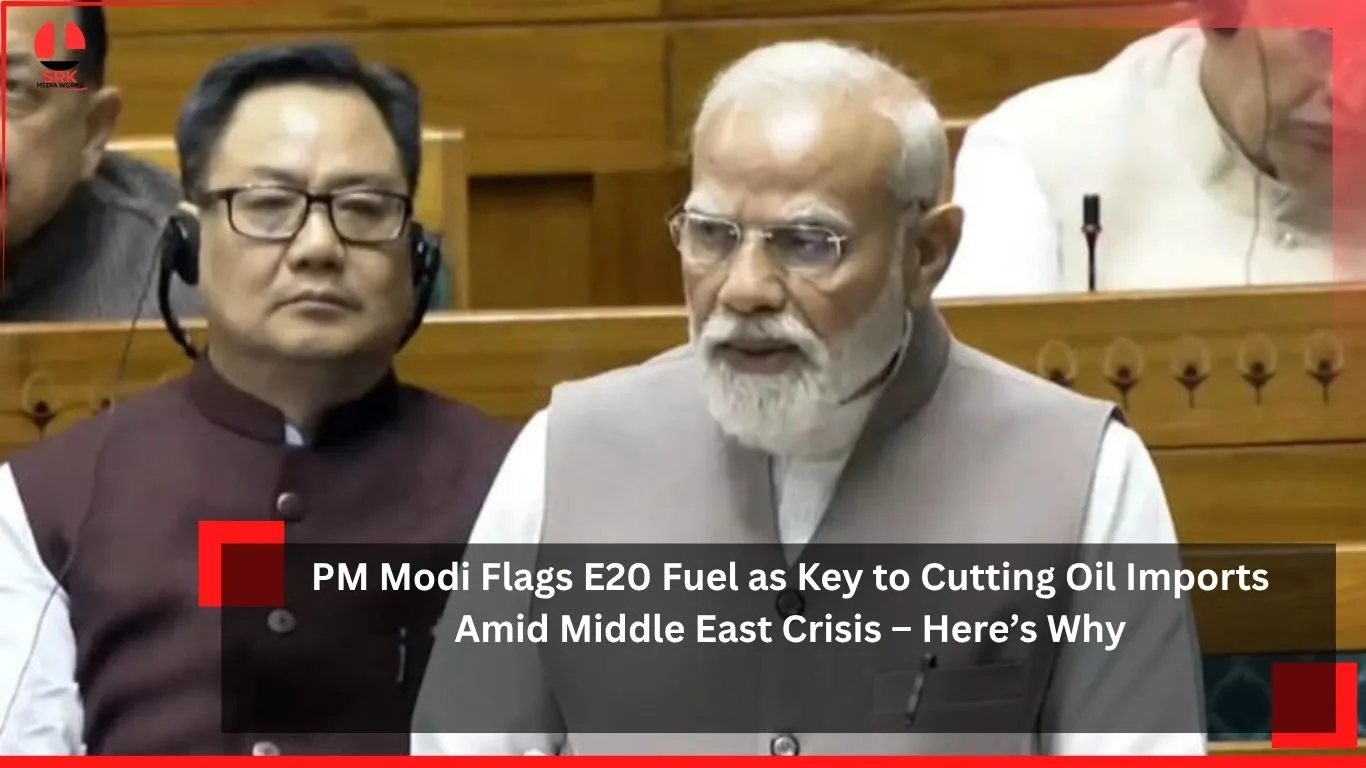
India’s energy landscape is undergoing a significant transformation as Prime Minister Narendra Modi highlighted E20 fuel as a crucial step toward reducing oil imports, especially during the ongoing Middle East crisis. The announcement has sparked widespread discussion among analysts, policymakers, and industry leaders, who see ethanol-blended fuel as a game-changer for India’s energy independence.
What is E20 Fuel?
E20 fuel refers to a blend of 20% ethanol and 80% petrol. Ethanol, derived from crops such as sugarcane, maize, and other biomass, is considered a cleaner and more sustainable alternative to fossil fuels. By blending ethanol with petrol, India aims to reduce its dependency on imported crude oil, cut carbon emissions, and support domestic agriculture.
Why E20 Fuel Matters Now
The Middle East crisis has disrupted global oil supply chains, leading to price volatility and concerns over energy security. India, which imports nearly 85% of its crude oil, faces significant risks from such geopolitical tensions.
Key reasons why E20 fuel is critical:
- Reduced oil imports: Less reliance on Middle Eastern oil.
- Economic savings: Lower import bills strengthen foreign reserves.
- Environmental benefits: Reduced greenhouse gas emissions.
- Agricultural boost: Farmers benefit from increased demand for ethanol-producing crops.
Prime Minister’s Vision
PM Modi emphasized that adopting E20 fuel is not just an energy reform but a strategic necessity. He stated that India must diversify its energy sources to shield itself from external shocks. The government has set ambitious targets to expand ethanol production and ensure nationwide availability of E20 fuel by 2026.
Comparative Analysis of Fuel Blends
| Fuel Type | Ethanol Content | Import Dependency | Emission Reduction |
|---|---|---|---|
| Petrol (E0) | 0% | Very High | None |
| E10 | 10% | Moderate | 20% reduction |
| E20 | 20% | Lower | 35% reduction |
| E85 | 85% | Minimal | 70% reduction |
Economic Impact of E20 Fuel
Analysts estimate that widespread adoption of E20 fuel could save India billions annually.
| Factor | Current Scenario | With E20 Fuel |
|---|---|---|
| Oil Import Bill | $120 billion | $100 billion |
| Foreign Reserve Pressure | High | Reduced |
| Farmer Income | Moderate | Increased |
| Carbon Emissions | Rising | Declining |
Challenges Ahead
While the benefits are clear, several challenges remain:
- Infrastructure readiness: Fuel stations must adapt to E20 distribution.
- Vehicle compatibility: Not all vehicles are designed for ethanol blends.
- Supply chain issues: Ensuring consistent ethanol production.
- Price stability: Balancing ethanol costs with petrol prices.
Public and Industry Reaction
The announcement has received mixed reactions:
- Automobile manufacturers are cautiously optimistic, but stress the need for vehicle modifications.
- Farmers welcome the move, seeing it as an opportunity to increase crop demand.
- Consumers are concerned about potential price fluctuations.
Sentiment Analysis
| Sentiment | Percentage |
|---|---|
| Support for E20 fuel | 50% |
| Concern about vehicle compatibility | 30% |
| Skepticism about implementation | 20% |
Global Context
Countries like Brazil and the United States have successfully implemented ethanol-blended fuels, providing India with models to follow. Brazil, for instance, has been using E85 fuel for decades, significantly reducing its oil dependency. India hopes to replicate similar success with E20 fuel.
Long-Term Outlook
If implemented effectively, E20 fuel could:
- Save billions in oil imports.
- Strengthen India’s energy independence.
- Provide a sustainable boost to agriculture.
- Position India as a leader in renewable energy adoption.
Conclusion
PM Modi’s emphasis on E20 fuel amid the Middle East crisis underscores India’s urgent need to diversify energy sources. While challenges remain, the potential benefits in terms of reduced oil imports, economic savings, and environmental sustainability make E20 fuel a cornerstone of India’s energy future. The coming years will determine whether India can overcome implementation hurdles and fully realize the promise of ethanol-blended fuel.
Disclaimer
This article is based on publicly available information and analytical perspectives. It does not claim to provide verified government data or official energy statistics. Readers are encouraged to follow updates from credible authorities for confirmed details. The content is intended for informational and discussion purposes only.