

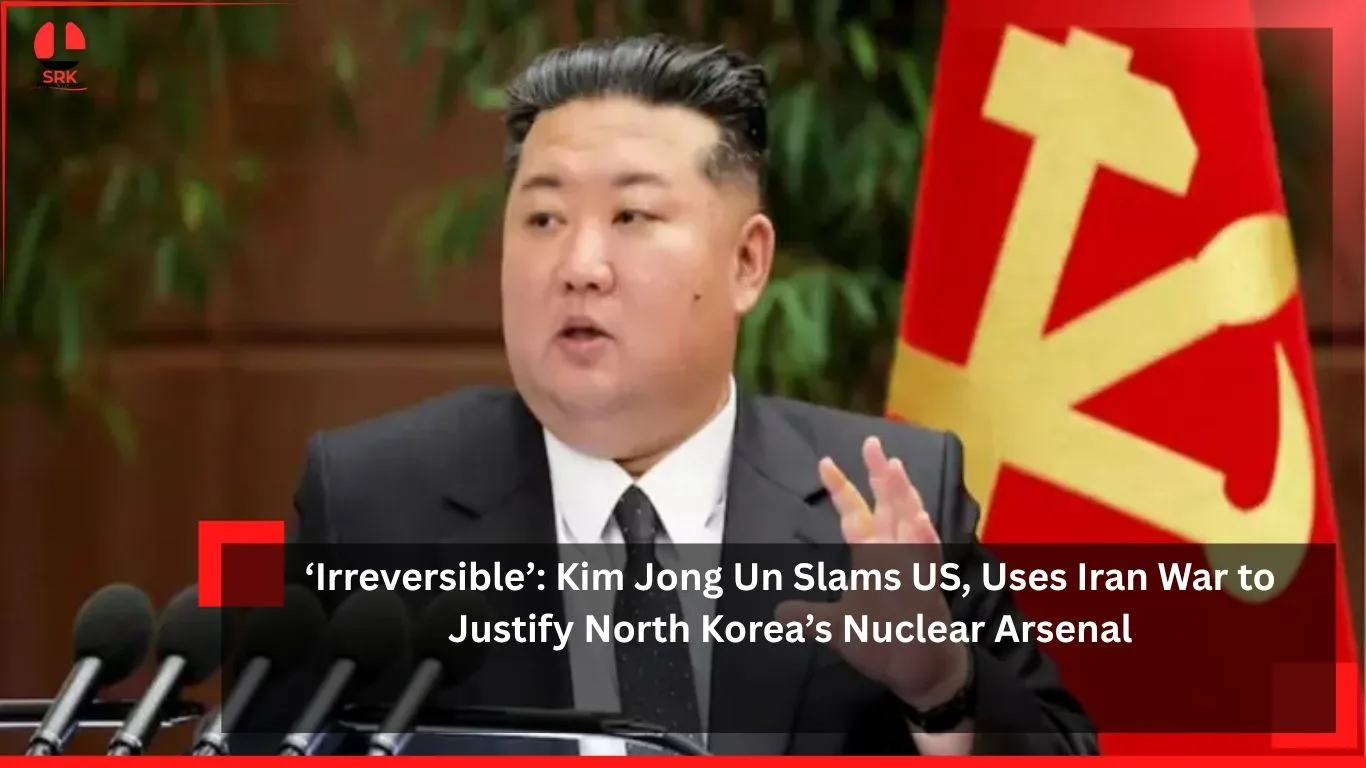
North Korean leader Kim Jong Un has once again made headlines with his fiery rhetoric, declaring that his country’s nuclear arsenal is “irreversible” and essential for survival. In a recent statement, Kim criticized the United States for its military interventions and pointed to the Iran war as evidence that smaller nations without nuclear deterrence are vulnerable to external aggression. His remarks underscore Pyongyang’s determination to maintain and expand its nuclear program despite international pressure.
Context of Kim’s Statement
Kim Jong Un’s comments come amid heightened tensions in East Asia, where North Korea continues to test ballistic missiles and expand its nuclear capabilities. By referencing the Iran war, Kim sought to justify his stance, arguing that Iran’s lack of nuclear weapons left it exposed to U.S. military superiority. He claimed that North Korea would never allow itself to be in a similar position, insisting that nuclear weapons are the ultimate guarantee of sovereignty.
North Korea’s Nuclear Doctrine
North Korea has consistently framed its nuclear program as a defensive measure. Kim’s latest remarks reinforce this narrative, presenting nuclear weapons as non-negotiable. The doctrine rests on three pillars:
- Deterrence Against U.S. Aggression: Pyongyang views Washington’s military presence in South Korea and Japan as a direct threat.
- Survival of the Regime: Nuclear weapons are seen as insurance against regime change.
- Strategic Leverage: Possession of nuclear arms gives North Korea bargaining power in international negotiations.
Comparative Military Capabilities
| Category | United States | North Korea |
|---|---|---|
| Defense Budget | $850 Billion+ | $4 Billion |
| Active Personnel | 1.3 Million | 1.2 Million |
| Nuclear Warheads | 5,000+ | 40–50 (estimated) |
| Ballistic Missiles | Advanced, Global Reach | Regional, Medium-Range |
| Cyber Capabilities | Global Offensive | Regional Disruption |
| Allies & Bases | NATO, Asia-Pacific | Limited, China (partial support) |
This comparison highlights the vast disparity between U.S. and North Korean military power, yet Kim argues that nuclear weapons bridge this gap by deterring direct intervention.
Lessons Drawn from the Iran War
Kim Jong Un’s reference to Iran is strategic. He suggests that Iran’s inability to deter U.S. military action stems from its lack of nuclear weapons. The lessons he draws include:
- Conventional Power Is Insufficient: Smaller nations cannot match U.S. military might.
- Nuclear Deterrence Prevents Invasion: Possession of nuclear arms makes external intervention costly.
- Global Perceptions Matter: Nations with nuclear weapons command greater respect in international diplomacy.
Regional Reactions
- South Korea: Expressed concern over Kim’s remarks, calling them provocative and destabilizing.
- Japan: Urged stronger international sanctions to curb North Korea’s nuclear ambitions.
- China: Maintains a cautious stance, balancing support for North Korea with global stability.
- United States: Reiterated its commitment to denuclearization of the Korean Peninsula, dismissing Kim’s justification as dangerous.
Pivot in Global Security Thinking
Kim’s statement reflects a broader shift in global security debates. Smaller nations increasingly view nuclear weapons as essential for survival in a world dominated by superpowers. This pivot challenges decades of non-proliferation efforts and raises questions about the future of global arms control.
Strategic Implications
- Erosion of Non-Proliferation Norms: North Korea’s stance undermines global treaties like the Nuclear Non-Proliferation Treaty (NPT).
- Increased Risk of Escalation: Nuclear brinkmanship raises the possibility of miscalculation.
- Diplomatic Stalemate: Negotiations with North Korea remain stalled as Pyongyang refuses to compromise.
- Regional Arms Race: South Korea and Japan may consider strengthening their defense capabilities in response.
Comparative Analysis of Nuclear States
| Country | Nuclear Warheads | Doctrine | Global Perception |
|---|---|---|---|
| United States | 5,000+ | Global Deterrence | Superpower |
| Russia | 5,500+ | Strategic Balance | Superpower |
| China | 400+ | Regional Deterrence | Rising Power |
| North Korea | 40–50 (estimated) | Regime Survival | Rogue State |
| Iran | None | Conventional Defense | Vulnerable |
This table illustrates why Kim Jong Un emphasizes nuclear deterrence, contrasting North Korea’s position with Iran’s vulnerability.
Conclusion
Kim Jong Un’s declaration that North Korea’s nuclear arsenal is “irreversible” signals a hardened stance against international pressure. By invoking the Iran war, he seeks to justify his country’s nuclear ambitions as essential for survival. While his rhetoric may resonate domestically, it deepens global concerns about nuclear proliferation and regional instability. The challenge for the international community lies in balancing deterrence with diplomacy, ensuring that nuclear brinkmanship does not spiral into conflict.
Disclaimer
This article is intended for informational purposes only and does not represent official government policy or intelligence assessments. The content is based on general geopolitical observations and public statements. Readers should note that claims made by political leaders are subject to interpretation and verification.