




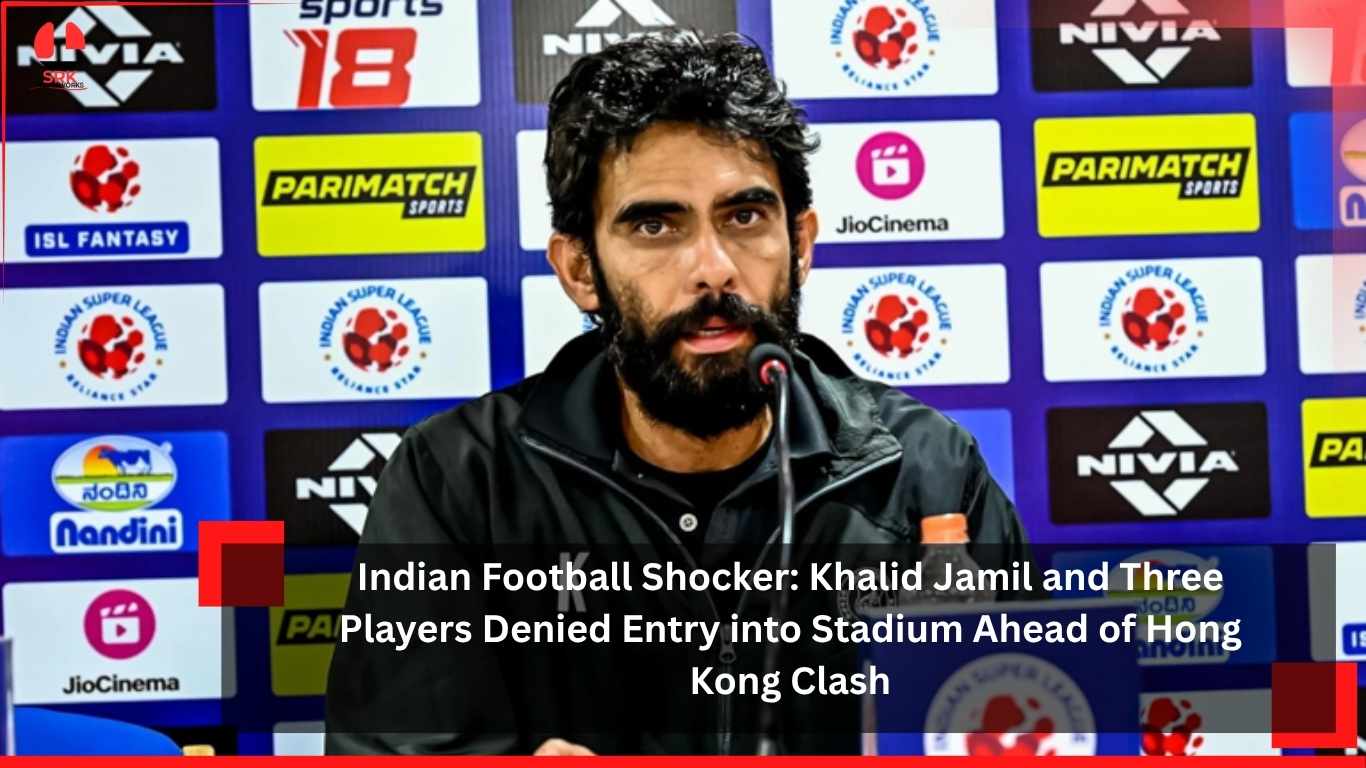
Indian football has been jolted by controversy as head coach Khalid Jamil and three players were reportedly denied entry into the Jawaharlal Nehru International Stadium in Kochi ahead of the crucial AFC Asian Cup qualifier against Hong Kong. The incident, which unfolded just hours before the scheduled match, has raised serious concerns about organizational lapses, administrative disputes, and the preparedness of Indian football authorities in handling international fixtures.
Background of the Incident
According to reports, Khalid Jamil and three key players were stopped at the stadium gates due to alleged payment disputes and accreditation issues. The denial of entry not only disrupted pre-match training but also forced the cancellation of a scheduled press conference. For a team preparing for a high-stakes clash, such an incident has cast a shadow over India’s campaign.
Key Details
- Venue: Jawaharlal Nehru International Stadium, Kochi
- Match: India vs Hong Kong, AFC Asian Cup Qualifier
- Individuals Denied Entry: Head coach Khalid Jamil and three players (names withheld in initial reports)
- Reason Cited: Payment disputes and accreditation lapses
Impact on Team Preparations
The denial of entry had immediate consequences:
- Training Disruption: Players missed crucial warm-up sessions.
- Psychological Effect: The incident may have affected morale ahead of the match.
- Media Fallout: Cancellation of press conferences fueled speculation and criticism.
Comparative Analysis of the Incident
| Aspect | Normal Protocol | What Happened | Impact on Team |
|---|---|---|---|
| Accreditation | Issued well before match day | Reportedly incomplete or disputed | Entry denied |
| Payment Settlements | Cleared by organizing committee | Alleged delays and disputes | Administrative chaos |
| Team Access | Guaranteed for players and staff | Blocked at stadium gates | Training disrupted |
| Media Engagement | Pre-match press conference scheduled | Cancelled due to incident | Negative optics |
Pivot Analysis: Organizational Failures vs Team Readiness
| Organizational Failure | Effect on Team | Broader Implication |
|---|---|---|
| Accreditation lapse | Denied entry to coach and players | Questions on event management |
| Payment dispute | Administrative standoff | Weak financial governance |
| Communication breakdown | Cancellation of press conference | Damaged credibility with media |
| Security mismanagement | Players stopped at gates | Embarrassment for Indian football |
Reactions
- Football Authorities: Officials have promised an investigation into the incident.
- Fans: Outrage spread across social media, with many calling it a “shocker” and demanding accountability.
- Analysts: Experts argue that such lapses undermine India’s credibility in hosting international matches.
- Opposition Teams: Hong Kong officials reportedly expressed surprise, though they refrained from commenting publicly.
Historical Context
Indian football has faced organizational challenges before, including delayed payments, poor infrastructure, and mismanagement of fixtures. However, denying entry to the national team’s coach and players ahead of an international clash is unprecedented, making this incident particularly damaging.
Implications for Indian Football
- Global Image: Such incidents tarnish India’s reputation as a host nation.
- Player Morale: Disruptions can affect performance on the field.
- Administrative Accountability: Calls for reform within football governance are likely to intensify.
- Future Hosting: International bodies may scrutinize India’s ability to manage tournaments.
Challenges Ahead
- Restoring Confidence: Authorities must reassure players and fans of professionalism.
- Ensuring Transparency: Clear communication about accreditation and payments is essential.
- Preventing Recurrence: Stronger protocols must be established for future matches.
- Handling Media Fallout: Addressing criticism openly will be key to damage control.
Conclusion
The denial of entry to Khalid Jamil and three players ahead of the Hong Kong clash is a shocking reminder of the organizational challenges facing Indian football. As the team prepares for crucial fixtures, the incident underscores the urgent need for reforms in administration, accountability, and event management. For Indian football to progress on the global stage, professionalism must replace chaos, and transparency must become the norm.
Disclaimer
This article is based on publicly available reports and expert commentary. It does not represent official statements from football authorities or governing bodies. Readers should interpret the content as journalistic analysis, recognizing that developments in sports administration are subject to change.