




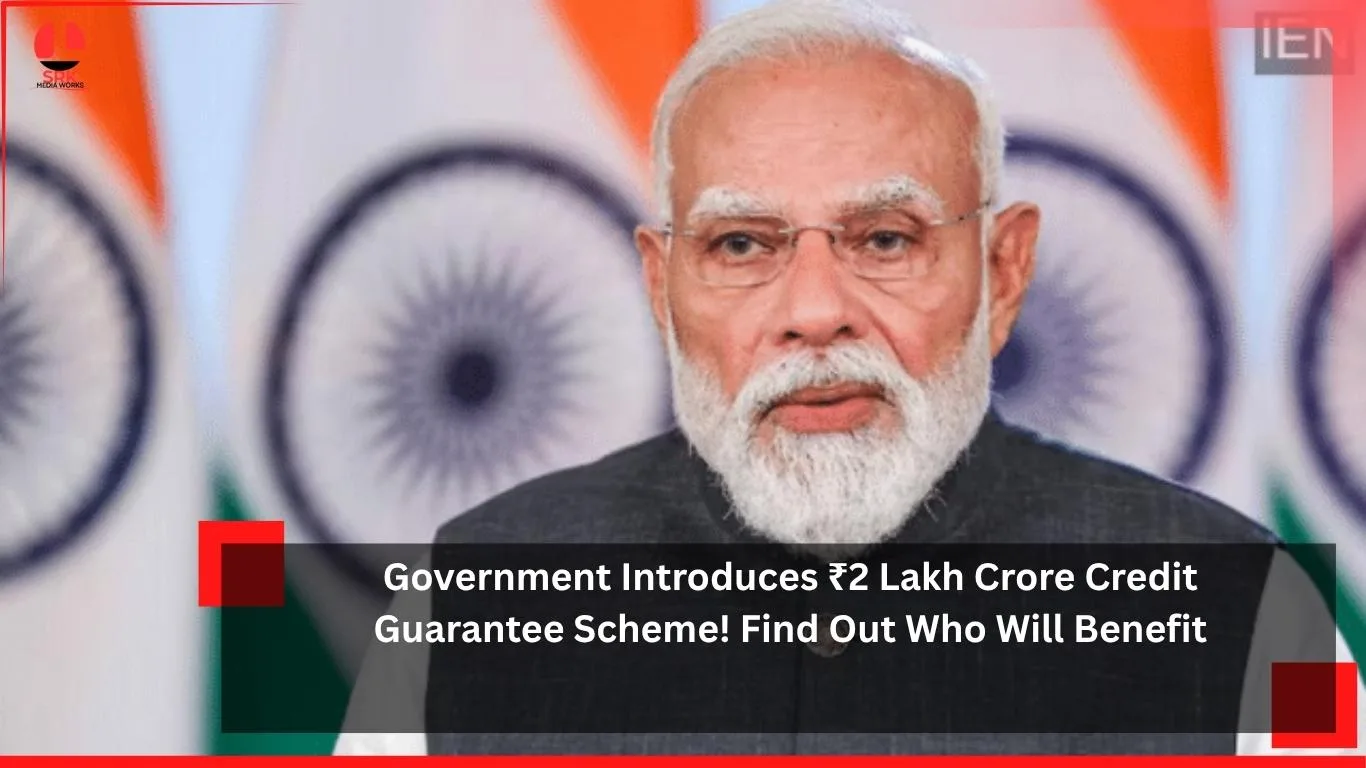
The Government of India has unveiled a massive ₹2 lakh crore credit guarantee scheme aimed at boosting economic growth, supporting small businesses, and strengthening the financial ecosystem. This landmark initiative is expected to provide a safety net for lenders while ensuring that entrepreneurs, startups, and micro, small, and medium enterprises (MSMEs) gain easier access to credit.
What is the Credit Guarantee Scheme?
The scheme essentially acts as a financial shield. When banks and financial institutions lend money to businesses, there is always a risk of default. Under this new program, the government guarantees a portion of the loan, reducing the risk for lenders and encouraging them to extend credit to sectors that often struggle to secure financing.
Key Features of the Scheme
- Total Outlay: ₹2 lakh crore, making it one of the largest credit guarantee programs in India’s history.
- Target Beneficiaries: MSMEs, startups, women entrepreneurs, and rural enterprises.
- Coverage: Loans across manufacturing, services, agriculture-linked businesses, and digital startups.
- Risk Sharing: Government guarantees a significant portion of the loan, reducing exposure for banks.
- Ease of Access: Simplified application processes and reduced collateral requirements.
Who Will Benefit?
- MSMEs: The backbone of India’s economy, contributing nearly 30% to GDP and employing millions.
- Startups: Particularly those in technology, fintech, and green energy sectors.
- Women Entrepreneurs: Special provisions to encourage female-led businesses.
- Rural Enterprises: Farmers and rural cooperatives seeking credit for modernization.
Economic Impact
The scheme is expected to:
- Increase liquidity in the market.
- Strengthen employment generation.
- Encourage innovation and entrepreneurship.
- Reduce dependence on informal credit sources.
Sector-Wise Allocation
| Sector | Estimated Allocation (₹ Crore) | Beneficiaries (in Lakhs) | Focus Area |
|---|---|---|---|
| MSMEs | 80,000 | 25 | Manufacturing & Services |
| Startups | 40,000 | 5 | Technology & Innovation |
| Agriculture-linked Enterprises | 50,000 | 15 | Rural Modernization |
| Women Entrepreneurs | 30,000 | 10 | Inclusive Growth |
Pivot Analysis of Beneficiaries
| Category | High Benefit | Moderate Benefit | Low Benefit |
|---|---|---|---|
| MSMEs | ✔ | ||
| Startups | ✔ | ||
| Agriculture-linked Enterprises | ✔ | ||
| Women Entrepreneurs | ✔ | ||
| Large Corporates | ✔ |
This analysis shows that the scheme is primarily designed to uplift smaller players rather than large corporations.
Challenges Ahead
While the scheme is ambitious, challenges remain:
- Ensuring timely disbursement of funds.
- Preventing misuse or fraudulent claims.
- Monitoring repayment and maintaining transparency.
- Balancing regional distribution to avoid concentration in urban areas.
Public and Industry Sentiment
| Stakeholder | Reaction | Sentiment (%) |
|---|---|---|
| MSMEs | Strong Support | 85 Positive |
| Startups | Optimistic | 80 Positive |
| Banks | Cautious | 60 Positive / 40 Neutral |
| Economists | Mixed | 50 Positive / 50 Concerned |
Long-Term Outlook
If implemented effectively, the ₹2 lakh crore credit guarantee scheme could transform India’s financial landscape. By empowering small businesses and startups, the government aims to create a more resilient economy capable of withstanding global uncertainties.
Conclusion
The introduction of the ₹2 lakh crore credit guarantee scheme marks a bold step toward inclusive growth. By reducing risks for lenders and empowering entrepreneurs, the government is laying the foundation for a stronger, more diversified economy. The success of this initiative will depend on effective execution, transparency, and the ability to reach those who need it most.
Disclaimer
This article is intended for informational purposes only. It provides an overview of government policy initiatives and their potential impact. It does not constitute financial advice or recommendations. Readers should consult official government notifications and financial experts before making business or investment decisions.