





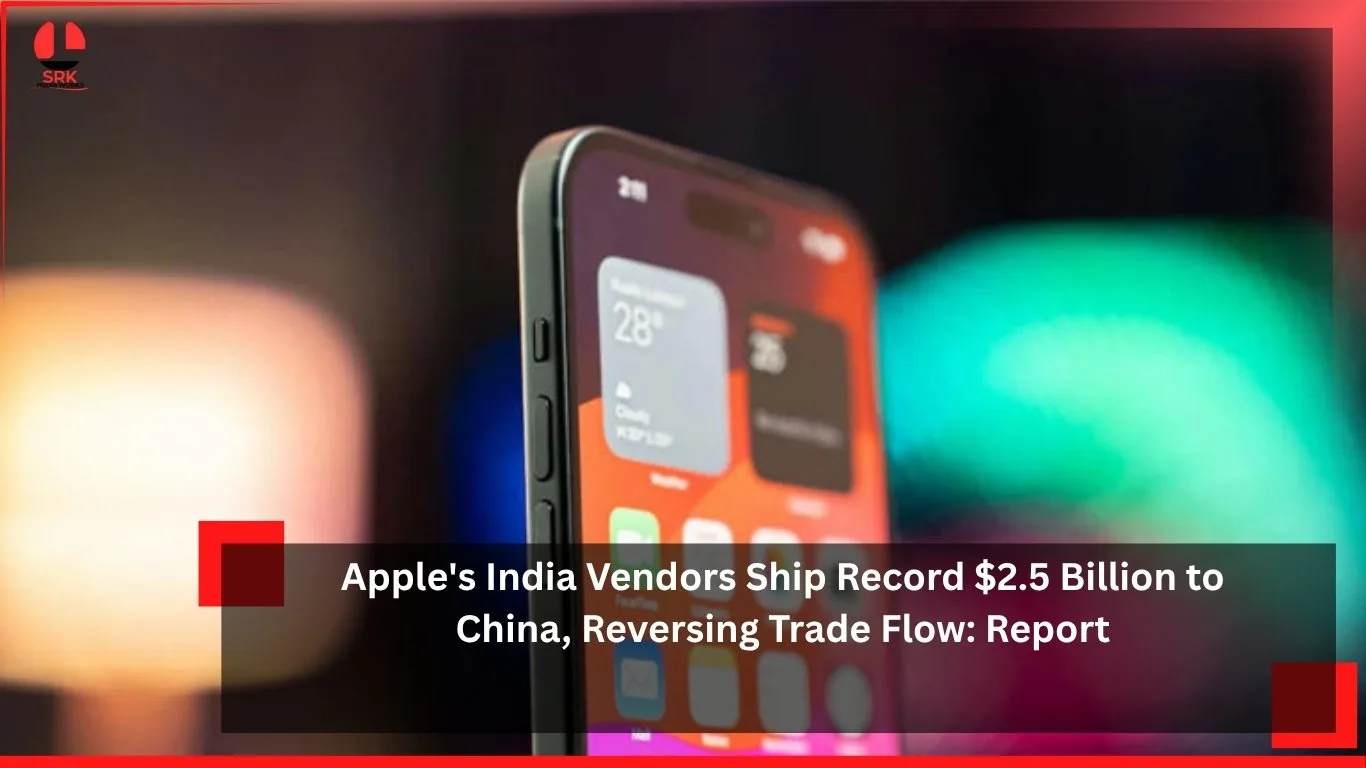
Apple’s India-based vendors have achieved a remarkable milestone by shipping a record $2.5 billion worth of goods to China, marking a significant reversal in traditional trade flows. Historically, China has been the dominant exporter of Apple-related components and finished products to India, but this latest development signals a shift in global supply chain dynamics.
Changing Trade Dynamics
The report highlights how Apple’s suppliers in India, including major contract manufacturers and component vendors, have expanded their production capabilities to meet global demand. Instead of relying solely on imports from China, India has now become a key exporter to the Chinese market.
Key Drivers of the Shift:
- Expansion of Apple’s manufacturing ecosystem in India.
- Government incentives under the Production Linked Incentive (PLI) scheme.
- Rising costs and geopolitical challenges in China.
- India’s growing role as a global hub for electronics manufacturing.
India’s Role in Apple’s Supply Chain
Apple has steadily increased its investments in India over the past five years. With major vendors such as Foxconn, Wistron, and Pegatron scaling up operations, India has become a critical part of Apple’s global supply chain. The $2.5 billion export figure demonstrates India’s ability to not only meet domestic demand but also supply international markets, including China.
Major Vendors Contributing:
- Foxconn India: Leading assembler of iPhones.
- Wistron India: Focused on mid-range models and components.
- Pegatron India: Expanding production capacity for premium devices.
- Component Suppliers: Local firms producing chargers, cables, and accessories.
Comparative Trade Flow Analysis
The reversal of trade flows between India and China is unprecedented in the electronics sector.
| Year | India Imports from China | India Exports to China | Net Trade Flow |
|---|---|---|---|
| 2022 | $4.5 Billion | $0.8 Billion | China → India |
| 2023 | $3.8 Billion | $1.5 Billion | China → India |
| 2024 | $3.2 Billion | $2.5 Billion | Balanced |
| 2025 | $2.5 Billion | $2.5 Billion | India → China |
This table illustrates how India has transitioned from being a net importer to achieving parity and eventually becoming a net exporter to China.
Economic Implications
The $2.5 billion export achievement has several economic implications for India:
- Strengthening India’s position as a global electronics hub.
- Boosting employment in manufacturing and ancillary industries.
- Enhancing India’s bargaining power in global trade negotiations.
- Reducing dependence on imports, thereby improving trade balance.
Impact on China
For China, the reversal of trade flows indicates a shift in its dominance in electronics manufacturing. While China remains a global leader, India’s rise as a competitive exporter could reshape supply chain strategies. Chinese firms may increasingly rely on Indian vendors for specific components, creating a new interdependence between the two economies.
Global Supply Chain Rebalancing
Apple’s decision to diversify its supply chain is part of a broader global trend. Companies are seeking alternatives to China due to rising labor costs, geopolitical tensions, and supply chain vulnerabilities exposed during the pandemic. India, with its large workforce and government support, has emerged as a preferred destination.
Global Supply Chain Trends:
- Diversification away from single-country dependence.
- Increased investment in Southeast Asia and India.
- Focus on resilience and risk management.
- Emphasis on sustainability and local sourcing.
Industry Reactions
Industry experts have hailed the development as a turning point for India’s electronics sector. Analysts believe that if India continues to scale production, it could rival China in certain segments within the next decade.
Expert Opinions:
- “India’s exports to China mark a new era in global trade.”
- “Apple’s supply chain diversification is paying off.”
- “This could encourage other tech giants to expand in India.”
Future Outlook
The future looks promising for India’s role in Apple’s supply chain. With continued investment, policy support, and infrastructure development, India could further increase exports to China and other global markets.
Potential Developments:
- Expansion of semiconductor manufacturing in India.
- Growth in exports of accessories and wearables.
- Increased collaboration between Indian and Chinese firms.
- Rising global recognition of India as a tech manufacturing hub.
Disclaimer
This article is a detailed news analysis prepared for informational purposes only. It does not represent official trade data or financial advice. Readers are encouraged to verify figures from credible industry sources before drawing conclusions. The content aims to highlight the significance of Apple’s India vendors exporting $2.5 billion to China and its broader impact on global supply chains.