









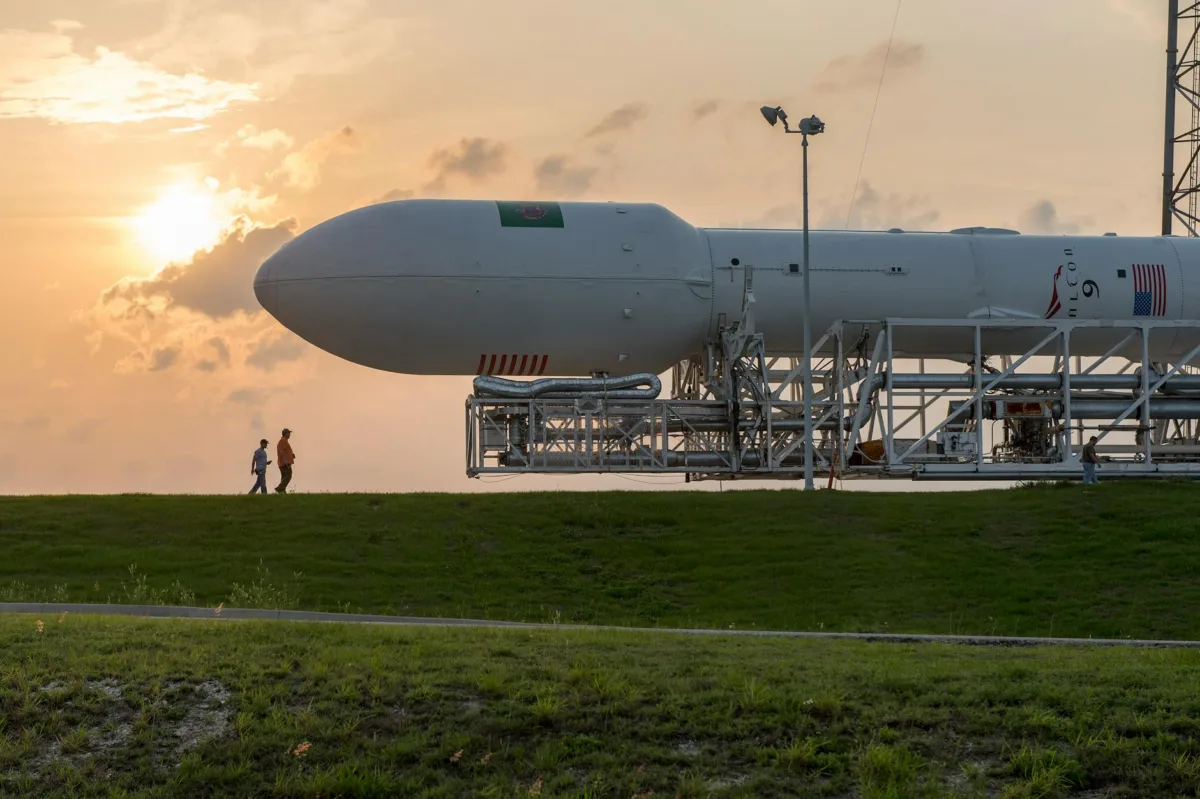
SpaceX, the aerospace manufacturer led by Elon Musk, announced plans this month to launch an initial public offering (IPO) seeking to raise up to $75 billion. The offering, expected to take place on the New York Stock Exchange, marks the largest stock market debut in history and positions the company at the forefront of the commercial space industry. Financial analysts suggest that if the IPO reaches its projected valuation, it could catalyze Elon Musk’s net worth toward the trillion-dollar threshold.
The Evolution of Commercial Spaceflight
Founded in 2002, SpaceX has transformed from a disruptive startup into the backbone of modern orbital logistics. The company revolutionized the industry by introducing reusable rocket technology, significantly lowering the cost of access to space.
Over the last decade, SpaceX has secured lucrative government contracts, including partnerships with NASA for crewed missions and the Department of Defense for national security satellite launches. These government-backed revenue streams have provided the financial stability necessary to pursue ambitious projects like the Starship launch vehicle and the Starlink satellite internet constellation.
Market Dynamics and Investor Appetite
The decision to go public comes as investor interest in the space economy reaches record levels. According to data from the Space Foundation, the global space economy is currently valued at over $500 billion and is projected to grow to $1 trillion by 2040.
Market experts indicate that the sheer scale of SpaceX’s infrastructure creates a significant competitive moat. With a vertical integration strategy that spans manufacturing, launch operations, and satellite communications, the company represents a unique asset for institutional investors seeking exposure to deep-tech and aerospace sectors.
Expert Perspectives on Valuation
Financial analysts are closely monitoring the pricing strategy for the IPO. While $75 billion is the target for capital raising, the total market capitalization of the firm could reach into the hundreds of billions, depending on the reception from retail and institutional markets.
Dr. Sarah Jenkins, an aerospace industry analyst, notes that the company’s valuation is heavily tied to the long-term profitability of Starlink. “If Starlink achieves global connectivity targets, it shifts SpaceX from a launch provider to a global telecommunications utility,” Jenkins stated. This transition is essential for justifying the premium valuation investors are expected to pay.
The Trillionaire Trajectory
The potential for Elon Musk to become the world’s first trillionaire rests largely on his equity stake in SpaceX. As the company’s largest shareholder, an IPO at these valuations would consolidate his position as the most influential figure in private enterprise.
However, the transition to a public company introduces new regulatory pressures and shareholder oversight. The company will be required to disclose financial performance, executive compensation, and operational risks with a level of transparency that was previously unnecessary in its private capacity.
What to Watch Next
Industry observers are now turning their attention to the official S-1 filing, which will provide the first public look at the company’s internal balance sheets and debt obligations. The market will also be watching for potential regulatory hurdles from the SEC and how the firm plans to balance its aggressive research and development spending with the demands of public shareholders for quarterly profitability.