

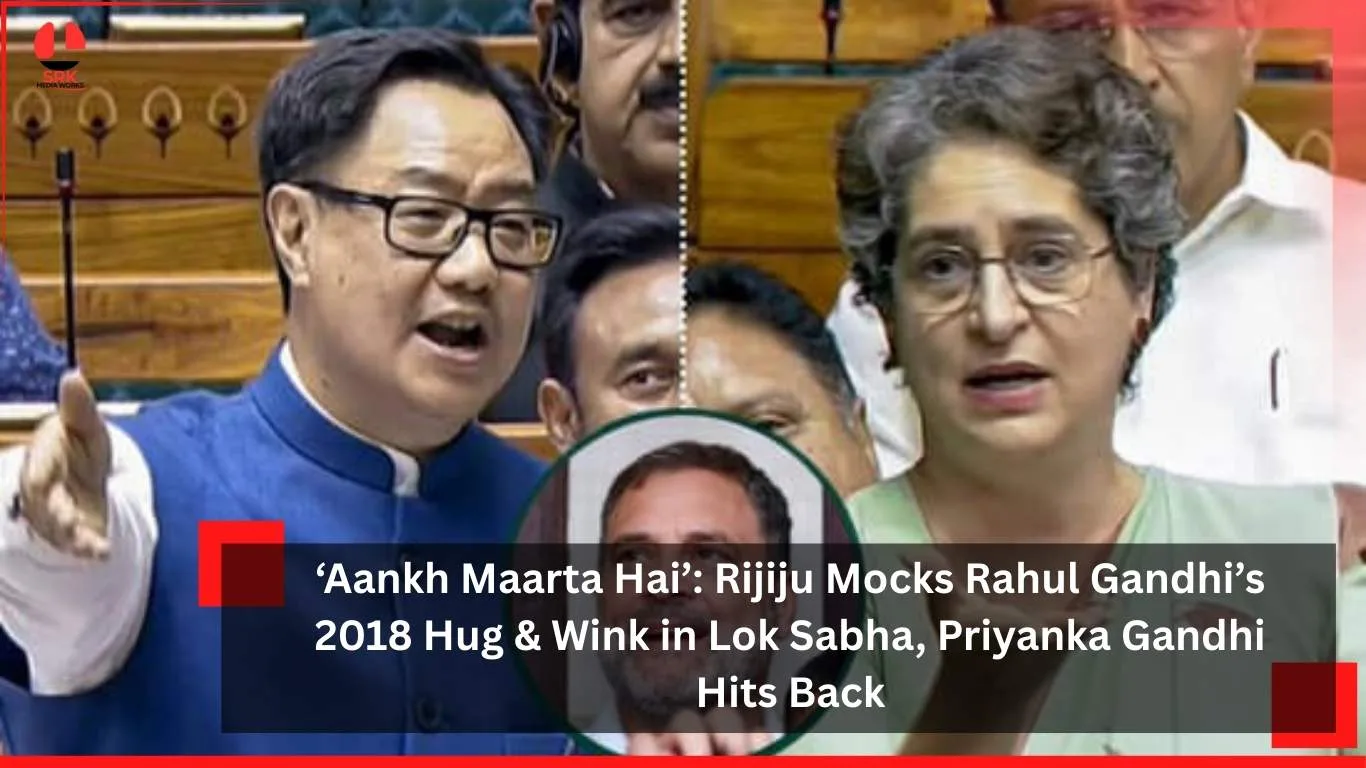
In a fresh round of political sparring, Union Minister Kiren Rijiju reignited memories of Rahul Gandhi’s dramatic 2018 gesture in the Lok Sabha—his unexpected hug to Prime Minister Narendra Modi followed by a wink. Rijiju mocked the incident with the phrase “aankh maarta hai” (he winks), sparking a sharp retort from Congress leader Priyanka Gandhi. The exchange has once again brought the spotlight back to one of the most talked-about moments in Indian parliamentary history, highlighting the enduring nature of symbolic gestures in politics.
Revisiting the 2018 Hug and Wink
The 2018 episode occurred during a heated debate in Parliament. Rahul Gandhi, then Congress president, walked across the aisle to hug Prime Minister Modi, a move that stunned the House. Immediately after, Rahul returned to his seat and winked at his colleagues, a gesture that became a viral sensation across social media platforms. Supporters hailed it as a bold act of defiance, while critics dismissed it as theatrics.
Rijiju’s Mockery
Years later, Rijiju’s remark—“aankh maarta hai”—was aimed at ridiculing Rahul Gandhi’s gesture, portraying it as immature and unserious. By invoking the incident, Rijiju sought to remind the public of what he described as a lack of decorum in Parliament. His comment reflects the BJP’s strategy of using past episodes to question the credibility and seriousness of opposition leaders.
Priyanka Gandhi’s Retort
Priyanka Gandhi wasted no time in responding. She defended her brother, suggesting that the BJP’s obsession with the 2018 wink reveals their inability to focus on pressing issues such as unemployment, inflation, and farmer distress. Her counterattack reframed the debate, shifting attention from symbolic gestures to substantive governance challenges.
Symbolism in Indian Politics
Gestures like Rahul’s hug and wink are not isolated incidents. Indian politics has a long tradition of symbolic acts—whether it is leaders touching the Constitution, bowing before Parliament, or making dramatic statements in rallies. These gestures often carry deeper meanings, resonating with supporters while provoking opponents.
Public Reaction
The renewed debate has sparked lively discussions across social media. Memes, videos, and commentaries have resurfaced, with citizens divided between amusement and criticism. Some view Rijiju’s remark as unnecessary provocation, while others see Priyanka’s retort as a strong defense of her brother’s political style.
Comparative Analysis of Political Gestures
| Political Gesture | Leader Involved | Year | Public Impact |
|---|---|---|---|
| Hug & Wink in Lok Sabha | Rahul Gandhi | 2018 | Viral, controversial, symbolic |
| Bowing before Constitution | Various leaders | Ongoing | Respect for democratic values |
| Dramatic resignations | Opposition leaders | Multiple | Political shock, media attention |
| Symbolic farmer outreach | Regional leaders | Ongoing | Connect with rural voters |
Analytical Perspective
Rijiju’s mockery and Priyanka’s retort highlight the dual nature of political discourse in India—where symbolic gestures coexist with substantive debates. While critics argue that theatrics undermine serious policymaking, supporters contend that such acts humanize leaders and make politics relatable to ordinary citizens.
Key Themes Emerging
| Theme | Explanation |
|---|---|
| Political Symbolism | Gestures like hugs and winks carry lasting impact in public memory. |
| Mockery as Strategy | Rijiju’s remark reflects BJP’s use of satire to question opposition leaders. |
| Defensive Counterattack | Priyanka reframed the debate toward governance issues. |
| Public Engagement | Social media amplifies symbolic acts, making them part of popular culture. |
Broader Implications
The incident underscores how political narratives are shaped not only by policies but also by gestures. In a democracy where perception often influences public opinion, symbolic acts can become defining moments. The BJP’s decision to revive the 2018 wink suggests its enduring resonance, while the Congress’s defense indicates its willingness to embrace symbolism as part of its political identity.
Conclusion
The “aankh maarta hai” remark by Kiren Rijiju and Priyanka Gandhi’s sharp retort have reignited debates around Rahul Gandhi’s 2018 hug and wink in the Lok Sabha. More than just a political spat, the exchange reflects the power of symbolism in Indian politics. Whether seen as theatrics or bold defiance, such gestures continue to shape narratives, influence public perception, and fuel political discourse years after they occur.
Disclaimer
This article is a journalistic analysis based on publicly available information and political statements. It is intended for informational and educational purposes only. It does not represent endorsement of any political party or leader. Readers should interpret the content as part of democratic discourse rather than a definitive political judgment.