

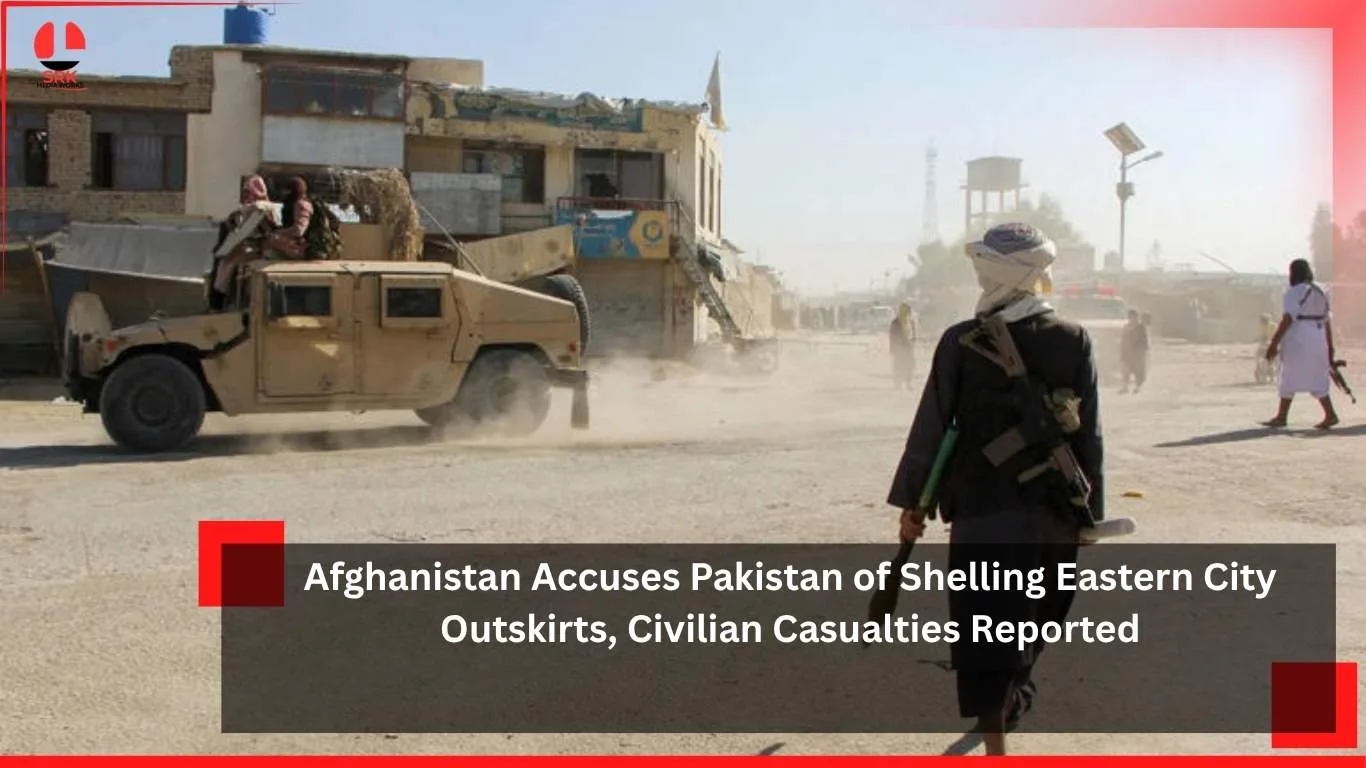
Afghanistan has accused Pakistan of carrying out cross-border shelling on the outskirts of an eastern Afghan city, resulting in civilian deaths and injuries. The incident has heightened tensions between the two neighboring countries, both of which share a long and complex history of border disputes, security concerns, and political mistrust.
Background of the Incident
According to Afghan officials, artillery fire from Pakistan struck residential areas near the border, killing and wounding civilians. The Afghan government condemned the attack, calling it a violation of sovereignty and international law. Pakistan has yet to issue an official response, though past incidents have often been linked to counter-insurgency operations along the porous frontier.
The Afghanistan-Pakistan border, known as the Durand Line, has historically been a flashpoint for conflict. Both sides accuse each other of harboring militants and failing to prevent cross-border attacks.
Political Reactions
Afghanistan
- Officials strongly condemned the shelling, demanding accountability.
- Calls were made for international organizations to investigate the incident.
Pakistan
- No immediate official statement was released.
- Analysts suggest Pakistan may frame the shelling as part of counter-terrorism operations.
International Community
- Observers expressed concern about escalating tensions.
- Human rights groups highlighted the impact on civilians and urged restraint.
Comparative Analysis of Border Tensions
| Aspect | Afghanistan’s Position | Pakistan’s Position | Impact |
|---|---|---|---|
| Sovereignty | Claims violation of territory | Justifies actions as security | Diplomatic strain |
| Civilian Casualties | Condemns attacks | Often denies or downplays | Humanitarian crisis |
| Security Concerns | Accuses Pakistan of aggression | Accuses Afghanistan of harboring militants | Mutual distrust |
| International Response | Seeks global support | Calls for bilateral dialogue | Limited mediation |
Stakeholder Perspectives
| Stakeholder Group | Reaction | Implications |
|---|---|---|
| Afghan Govt | Strong condemnation | Push for international inquiry |
| Pakistani Govt | Awaiting response | Possible justification |
| Citizens | Fear and anger | Heightened insecurity |
| Analysts | Concern over escalation | Debate on regional stability |
Pivot Analysis of Future Scenarios
| Scenario | Likelihood | Impact |
|---|---|---|
| Diplomatic Resolution | Moderate | Stabilizing |
| Continued Border Clashes | High | Severe instability |
| International Mediation | Moderate | Balanced outcome |
| Escalation of Conflict | High | Regional crisis |
Broader Implications
The accusations highlight the fragile nature of Afghanistan-Pakistan relations. Border clashes not only threaten bilateral ties but also destabilize the wider region. Civilian casualties add a humanitarian dimension, drawing attention from international organizations and human rights groups.
Challenges Ahead
- Verification: Independent confirmation of the incident is needed.
- Diplomatic Sensitivity: Both nations must avoid rhetoric that escalates tensions.
- Civilian Protection: Ensuring safety of border communities is critical.
- Regional Stability: Ongoing disputes risk destabilizing South Asia.
Opportunities for Resolution
- Strengthening border monitoring mechanisms.
- Engaging in bilateral dialogue to reduce mistrust.
- Involving international mediators to ensure accountability.
- Promoting humanitarian aid for affected civilians.
Conclusion
Afghanistan’s accusation that Pakistan shelled the outskirts of an eastern city, killing and wounding civilians, underscores the volatility of their border relations. While both nations have long struggled with security concerns and mutual distrust, the humanitarian impact of such incidents demands urgent attention. The path forward will depend on whether diplomacy, accountability, and restraint can prevail over hostility.
Disclaimer
This article is based on public reports and official statements regarding Afghanistan’s accusations against Pakistan. No independent verification has been provided at the time of writing. The content is intended for informational and analytical purposes only, not as verified fact. Readers are encouraged to follow official updates for accurate information.