




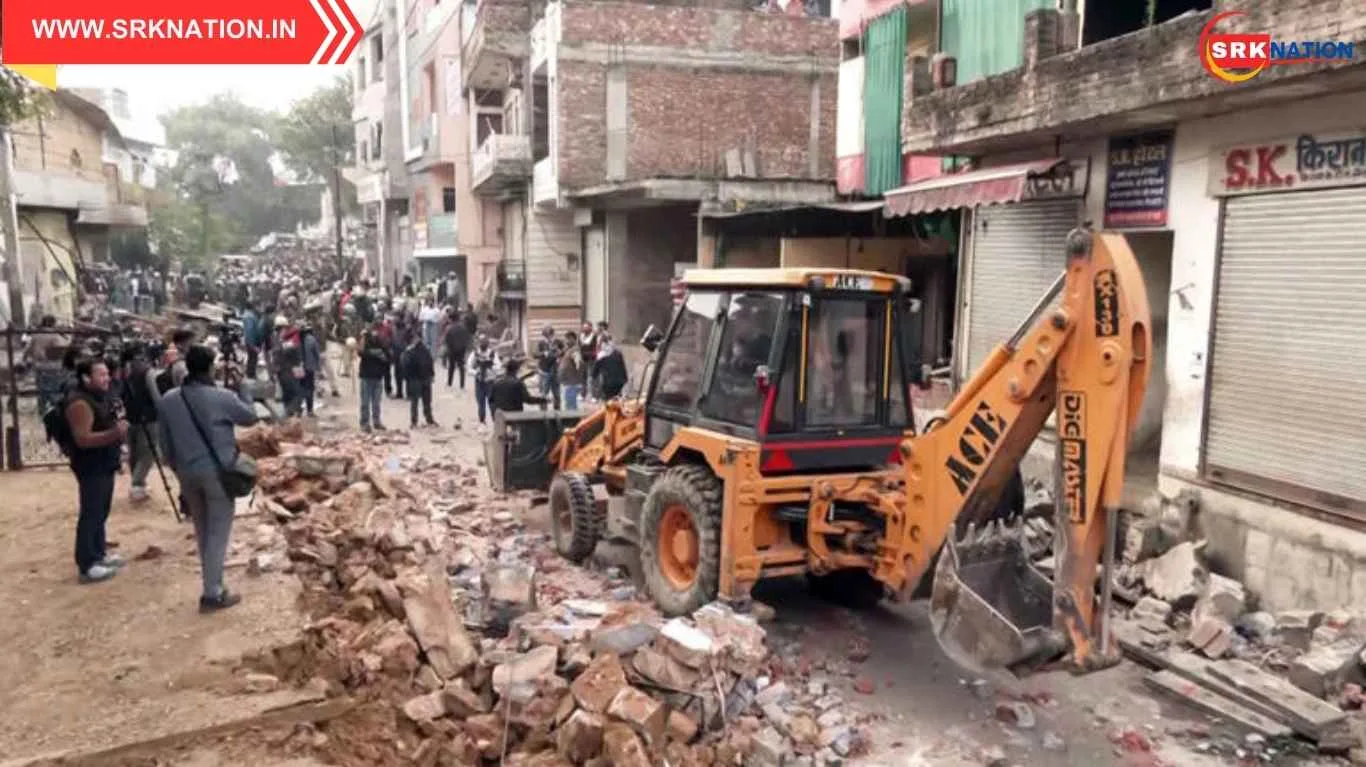
The town of Chomu in Rajasthan witnessed dramatic scenes as bulldozers rolled in to demolish what authorities described as “illegal structures” following incidents of violence. The move, carried out under heavy police presence, has sparked widespread debate on governance, law enforcement, and the use of demolition drives as a response to unrest.
Background of the Incident
- Violence erupted in Chomu earlier this week, leading to clashes between groups and damage to property.
- Authorities responded by deploying police forces to restore order and later initiated demolition drives targeting structures allegedly built without proper authorization.
- The bulldozer action was justified by officials as part of a crackdown on unlawful encroachments, but critics argue it reflects a growing trend of punitive demolitions.
- The incident has drawn attention across Rajasthan and beyond, highlighting tensions between law enforcement, governance, and civil rights.
Key Highlights of the Demolition Drive
| Indicator | Details |
|---|---|
| Location | Chomu, Rajasthan |
| Trigger | Violence and unrest in the area |
| Action Taken | Bulldozers razed alleged illegal structures |
| Security Measures | Heavy police deployment during demolition |
| Public Reaction | Mixed – support for law enforcement, criticism over human rights |
Implications of Bulldozer Action in Chomu
| Factor | Positive Impact | Challenges | Long-Term Implication |
|---|---|---|---|
| Law Enforcement | Demonstrates swift action | Risk of excessive force | Sets precedent for future governance |
| Public Safety | Restores order after violence | Fear among residents | May deter future unrest |
| Governance | Reinforces authority | Criticism of punitive demolitions | Raises questions on legality |
| Community Relations | Support from some groups | Alienation of affected families | Potential for social divisions |
| Media Coverage | Highlights government action | Risk of sensationalism | Shapes national debate on bulldozer politics |
Why This Story Matters
- Governance and Authority: The demolition reflects how authorities assert control after unrest.
- Public Safety: Officials argue such measures restore peace and deter violence.
- Civil Rights Concerns: Critics question whether demolitions respect due process and legal safeguards.
- Political Symbolism: Bulldozer actions have become symbolic of strong governance in recent years.
- Community Impact: Families affected by demolitions face displacement and economic hardship.
Sequence of Events in Chomu
| Timeline | Details |
|---|---|
| Initial Violence | Clashes broke out, leading to property damage |
| Police Deployment | Security forces moved in to restore order |
| Identification of Sites | Authorities marked structures deemed illegal |
| Bulldozer Action | Demolitions carried out under police watch |
| Aftermath | Mixed reactions from residents and political leaders |
Public Sentiment
- Supporters: Some residents welcomed the demolitions, seeing them as necessary to curb lawlessness.
- Critics: Others condemned the move, arguing it punished families without due process.
- Neutral Voices: Many expressed concern about rising tensions and called for dialogue instead of punitive measures.
- Social Media: Platforms were flooded with videos and debates, amplifying both support and criticism.
Expert Opinions
- Legal Analysts: Stress the importance of due process before demolitions.
- Political Commentators: Note that bulldozer actions have become a political tool in several states.
- Human Rights Advocates: Warn against collective punishment and displacement of vulnerable groups.
- Local Leaders: Call for balancing law enforcement with community welfare.
Challenges Ahead
- Legal Scrutiny: Courts may examine whether demolitions followed proper procedures.
- Community Relations: Authorities must rebuild trust with affected families.
- Political Fallout: The incident could influence local and state-level politics.
- Media Pressure: Continuous coverage may intensify scrutiny of government actions.
- Long-Term Stability: Ensuring peace in Chomu requires more than punitive measures.
Opportunities for Governance
- Strengthen Legal Frameworks: Ensure demolitions follow clear legal guidelines.
- Community Dialogue: Engage residents to prevent future unrest.
- Urban Planning: Address encroachment issues through proactive measures.
- Transparency: Provide clear communication on why structures were demolished.
- Rehabilitation: Offer support to families displaced by demolitions.
Broader Context of Bulldozer Politics
- Bulldozer actions have become a recurring theme in several Indian states.
- Authorities often justify them as measures against illegal encroachments or criminal elements.
- Critics argue they bypass legal processes and disproportionately affect marginalized communities.
- The Chomu incident adds to the ongoing debate about governance, legality, and human rights.
Media Coverage and National Debate
- News channels highlighted visuals of bulldozers razing structures under police protection.
- Debates focused on whether such actions are justified responses to violence.
- The incident has sparked discussions on “bulldozer politics” and its implications for democracy.
- National attention ensures that Chomu’s events will influence broader policy debates.
Conclusion
The bulldozer demolitions in Rajasthan’s Chomu after violence underscore the complex interplay between governance, law enforcement, and civil rights. While authorities defend the move as necessary to restore order, critics warn against bypassing legal safeguards and punishing families collectively. The incident has sparked national debate, highlighting the symbolic and controversial role of bulldozer actions in contemporary Indian politics. As Chomu rebuilds after unrest, the challenge lies in balancing strong governance with fairness, legality, and community welfare.
Disclaimer
This article is intended for informational purposes only and does not constitute legal or political advice. Events, government actions, and public sentiments are subject to change based on evolving circumstances. Readers are encouraged to follow official updates for accurate information. The author and publisher are not responsible for any decisions made based on this article.