




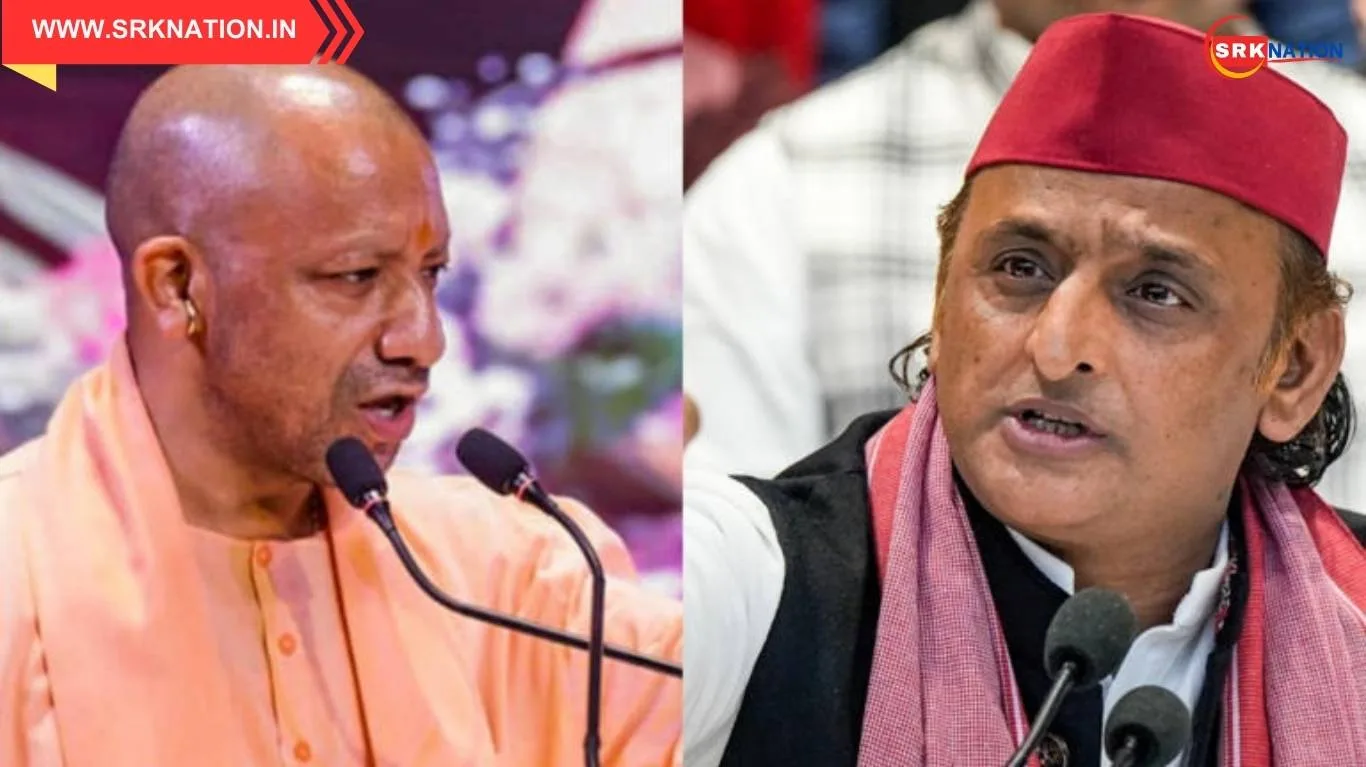
The political rivalry between Uttar Pradesh Chief Minister Yogi Adityanath and Samajwadi Party chief Akhilesh Yadav took center stage once again, with sharp exchanges that underline the intensity of the state’s political discourse. Yogi Adityanath, in a fiery speech, referred to Akhilesh as “Babua who wakes up at noon”, questioning his seriousness in governance. Akhilesh Yadav swiftly hit back, accusing the BJP of failing to deliver on promises and relying on personal attacks instead of addressing real issues.
Background of the Exchange
- Uttar Pradesh politics has long been defined by the rivalry between BJP and SP.
- Yogi Adityanath’s remark was aimed at portraying Akhilesh as disconnected from the people.
- Akhilesh responded by highlighting governance failures and asserting his party’s commitment to development.
- The exchange reflects the heated atmosphere ahead of upcoming electoral battles in the state.
Key Highlights
| Indicator | Details |
|---|---|
| Leaders in Focus | Yogi Adityanath, Akhilesh Yadav |
| Remark by Yogi | “Babua who wakes up at noon” |
| Akhilesh’s Response | Criticism of BJP governance |
| Political Context | Uttar Pradesh rivalry |
| Broader Implication | Intensifying political battle |
Yogi vs Akhilesh Narratives
| Factor | Yogi Adityanath | Akhilesh Yadav | Implication |
|---|---|---|---|
| Leadership Image | Disciplined, early riser | Targeted as casual | Public perception battle |
| Governance Narrative | BJP’s development agenda | BJP’s failures highlighted | Competing claims |
| Campaign Strategy | Personal jibes, discipline | Counter-attacks, policy focus | Heated exchanges |
| Public Sentiment | Appeals to discipline | Appeals to governance issues | Divided electorate |
| Long-Term Outlook | BJP’s continuity | SP’s resurgence | Electoral competition |
Why This Story Matters
- Political Symbolism: Remarks reflect deeper narratives about leadership styles.
- Electoral Strategy: Both leaders are shaping public perception ahead of polls.
- Public Engagement: Exchanges resonate with voters, influencing opinions.
- Media Attention: Headlines amplify the rivalry, keeping it in public discourse.
- Future Outlook: Sets the tone for upcoming campaigns in Uttar Pradesh.
Yogi Adityanath’s Perspective
- Emphasized discipline and seriousness in governance.
- Used the “Babua” remark to question Akhilesh’s credibility.
- Reinforced BJP’s narrative of strong leadership and accountability.
Akhilesh Yadav’s Counter
- Criticized BJP for failing to deliver on promises of jobs, development, and law and order.
- Accused Yogi of resorting to personal attacks instead of addressing governance issues.
- Positioned SP as a party focused on real issues affecting citizens.
Expert Opinions
- Political Analysts: See the exchange as part of a larger strategy to energize party bases.
- Historians: Note that personal jibes have long been part of Indian political culture.
- Critics: Argue that such remarks distract from substantive policy debates.
- Supporters: Applaud leaders for engaging directly with rivals.
Challenges Ahead
- Public Perception: Balancing personal attacks with policy substance.
- Electoral Strategy: Ensuring remarks resonate positively with voters.
- Governance Narrative: Addressing real issues beyond rhetoric.
- Media Scrutiny: Managing coverage that amplifies controversies.
- Opposition Pressure: Navigating counter-attacks effectively.
Opportunities
- Voter Engagement: Using sharp exchanges to energize supporters.
- Narrative Building: Shaping public perception through symbolic remarks.
- Policy Focus: Highlighting governance achievements or failures.
- Media Leverage: Utilizing coverage to amplify party messages.
- Electoral Mobilization: Strengthening grassroots campaigns.
Broader Context of Uttar Pradesh Politics
- Uttar Pradesh remains India’s most politically significant state.
- The rivalry between BJP and SP defines much of its political discourse.
- Personal remarks often serve as shorthand for larger narratives.
- The exchange reflects the intensity of competition ahead of elections.
Sectoral Breakdown of Impact
| Sector | Impact | Strategic Importance |
|---|---|---|
| Politics | Intensified rivalry | Electoral competition |
| Society | Public debates | Voter engagement |
| Media | Amplified coverage | Narrative shaping |
| Governance | Policy scrutiny | Accountability |
| Culture | Symbolic language | Political tradition |
Media Coverage
- Headlines highlight Yogi’s “Babua” remark and Akhilesh’s sharp response.
- Analysts debate the effectiveness of personal jibes in campaigns.
- Coverage emphasizes the rivalry as central to Uttar Pradesh politics.
- The story resonates across political, social, and cultural platforms.
Conclusion
The exchange between Yogi Adityanath and Akhilesh Yadav, centered on the “Babua who wakes up at noon” remark, reflects the intensity of Uttar Pradesh’s political rivalry. While Yogi sought to question Akhilesh’s seriousness, Akhilesh countered by focusing on governance failures. The episode underscores the blend of symbolism, rhetoric, and strategy that defines Indian politics, setting the stage for a heated electoral battle.
Disclaimer
This article is intended for informational purposes only and does not constitute political or professional advice. Statements, policies, and outcomes are subject to change based on evolving circumstances. Readers are encouraged to follow official updates for accurate information. The author and publisher are not responsible for any decisions made based on this article.