

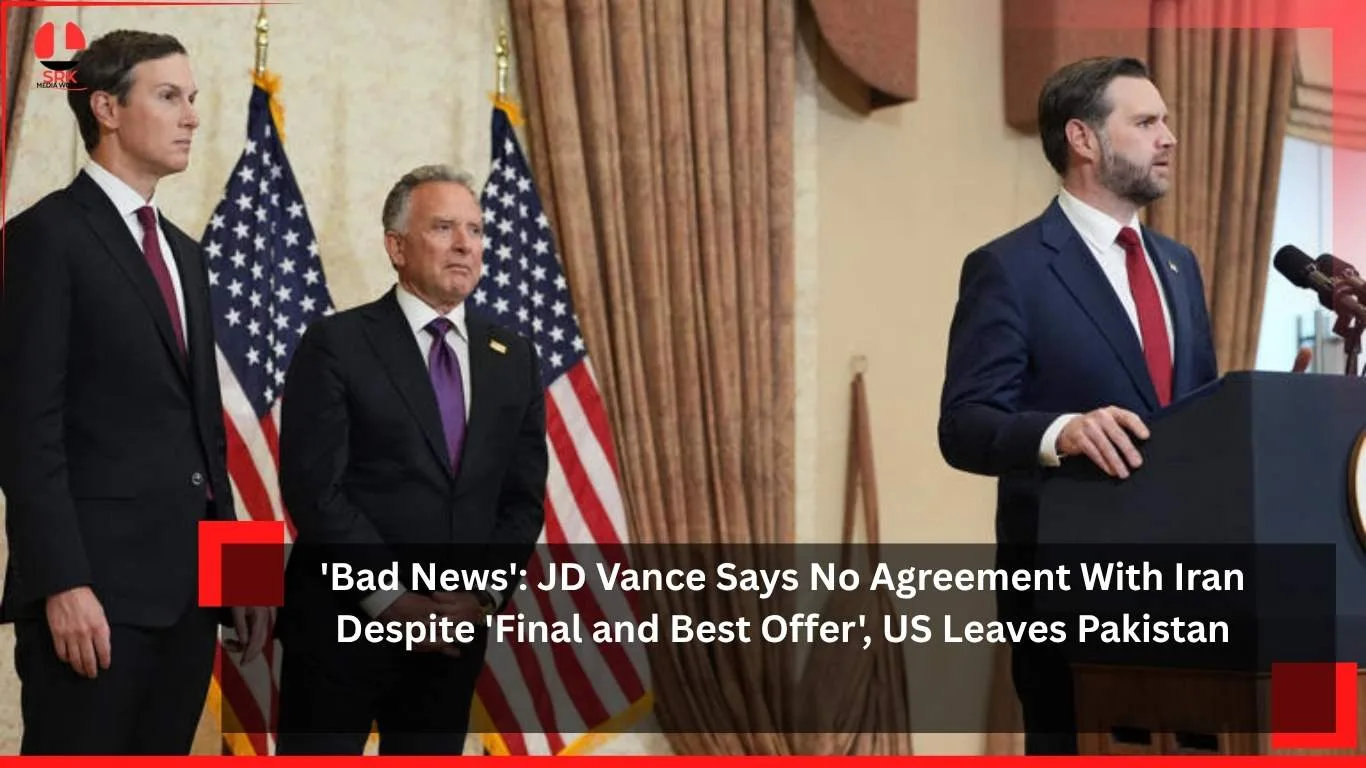
In a development that underscores the fragility of ongoing negotiations, U.S. Senator JD Vance has declared that no agreement has been reached with Iran despite what Washington described as its “final and best offer.” The announcement coincides with reports that the United States has withdrawn its delegation from Pakistan, where talks were being held to address regional tensions and nuclear concerns.
The Breakdown of Talks
According to diplomatic insiders, the U.S. delegation presented what it termed a comprehensive proposal aimed at easing sanctions in exchange for verifiable commitments from Iran. However, Iranian negotiators reportedly rejected the offer, citing concerns over sovereignty and insufficient guarantees.
JD Vance, speaking to reporters, described the outcome as “bad news,” emphasizing that the U.S. had exhausted its options in the current round of negotiations. His remarks suggest that Washington may now reassess its strategy toward Tehran.
US Withdrawal From Pakistan
The decision to leave Pakistan marks a symbolic end to the latest round of talks. Islamabad had positioned itself as a mediator, hoping to facilitate dialogue between Washington and Tehran. The U.S. withdrawal signals frustration and a possible shift toward alternative diplomatic or economic measures.
Iran’s Position
Iran has consistently demanded the lifting of sanctions and access to frozen assets. While the U.S. offer reportedly included partial relief, Tehran insisted on broader concessions. The rejection highlights the deep mistrust between the two nations.
Pakistan’s Role
Pakistan’s hosting of the talks was seen as an attempt to elevate its diplomatic profile. The U.S. departure, however, raises questions about Islamabad’s ability to mediate effectively in complex regional disputes.
Comparative Analysis of Stakeholders
| Stakeholder | Position | Potential Gain | Potential Risk |
|---|---|---|---|
| United States | Offered “final and best” deal | Possible easing of tensions | Failure undermines credibility |
| Iran | Rejected proposal | Maintains sovereignty | Continued sanctions, isolation |
| Pakistan | Mediator role | Diplomatic recognition | Loss of influence after U.S. exit |
| Regional Allies | Observing closely | Stability if deal succeeds | Instability if talks collapse |
This comparison shows how each stakeholder faces both opportunities and risks in the aftermath of the failed negotiations.
Pivot Analysis: Implications of Failed Talks
| Dimension | Before Talks | After Talks | Implications |
|---|---|---|---|
| US-Iran Relations | Tentative dialogue | Renewed hostility | Possible escalation |
| Pakistan’s Diplomacy | Rising mediator role | Undermined | Reduced credibility |
| Regional Stability | Fragile | More uncertain | Risk of conflict |
| Global Perception | Hope for progress | Disappointment | Questions about U.S. strategy |
The pivot analysis highlights how the breakdown of talks reshapes diplomatic dynamics across the region.
Domestic Reactions in the US
JD Vance’s remarks reflect growing frustration within Washington. Supporters of a hardline approach argue that Iran’s rejection proves the futility of concessions, while advocates of diplomacy warn that abandoning talks could worsen tensions.
Global Implications
The failure to reach an agreement may impact global energy markets, trade flows, and security alignments. Allies may question Washington’s ability to secure meaningful deals, while adversaries could interpret the breakdown as an opportunity to expand influence.
Possible Outcomes
- Escalation: The U.S. adopts tougher sanctions or military posturing.
- Renewed Diplomacy: Talks resume under new conditions, possibly with different mediators.
- Regional Realignment: Other powers, such as China or Russia, step in to fill the diplomatic void.
- Continued Stalemate: Sanctions remain, with no progress toward resolution.
Conclusion
JD Vance’s declaration that no agreement was reached with Iran, despite Washington’s “final and best offer,” underscores the challenges of diplomacy in a volatile region. The U.S. withdrawal from Pakistan further complicates efforts to mediate, leaving the future of negotiations uncertain. The outcome highlights the enduring mistrust between Washington and Tehran and raises questions about the next steps in U.S. foreign policy.
Disclaimer: This article is based on reported developments and diplomatic analysis. It does not confirm the authenticity of specific negotiations but explores their potential implications. The content is intended for informational purposes only, highlighting how failed talks can shape international relations. Readers should interpret the situation with caution, as official details remain limited.