



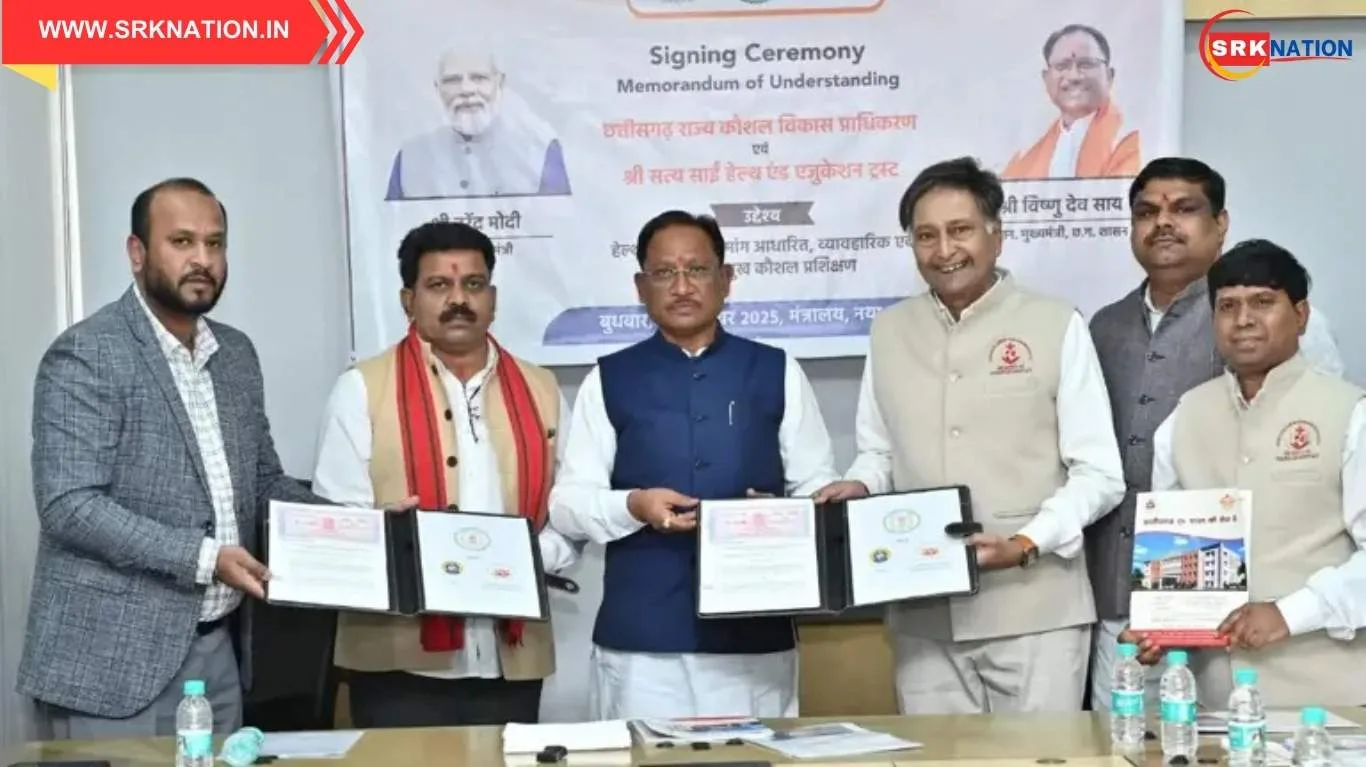
In a landmark initiative aimed at strengthening healthcare infrastructure and empowering the youth, the Government of Chhattisgarh has signed a Memorandum of Understanding (MoU) with the Sri Sathya Sai Trust. The collaboration focuses on enhancing healthcare skills, creating employment opportunities, and building a sustainable ecosystem for medical services across the state.
This partnership is expected to transform the healthcare landscape in Chhattisgarh by providing skill development programs, vocational training, and employment avenues for young professionals. The initiative also aligns with the state’s broader vision of inclusive growth, ensuring that healthcare services reach rural and underserved communities.
Background of the MoU
- The MoU was signed to address the dual challenges of healthcare skill shortages and youth unemployment.
- The Sri Sathya Sai Trust, known for its philanthropic work in education and healthcare, will provide expertise, training modules, and infrastructure support.
- The Chhattisgarh government aims to leverage this collaboration to train thousands of young people in healthcare-related fields.
- The initiative is part of the state’s long-term strategy to improve healthcare delivery and create sustainable employment opportunities.
Key Highlights of the MoU
| Indicator | Details |
|---|---|
| Parties Involved | Government of Chhattisgarh & Sri Sathya Sai Trust |
| Objective | Boost healthcare skills and youth employment |
| Focus Areas | Skill development, vocational training, healthcare infrastructure |
| Beneficiaries | Young professionals, rural communities, healthcare institutions |
| Broader Impact | Strengthened healthcare ecosystem, reduced unemployment |
Impact of MoU on Chhattisgarh
| Factor | Positive Impact | Challenges | Long-Term Implication |
|---|---|---|---|
| Healthcare Skills | Improved training and expertise | Need for continuous updates | Stronger medical workforce |
| Youth Employment | New job opportunities in healthcare | Matching skills with demand | Reduced unemployment rates |
| Rural Healthcare | Better access to trained professionals | Infrastructure gaps | Improved healthcare delivery |
| Government Policy | Strengthens welfare initiatives | Requires sustained funding | Builds inclusive growth model |
| Public Sentiment | Positive response to collaboration | Expectations of quick results | Trust in government initiatives |
Why the MoU Matters
- Healthcare Transformation: The collaboration will address skill shortages and improve service delivery.
- Youth Empowerment: Employment opportunities in healthcare will reduce unemployment and enhance livelihoods.
- Rural Development: The initiative ensures that healthcare services reach underserved areas.
- Public-Private Partnership: The MoU reflects the growing importance of partnerships in achieving social goals.
- Sustainable Growth: By focusing on skills and employment, the initiative supports long-term development.
Strategic Objectives of the MoU
| Attribute | Details |
|---|---|
| Skill Development | Training programs for nurses, paramedics, and technicians |
| Employment Creation | Job opportunities in hospitals, clinics, and healthcare centers |
| Infrastructure Support | Establishment of training centers and healthcare facilities |
| Community Outreach | Awareness programs in rural and tribal areas |
| Long-Term Vision | Build a self-sustaining healthcare ecosystem |
The MoU aims to create a holistic framework that addresses both immediate needs and long-term goals.
Expert Opinions
- Healthcare Analysts: Highlight the importance of skill development in bridging gaps in medical services.
- Economists: Emphasize the role of employment generation in boosting state GDP.
- Policy Experts: Note that partnerships with trusts and NGOs strengthen government initiatives.
- Citizens: Express optimism about improved healthcare access and job opportunities.
Challenges Ahead
- Infrastructure Gaps: Ensuring adequate facilities in rural areas.
- Funding Requirements: Sustaining long-term programs requires consistent investment.
- Skill Matching: Aligning training with industry demands.
- Monitoring Impact: Measuring success through tangible outcomes.
- Community Engagement: Building trust among rural populations.
Opportunities for Chhattisgarh
- Expand Healthcare Workforce: Train thousands of professionals to meet growing demand.
- Boost Employment: Create jobs in hospitals, clinics, and allied services.
- Strengthen Rural Healthcare: Ensure equitable access to medical services.
- Promote Public-Private Partnerships: Encourage more collaborations with NGOs and trusts.
- Enhance State Reputation: Position Chhattisgarh as a model for healthcare innovation.
Broader Context of Healthcare in India
- India faces challenges in healthcare delivery, particularly in rural and tribal regions.
- Skill shortages among nurses, paramedics, and technicians hinder effective service delivery.
- Partnerships between governments and trusts are increasingly seen as solutions to bridge these gaps.
- The Chhattisgarh initiative reflects a broader trend of leveraging collaborations for social impact.
Public Sentiment
- Citizens welcomed the MoU, seeing it as a step toward better healthcare and employment.
- Youth expressed optimism about new opportunities in healthcare.
- Social media discussions highlighted the importance of skill development in addressing unemployment.
- Overall sentiment remains positive, with expectations of tangible results in the near future.
Conclusion
The MoU signed between the Government of Chhattisgarh and the Sri Sathya Sai Trust marks a significant step toward boosting healthcare skills and youth employment. By focusing on training, infrastructure, and community outreach, the initiative promises to transform healthcare delivery and create sustainable livelihoods. While challenges such as infrastructure and funding remain, the opportunities for growth and empowerment are immense. This collaboration reflects the power of partnerships in driving inclusive development and sets a benchmark for other states to follow.
Disclaimer
This article is intended for informational purposes only and does not constitute official policy or investment advice. Statements, public sentiments, and government initiatives are subject to change based on evolving circumstances. Readers are encouraged to follow official updates for accurate information. The author and publisher are not responsible for any decisions made based on this article.