




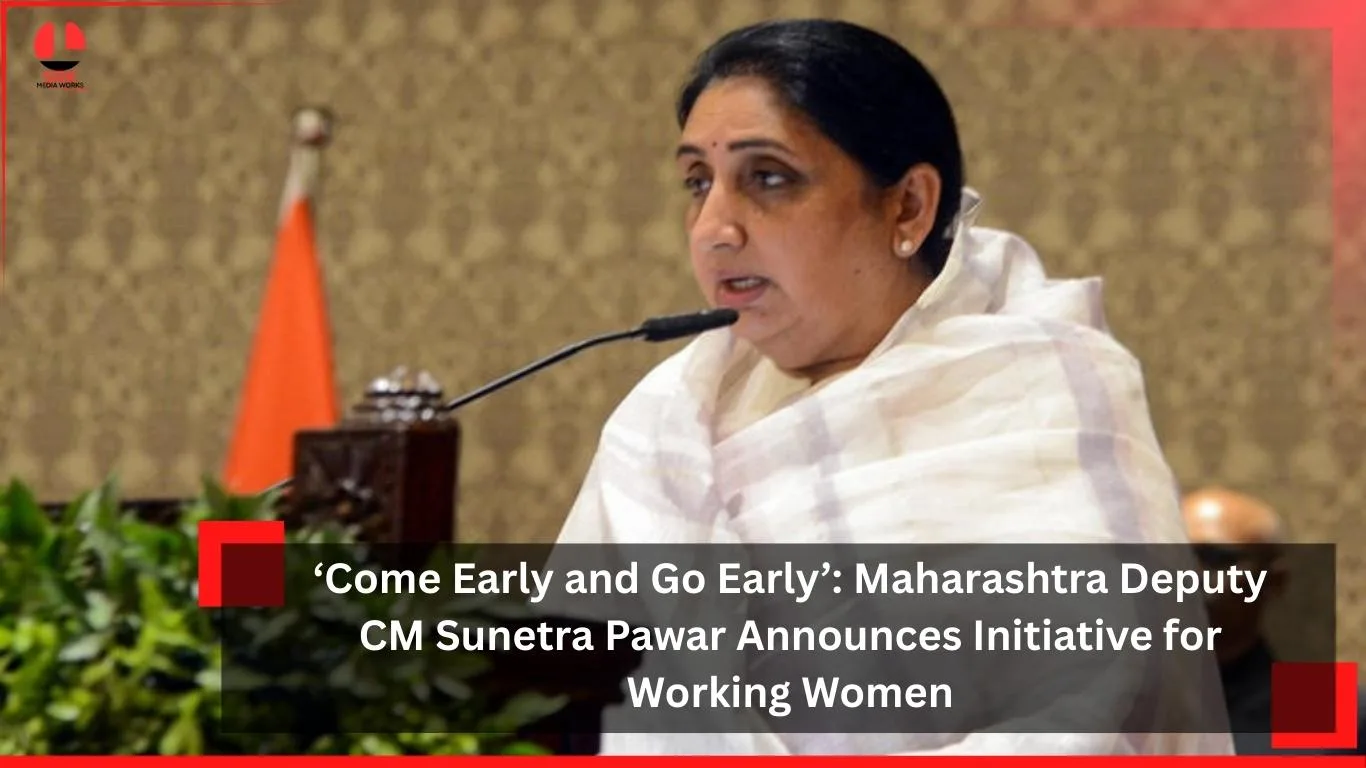
Maharashtra Deputy Chief Minister Sunetra Pawar has unveiled a new initiative titled “Come Early and Go Early” aimed at improving workplace flexibility for women employees across the state. The program is designed to empower working women by allowing them to start their day earlier and finish work earlier, thereby balancing professional responsibilities with family and personal commitments.
The Vision Behind the Initiative
Sunetra Pawar emphasized that the scheme is not just about adjusting office hours but about creating a gender-sensitive workplace culture. Many women juggle multiple roles—professional, caregiver, homemaker—and often face challenges in managing time. By enabling flexible hours, the government hopes to reduce stress, improve productivity, and encourage more women to remain in the workforce.
Key Features of the Initiative
- Flexible Timings – Women employees can opt to begin work earlier than standard office hours and leave earlier.
- Work-Life Balance – The initiative recognizes the dual responsibilities of women and aims to ease their daily schedules.
- Pilot Implementation – Initially, the scheme will be tested in government departments and later extended to private organizations.
- Encouragement for Employers – Companies will be encouraged to adopt similar policies to create inclusive workplaces.
- Monitoring & Feedback – Regular reviews will be conducted to assess the impact on productivity and employee satisfaction.
Comparative Workplace Policies
| Country/State | Policy Introduced | Impact on Women Workforce |
|---|---|---|
| Maharashtra (India) | Flexible early hours initiative | Better work-life balance, reduced stress |
| Kerala (India) | Work-from-home options | Increased participation in IT sector |
| Japan | Shorter workdays for mothers | Improved retention in corporate jobs |
| Sweden | Six-hour workday experiment | Higher productivity, employee satisfaction |
Why This Matters
The initiative comes at a time when women’s participation in the workforce is crucial for India’s economic growth. According to labor statistics, female workforce participation has been lower compared to global averages. Policies like “Come Early and Go Early” can help bridge this gap by making workplaces more accommodating.
Public and Corporate Response
The announcement has been welcomed by women’s organizations, employee unions, and corporate leaders. Many believe that such policies will encourage women to pursue careers without compromising family responsibilities. Some companies have already expressed interest in adopting similar flexible work models.
Analytical Perspective
From an analytical standpoint, the initiative reflects a progressive approach to gender equality. While traditional workplace structures often fail to account for women’s unique challenges, flexible policies can create a more inclusive environment. This move also aligns with global trends where countries are experimenting with shorter workweeks, flexible hours, and hybrid models.
Key Themes Emerging
| Theme | Explanation |
|---|---|
| Gender Inclusivity | Recognizing women’s dual roles and supporting them through workplace reforms |
| Work-Life Balance | Allowing flexibility to reduce stress and improve productivity |
| Policy Innovation | Introducing new models of working hours in government and private sectors |
| Economic Empowerment | Encouraging more women to join and stay in the workforce |
Long-Term Implications
If successfully implemented, the initiative could:
- Increase women’s workforce participation.
- Improve employee satisfaction and retention.
- Encourage private companies to adopt similar policies.
- Strengthen Maharashtra’s reputation as a progressive state in gender equality.
Conclusion
Sunetra Pawar’s “Come Early and Go Early” initiative is a landmark step in creating a supportive environment for working women. By recognizing the importance of flexible hours, the Maharashtra government is setting an example for other states and organizations. This policy not only empowers women but also contributes to building a more inclusive and productive workforce.
Disclaimer
This article is a journalistic analysis based on publicly available information and government statements. It is intended for informational purposes only and does not represent endorsement of any political party or leader. Readers should interpret the content as part of ongoing social and economic discourse rather than a definitive policy evaluation.