





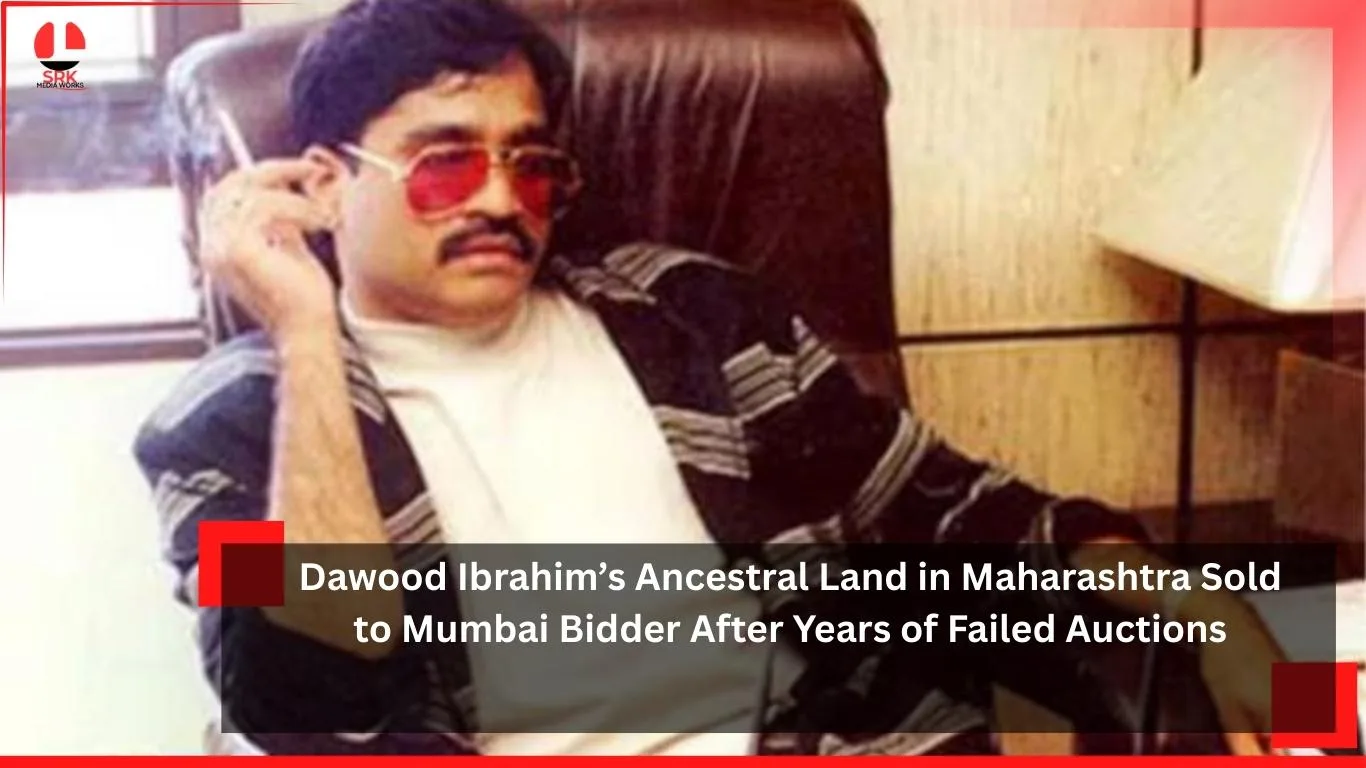
The long-standing saga surrounding Dawood Ibrahim’s ancestral property in Maharashtra has finally reached a conclusion. After years of failed auctions and repeated attempts by authorities to dispose of the land, a Mumbai-based bidder has successfully purchased the property. This marks a significant development in the government’s efforts to liquidate assets linked to the underworld figure, ensuring that such properties are brought under lawful ownership and productive use.
Background of the Property
The land, located in Ratnagiri district of Maharashtra, has been under government control for decades. It was seized as part of the crackdown on assets linked to Dawood Ibrahim, who remains one of India’s most wanted fugitives. Despite multiple auction attempts, the property failed to attract buyers due to its controversial history, security concerns, and the stigma attached to owning land associated with the underworld.
Years of Failed Auctions
Authorities had organized several auctions over the past decade, but bidders often withdrew at the last moment. Reasons included:
- Fear of retaliation from criminal networks.
- Concerns about legal disputes and ownership challenges.
- Social stigma of being associated with Dawood Ibrahim’s name.
This time, however, the auction concluded successfully, with a Mumbai-based bidder stepping forward to acquire the land.
Details of the Successful Bid
The bidder, whose identity has not been publicly disclosed, reportedly offered a competitive price that met the government’s expectations. The sale is seen as a breakthrough, not only in terms of revenue generation but also in sending a strong message that criminal-linked assets can be reclaimed and repurposed.
| Auction Attempt | Year | Outcome | Reason for Failure |
|---|---|---|---|
| First Attempt | 2015 | Failed | No bidders |
| Second Attempt | 2017 | Failed | Withdrawal due to security concerns |
| Third Attempt | 2019 | Failed | Legal complications |
| Fourth Attempt | 2021 | Failed | Lack of interest |
| Fifth Attempt | 2026 | Successful | Mumbai bidder purchased |
Government’s Perspective
Officials have hailed the sale as a landmark achievement. The successful auction demonstrates the government’s determination to ensure that properties linked to criminal figures do not remain idle or symbolic of unlawful influence.
Public Reaction
The public response has been mixed. While many see the sale as a positive step toward justice and accountability, others remain skeptical about whether the property will be used productively. Some locals expressed relief that the land would finally be put to use, while others worried about lingering associations with Dawood Ibrahim’s legacy.
Economic and Social Implications
The sale of the property carries several implications:
- Revenue Generation: The government earns revenue from the auction, which can be redirected toward development projects.
- Symbolic Victory: Demonstrates that criminal assets can be reclaimed by the state.
- Boost to Real Estate Confidence: Encourages bidders to participate in future auctions of seized properties.
- Community Relief: Local residents no longer have to live near land associated with criminal notoriety.
Comparative Analysis of Seized Properties
India has seized multiple properties linked to Dawood Ibrahim and other underworld figures. However, selling them has often proven difficult.
| Property Location | Status | Auction Attempts | Current Outcome |
|---|---|---|---|
| Ratnagiri, Maharashtra | Sold | 5 | Purchased by Mumbai bidder |
| Mumbai (Nagpada) | Pending | 3 | Awaiting successful bid |
| Pune | Failed | 2 | No bidders |
| Delhi | Seized | 1 | Under litigation |
Challenges in Auctioning Criminal Assets
The case highlights broader challenges faced by authorities:
- Legal Disputes: Ownership claims often complicate auctions.
- Security Concerns: Fear of retaliation deters bidders.
- Market Stigma: Properties linked to notorious figures carry social stigma.
- Valuation Issues: Determining fair market value is difficult due to limited interest.
Future Outlook
The successful sale of Dawood Ibrahim’s ancestral land may pave the way for smoother auctions of other seized properties. Authorities are expected to strengthen security measures and awareness campaigns to encourage participation.
Symbolism of the Sale
Beyond financial aspects, the sale represents a symbolic victory against organized crime. It sends a message that no matter how powerful criminal figures may seem, their assets can be reclaimed and reintegrated into lawful society.
Conclusion
The sale of Dawood Ibrahim’s ancestral land in Maharashtra to a Mumbai bidder marks the end of a long chapter of failed auctions and uncertainty. It reflects the government’s persistence in reclaiming criminal-linked assets and sets a precedent for future auctions. While challenges remain, this successful transaction is a step toward justice, accountability, and the productive use of seized properties.
Disclaimer: This article is intended for informational purposes only. It provides an overview of the auction and sale of Dawood Ibrahim’s ancestral land in Maharashtra. The content does not represent official government communication, and readers are advised to consult verified government notifications for precise details.