



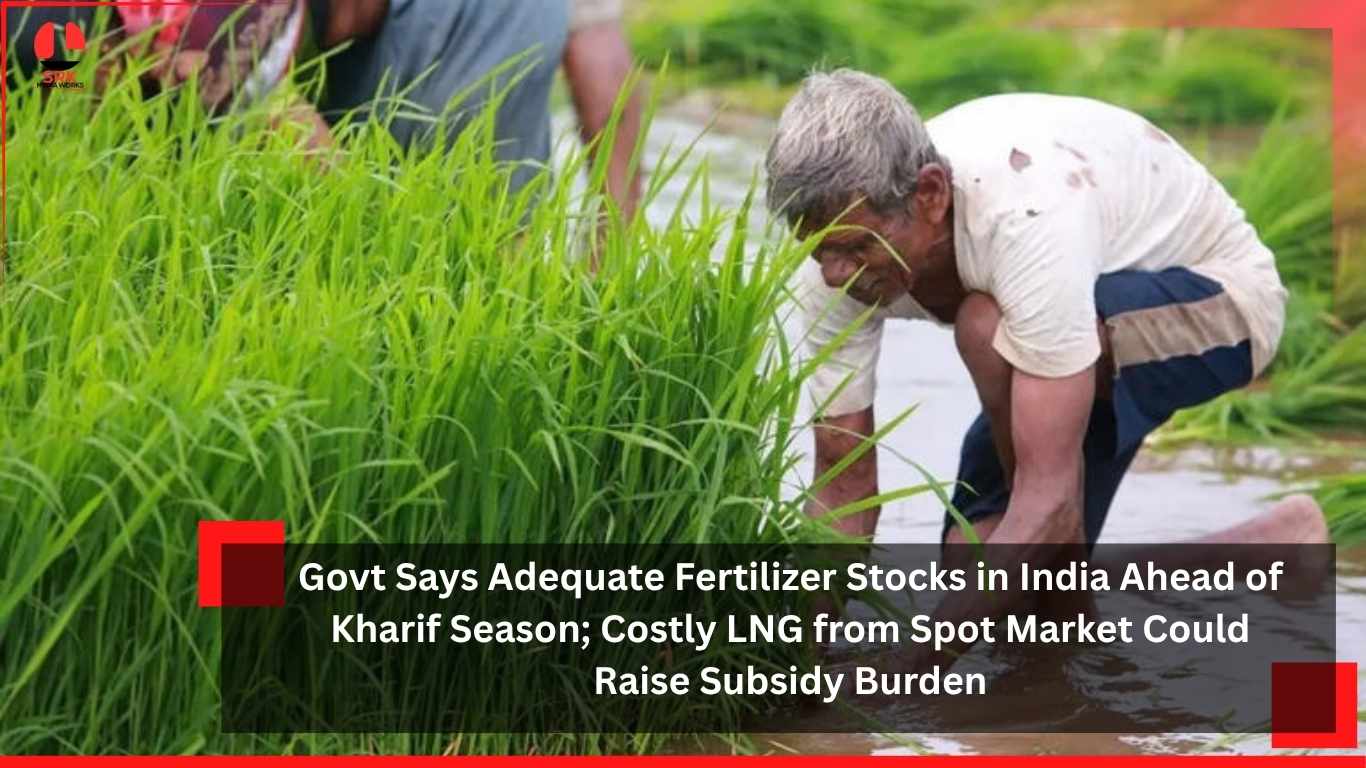
The Government of India has assured farmers that adequate fertilizer stocks are available across the country ahead of the upcoming Kharif season. However, officials have also cautioned that the rising cost of imported Liquefied Natural Gas (LNG) from the spot market could significantly increase the subsidy burden on the exchequer. This dual narrative highlights both preparedness and financial challenges as India gears up for one of its most crucial agricultural cycles.
Fertilizer Availability: A Positive Outlook
The Ministry of Chemicals and Fertilizers has confirmed that sufficient stocks of urea, DAP (Di-Ammonium Phosphate), MOP (Muriate of Potash), and complex fertilizers are in place. Distribution channels have been streamlined to ensure timely supply to farmers.
Key highlights:
- Urea stock: Adequate reserves maintained across states.
- DAP and MOP: Imports secured to meet demand.
- Complex fertilizers: Production boosted domestically.
- Logistics: Rail and road networks prepared for distribution.
This assurance is critical as the Kharif season, which begins with the onset of monsoon, accounts for nearly half of India’s annual food grain production.
Rising LNG Costs and Subsidy Concerns
While fertilizer availability is secure, the government faces a financial challenge due to costly LNG imports. Natural gas is a key raw material for urea production, and India imports a significant portion of its LNG requirements.
Spot market prices have surged, making fertilizer production more expensive. Since the government provides subsidies to keep fertilizer prices affordable for farmers, higher input costs translate into a heavier subsidy burden.
Timeline of Developments
| Date | Event | Impact |
|---|---|---|
| Early 2026 | Govt assures adequate fertilizer stocks | Farmers gain confidence |
| March 2026 | LNG prices rise in spot market | Production costs increase |
| April 2026 | Preparations for Kharif season | Subsidy burden projected to grow |
| Upcoming | Policy adjustments expected | Possible fiscal strain |
Comparative Analysis: Fertilizer Supply vs. Subsidy Burden
| Factor | Fertilizer Supply | Subsidy Burden |
|---|---|---|
| Current Status | Adequate stocks available | Rising due to costly LNG |
| Impact on Farmers | Positive, assured availability | Neutral, prices remain subsidized |
| Impact on Govt | Logistical success | Fiscal pressure increases |
| Long-term Outlook | Stable with imports and production | Dependent on global LNG prices |
Farmers’ Perspective
For farmers, the assurance of fertilizer availability is a relief. Timely access to inputs is crucial for sowing during the Kharif season. However, they remain insulated from rising production costs due to subsidies. The government’s challenge lies in balancing affordability for farmers with fiscal sustainability.
Policy Options Ahead
To manage the rising subsidy burden, the government may consider:
- Diversifying energy sources: Expanding domestic natural gas production.
- Boosting renewable alternatives: Encouraging bio-fertilizers and organic farming.
- Negotiating long-term LNG contracts: Reducing dependence on volatile spot markets.
- Efficiency in subsidy distribution: Targeting benefits to small and marginal farmers.
Broader Implications
The situation underscores the interconnectedness of global energy markets and domestic agriculture. Rising LNG prices not only affect fertilizer production but also ripple into fiscal policy, trade balances, and food security.
Conclusion
India enters the Kharif season with adequate fertilizer stocks, ensuring farmers can sow crops without disruption. However, the rising cost of LNG from the spot market poses a challenge, potentially increasing the government’s subsidy burden. Balancing agricultural support with fiscal responsibility will be key in the months ahead.
Disclaimer
This article is based on reported government statements and independent economic analysis. It does not confirm or deny specific policy decisions. Readers should treat the content as interpretative reporting rather than definitive government documentation.