



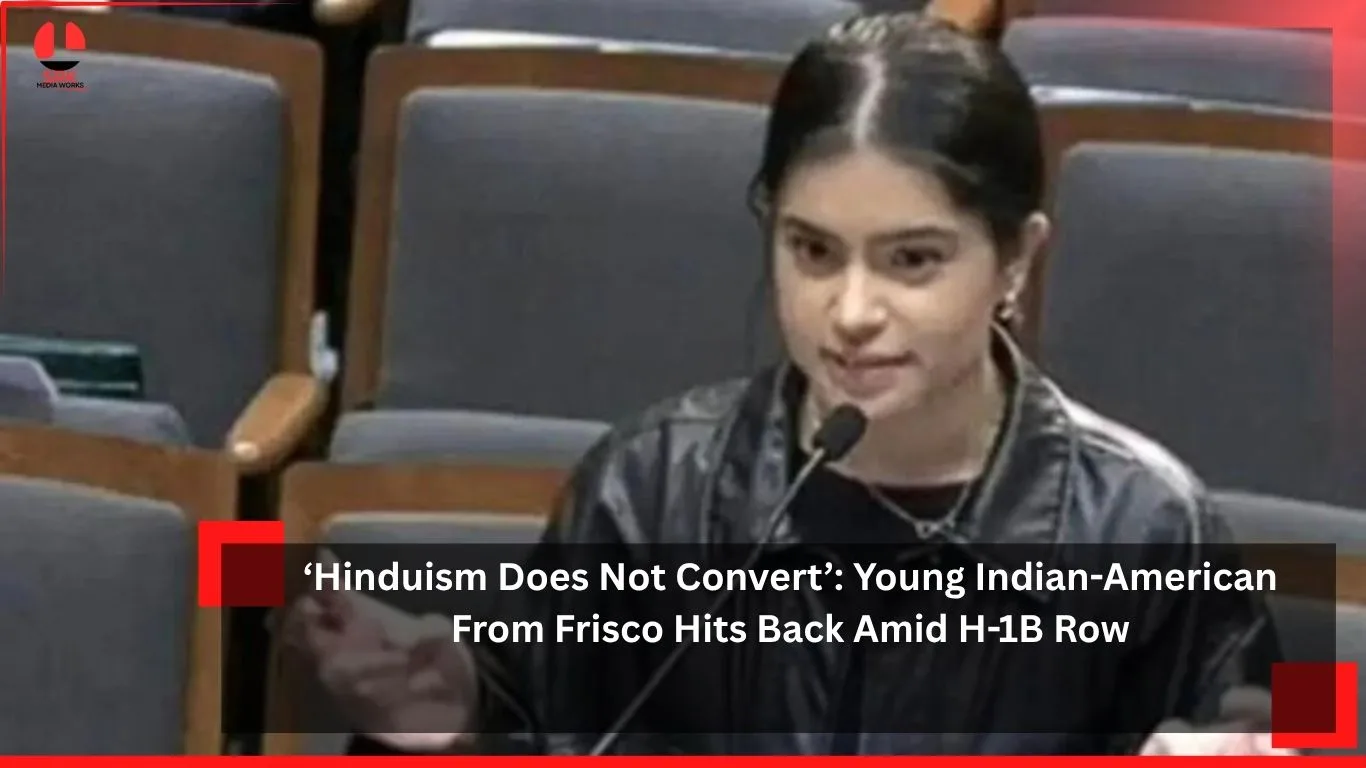
A young Indian-American from Frisco, Texas, has sparked widespread debate after firmly stating that “Hinduism does not convert,” in response to heated discussions surrounding the H-1B visa row and broader cultural identity issues. His remarks have resonated across communities, highlighting the intersection of immigration, religion, and identity in the United States.
Context of the Statement
The H-1B visa program, which allows skilled professionals from countries like India to work in the U.S., has long been a subject of political and social debate. Recently, tensions around immigration policies and cultural integration have reignited discussions about the role of Indian-Americans in American society. Against this backdrop, the young professional’s statement defending Hinduism’s non-conversion ethos has gained traction.
Hinduism’s Core Philosophy
Hinduism, one of the world’s oldest religions, is often described as a way of life rather than a proselytizing faith. Unlike many religions that actively seek converts, Hinduism emphasizes personal spiritual journeys, philosophical inquiry, and cultural traditions. The young Indian-American’s assertion reflects this ethos, reinforcing the idea that Hindu identity is rooted in heritage and practice rather than conversion.
Immigration and Identity
Indian-Americans, particularly those on H-1B visas, often face challenges balancing cultural identity with integration into American society. The statement “Hinduism does not convert” serves as a reminder of how immigrant communities preserve their traditions while navigating new environments.
Comparative Analysis of Religious Conversion Practices
| Religion | Approach to Conversion | Global Spread | Cultural Identity |
|---|---|---|---|
| Hinduism | No formal conversion | India, diaspora | Heritage-based |
| Christianity | Active evangelism | Global | Faith-based |
| Islam | Invitation to faith | Global | Faith-based |
| Buddhism | Open to adoption | Asia, global | Philosophical |
| Judaism | Limited conversion | Global | Heritage & faith |
This comparison highlights Hinduism’s unique position as a non-converting religion, contrasting with traditions that actively seek new adherents.
Pivot in Immigration Debate
The H-1B row has often focused on economic and political dimensions, but cultural identity is increasingly becoming part of the conversation. The young Indian-American’s remarks pivot the debate toward questions of assimilation, heritage, and the preservation of traditions in immigrant communities.
Challenges Faced by Indian-Americans
- Visa Uncertainty: Constant changes in H-1B policies create instability.
- Cultural Misunderstandings: Stereotypes about religion and identity often lead to misrepresentation.
- Generational Divide: Younger Indian-Americans balance traditional values with modern American lifestyles.
- Community Representation: Ensuring that Indian-American voices are heard in policy debates remains a challenge.
Sentiment Among Indian-American Communities
| Generation | Identity Expression | Cultural Preservation | Outlook |
|---|---|---|---|
| First Generation | Strong ties to India | High | Cautious |
| Second Generation | Hybrid identity | Moderate | Optimistic |
| Third Generation | American identity | Low | Integrated |
This table shows how identity evolves across generations, with younger Indian-Americans often adopting hybrid identities while still respecting cultural roots.
Broader Implications
The statement “Hinduism does not convert” carries implications beyond religion. It reflects:
- Resilience of Cultural Identity: Immigrant communities maintain traditions despite external pressures.
- Debate on Assimilation: Raises questions about how much immigrants should adapt versus preserve heritage.
- Political Discourse: Highlights the role of religion and culture in immigration debates.
Conclusion
The young Indian-American’s assertion that “Hinduism does not convert” amid the H-1B row is more than a religious statement—it is a declaration of identity, heritage, and resilience. As immigration debates continue in the U.S., such voices remind society of the importance of respecting diverse traditions while navigating complex cultural landscapes.
Disclaimer
This article is intended for informational purposes only and does not represent official policy positions. The content is based on general observations of immigration, religion, and cultural identity. Readers should note that statements made by individuals reflect personal perspectives and are subject to interpretation.