

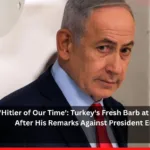
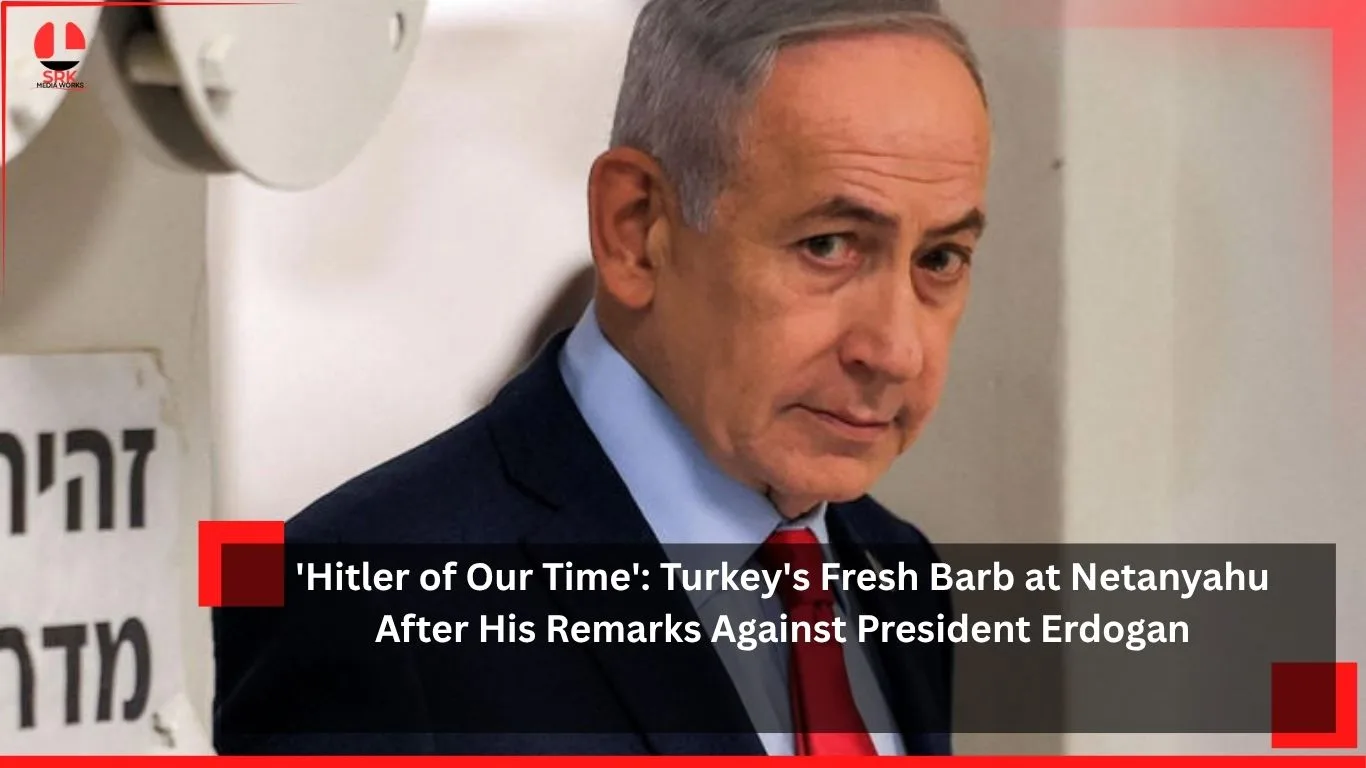
Tensions between Turkey and Israel have escalated sharply after Turkish officials lashed out at Israeli Prime Minister Benjamin Netanyahu, branding him the “Hitler of our time.” The remark came in response to Netanyahu’s recent criticism of Turkish President Recep Tayyip Erdogan, intensifying a war of words that reflects the deepening rift between Ankara and Tel Aviv amid the ongoing West Asia crisis.
The Exchange of Remarks
Netanyahu’s comments against Erdogan were described by Turkish officials as “provocative and unacceptable.” In retaliation, Ankara accused Netanyahu of committing atrocities against Palestinians and likened his leadership style to that of Adolf Hitler. The use of such strong language underscores the severity of the diplomatic fallout.
Turkey’s statement reflects its longstanding position as a vocal critic of Israel’s policies in Gaza and the West Bank. By invoking historical parallels, Ankara aims to highlight what it perceives as the gravity of Israel’s actions.
Historical Context of Turkey-Israel Relations
Turkey and Israel once enjoyed relatively strong ties, particularly in trade and defense cooperation. However, relations soured after the Gaza conflicts and the 2010 Mavi Marmara incident, when Israeli forces intercepted a Turkish aid flotilla bound for Gaza. Since then, Ankara has consistently positioned itself as a defender of Palestinian rights, often clashing with Tel Aviv.
Regional Reactions
The latest exchange has drawn mixed responses across the region:
- Palestinian Authorities: Welcomed Turkey’s strong stance, viewing it as moral support.
- Gulf States: Expressed concern about escalating rhetoric but remained cautious.
- United States: Urged restraint, warning that inflammatory language could worsen tensions.
- European Union: Called for diplomatic engagement rather than verbal attacks.
Comparative Analysis of Stakeholders
| Stakeholder | Position | Potential Gain | Potential Risk |
|---|---|---|---|
| Turkey | Strong criticism of Netanyahu | Regional support, domestic approval | Diplomatic isolation from Israel’s allies |
| Israel | Criticism of Erdogan | Rallying domestic support | Heightened hostility with Turkey |
| Palestinians | Support Turkey’s stance | Moral backing | Limited practical impact |
| US/EU | Urge restraint | Stability in diplomacy | Reduced influence if ignored |
| Gulf States | Neutral caution | Maintain balance | Pressure to take sides |
This comparison highlights how each stakeholder navigates the fallout from the Turkey-Israel confrontation.
Pivot Analysis: Impact of Turkey’s Remarks
| Dimension | Before Turkey’s Statement | After Turkey’s Statement | Implications |
|---|---|---|---|
| Turkey-Israel Relations | Hostile but manageable | Intensified hostility | Reduced prospects for reconciliation |
| Regional Diplomacy | Focused on Israel-Palestine | Expanded to include Turkey-Israel clash | Broader conflict narrative |
| Global Perception | Israel criticized by some | Israel compared to Hitler | Polarized views |
| Domestic Politics (Turkey) | Strong nationalist rhetoric | Reinforced by remarks | Erdogan gains domestic support |
The pivot analysis shows how Turkey’s remarks escalate tensions and broaden the scope of the crisis.
Strategic Implications
- For Turkey: The strong language bolsters Erdogan’s image as a defender of Muslim causes but risks alienating Western allies.
- For Israel: Netanyahu’s criticism of Erdogan reinforces his hardline stance but deepens hostility with Ankara.
- For the Region: The exchange adds another layer of tension to an already fragile situation, complicating efforts at peace.
Public and Media Reaction
In Turkey, the remarks have been widely praised, with commentators framing Erdogan as a leader standing up to Israel. In Israel, Netanyahu’s supporters view the criticism of Erdogan as justified, while opponents warn that escalating rhetoric could isolate Israel further. Global media has highlighted the exchange as evidence of widening fault lines in West Asia.
Possible Outcomes
- Escalation: Continued verbal attacks deepen hostility and risk diplomatic breakdown.
- Diplomatic Silence: Both sides avoid further confrontation, letting tensions cool.
- Regional Polarization: Other nations are forced to take sides, complicating diplomacy.
- Global Mediation: Larger powers intervene to prevent escalation and restore dialogue.
Conclusion
Turkey’s branding of Netanyahu as the “Hitler of our time” marks a new low in Ankara-Tel Aviv relations. The exchange reflects deep-rooted mistrust and ideological divergence, adding complexity to the West Asia crisis. Whether the situation escalates or cools will depend on the choices made by both governments and the broader international community.
Disclaimer: This article is based on reported developments and diplomatic analysis. It does not endorse any political party or government. The content is intended for informational purposes only, highlighting how diplomatic exchanges shape international relations. Readers should interpret the situation within the broader framework of global politics.