





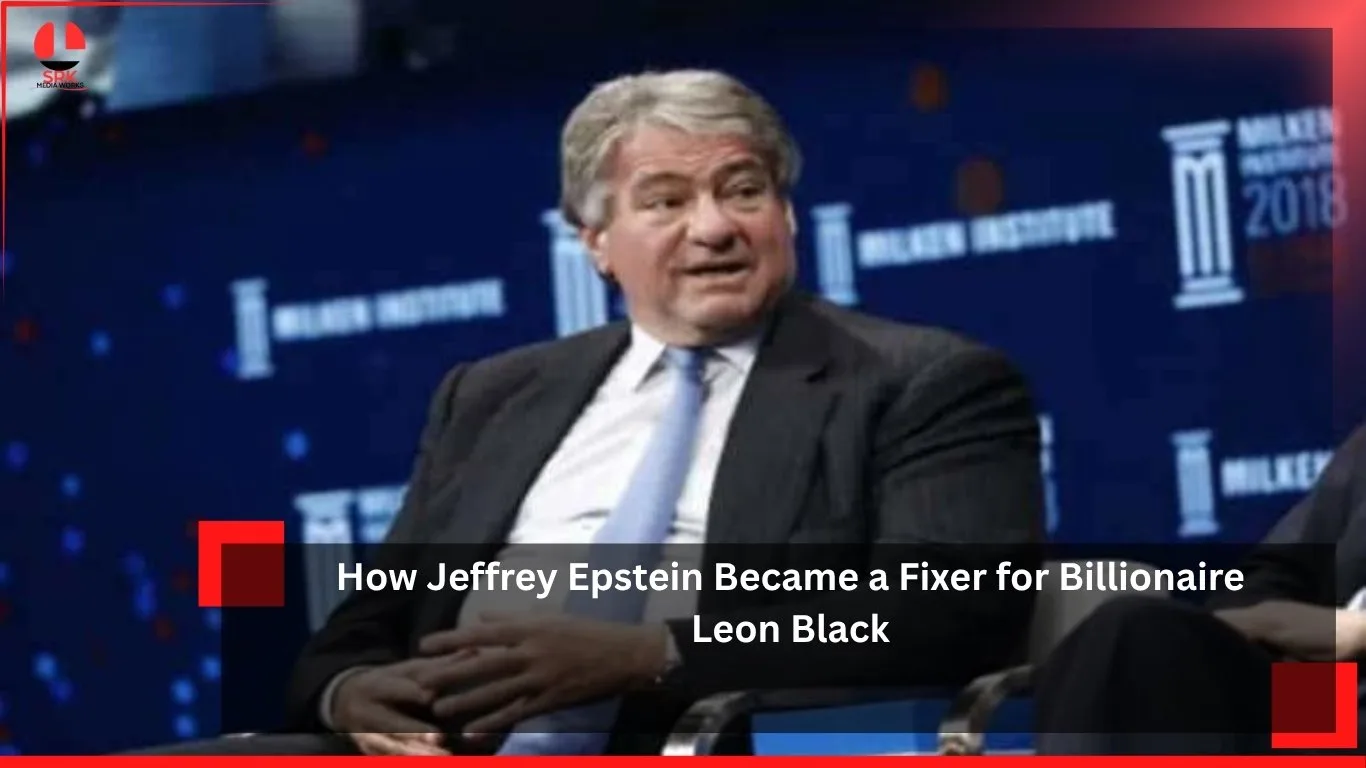
The Jeffrey Epstein scandal continues to reverberate across the financial and political world, with new revelations shedding light on his role as a “fixer” for billionaire Leon Black, co-founder of Apollo Global Management. Epstein’s involvement with Black has raised serious questions about the intersection of wealth, influence, and secrecy in high finance.
Background: Epstein’s Rise as a Power Broker
Jeffrey Epstein was not just a financier accused of heinous crimes; he was also a man who cultivated relationships with some of the world’s most powerful figures. His ability to provide “solutions” for wealthy clients made him a sought-after intermediary. For Leon Black, Epstein reportedly played a role in managing sensitive financial and personal matters, positioning himself as a behind-the-scenes fixer.
Leon Black’s Connection to Epstein
Leon Black, a billionaire investor and philanthropist, came under scrutiny when reports revealed that he had paid Epstein hundreds of millions of dollars for advisory services. These payments were allegedly linked to:
- Tax strategies designed to minimize liabilities.
- Wealth management advice involving complex offshore structures.
- Personal matters requiring discretion and confidentiality.
Black has maintained that his dealings with Epstein were strictly professional, but the scale of payments and the timing—after Epstein’s first conviction—raised eyebrows across the financial community.
Epstein’s Role as a Fixer
Epstein’s fixer role extended beyond financial advice. He was known to:
- Connect wealthy clients with influential figures.
- Offer discreet solutions to legal and personal challenges.
- Leverage his network to provide access to exclusive opportunities.
For Leon Black, Epstein’s services reportedly included structuring trusts, managing offshore accounts, and advising on tax shelters, all of which contributed to Black’s financial empire.
Comparative Analysis of Epstein’s Fixer Role
| Client Type | Services Provided | Impact |
|---|---|---|
| Billionaires | Tax strategies, wealth management | Reduced liabilities |
| Politicians | Networking, discreet arrangements | Political leverage |
| Celebrities | Image management, introductions | Enhanced influence |
| Corporations | Offshore structures, advisory | Financial optimization |
Public Reaction
The revelation that Epstein acted as a fixer for Leon Black has fueled public outrage. Many see it as evidence of how powerful individuals exploit loopholes and questionable advisors to protect their wealth. Social media discussions highlight:
- Anger at the scale of payments made to Epstein.
- Suspicion about what services justified such fees.
- Calls for accountability within the financial industry.
Analysts’ Perspectives
| Perspective | Key Points |
|---|---|
| Financial Analysts | Payments suggest Epstein had deep expertise in tax strategies. |
| Legal Analysts | Raises questions about legality of offshore structures. |
| Ethical Analysts | Highlights moral failures in associating with a convicted criminal. |
Broader Implications
Epstein’s role as a fixer for Leon Black underscores broader issues in global finance:
- Lack of transparency in advisory services.
- Reliance on shadow networks to manage wealth.
- Ethical blind spots among billionaires who prioritize financial gain over reputational risk.
Sentiment Breakdown
| Sentiment | Percentage |
|---|---|
| Outrage over Epstein’s involvement | 55% |
| Concern about financial ethics | 30% |
| Neutral/Wait-and-see | 15% |
Long-Term Outlook
The fallout from Epstein’s fixer role is likely to continue:
- Leon Black has faced reputational damage and stepped down from leadership roles.
- Regulatory bodies may tighten oversight of financial advisory practices.
- Public scrutiny of billionaire networks will intensify.
Conclusion
Jeffrey Epstein’s transformation into a fixer for billionaire Leon Black reveals the hidden dynamics of wealth and influence. While Black insists his dealings with Epstein were professional, the sheer scale of payments and the secrecy surrounding them highlight the murky intersection of finance, ethics, and power. This case serves as a stark reminder of how unchecked influence can erode trust in institutions and individuals alike.
Disclaimer
This article is based on publicly available information and analytical perspectives. It does not claim to provide verified financial records or official investigative findings. Readers are encouraged to follow updates from credible authorities for confirmed details. The content is intended for informational and discussion purposes only.