



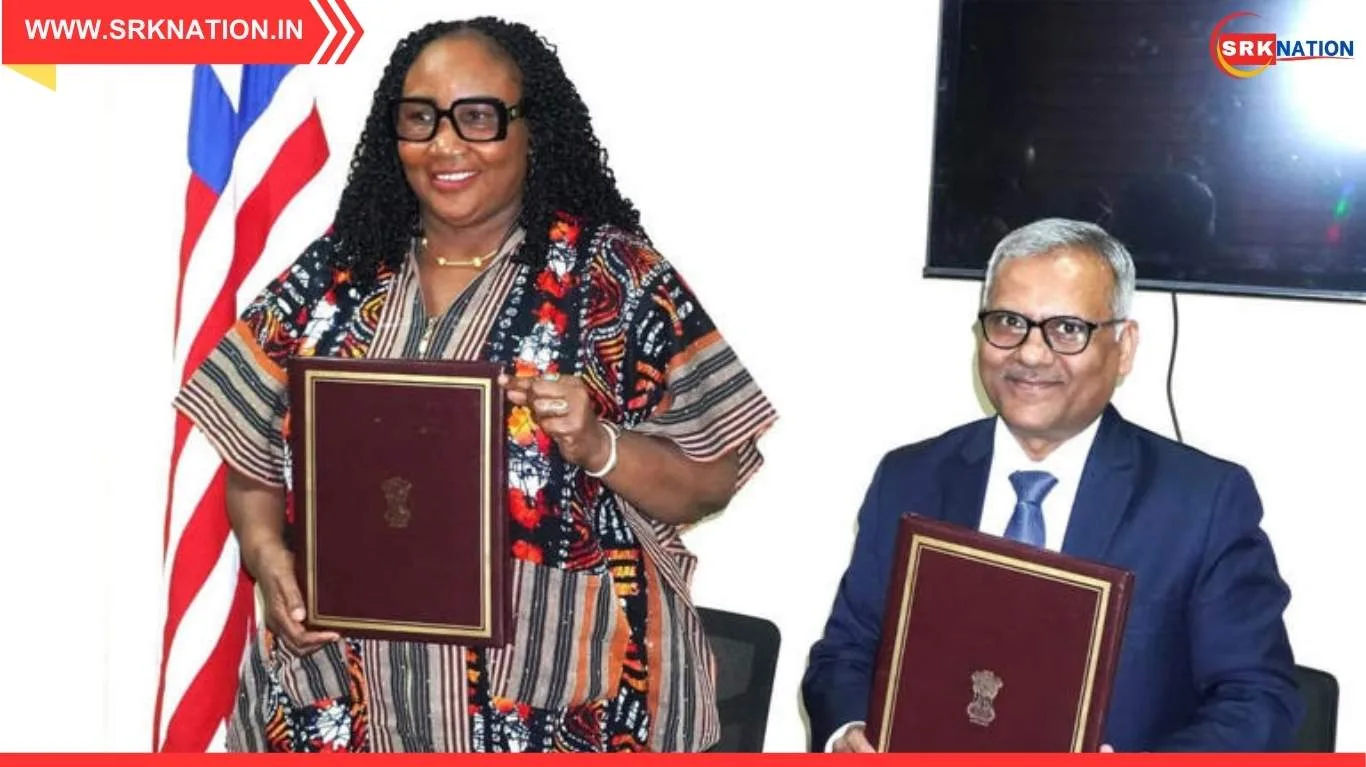
India has taken another significant step in strengthening global health cooperation by signing a Memorandum of Understanding (MoU) with Liberia to enhance collaboration on pharmacopoeia standards, ensuring safer, more affordable, and higher‑quality medicines for both nations. The agreement marks a major milestone in India’s expanding role as a global pharmaceutical leader and reflects Liberia’s commitment to improving its healthcare infrastructure, regulatory systems, and drug‑quality assurance mechanisms.
The MoU was signed between the Indian Pharmacopoeia Commission (IPC) and the Liberia Medicines and Health Products Regulatory Authority (LMHRA). It aims to harmonize drug standards, promote regulatory alignment, and strengthen quality control systems to ensure that medicines circulating in both countries meet internationally accepted benchmarks.
This partnership is expected to significantly benefit Liberia, which relies heavily on imported medicines, many of which come from India. By adopting Indian pharmacopoeia standards, Liberia can streamline drug approvals, reduce costs, and improve patient safety. For India, the agreement reinforces its position as a trusted global supplier of affordable, high‑quality pharmaceuticals.
🌍 Why the India–Liberia MoU Matters
The MoU is more than a technical agreement—it is a strategic collaboration with far‑reaching implications for public health, pharmaceutical trade, and regulatory modernization.
Key objectives of the MoU include:
- Strengthening drug‑quality standards
- Enhancing regulatory cooperation
- Facilitating capacity building and training
- Promoting the use of Indian Pharmacopoeia (IP) in Liberia
- Ensuring safer, more affordable medicines for citizens
The agreement also supports India’s broader vision of becoming a global hub for pharmaceutical innovation and regulatory leadership.
💊 What Is the Indian Pharmacopoeia?
The Indian Pharmacopoeia (IP) is an official book of standards for drugs manufactured and marketed in India. It defines the quality, purity, strength, and dosage of medicines.
Why IP is globally respected:
- Updated regularly with modern scientific standards
- Recognized by several countries
- Ensures stringent quality control
- Supports affordable drug manufacturing
Liberia’s adoption of IP standards will help streamline its regulatory processes and reduce dependence on multiple international guidelines.
🤝 How Liberia Benefits from the MoU
Liberia faces challenges in drug regulation, including limited laboratory capacity, inconsistent quality checks, and reliance on imported medicines. The MoU addresses these gaps through:
1. Improved Drug Quality
Adopting IP standards ensures that medicines meet globally accepted benchmarks.
2. Lower Healthcare Costs
Standardized quality reduces the need for expensive foreign testing and certification.
3. Stronger Regulatory Framework
Training and capacity‑building programs will help Liberia modernize its drug‑approval systems.
4. Better Public Health Outcomes
Safer medicines lead to fewer adverse reactions and improved treatment success.
How India Gains from the Partnership
India is already known as the “pharmacy of the world,” supplying affordable medicines to over 200 countries. This MoU strengthens India’s global influence in pharmaceutical regulation.
Benefits for India:
- Expands India’s regulatory footprint in Africa
- Strengthens bilateral ties with Liberia
- Boosts confidence in Indian pharmaceutical exports
- Opens doors for future collaborations in vaccines, diagnostics, and medical devices
📊 Statistical Overview of India–Liberia Pharma Relations
| Category | India | Liberia |
|---|---|---|
| Pharma Export Strength | One of world’s largest generic drug exporters | High dependence on imported medicines |
| Regulatory Framework | Strong, globally recognized | Developing, needs modernization |
| Key Need | Market expansion, global influence | Affordable, safe medicines |
| Benefit from MoU | Strengthened trade & regulatory ties | Improved drug quality & safety |
🔍 Impact of the MoU on Both Nations
| Factor | Impact on India | Impact on Liberia | Long‑Term Outcome |
|---|---|---|---|
| Drug Quality Standards | Enhances global trust in Indian pharma | Ensures safer medicines | Stronger health systems |
| Regulatory Cooperation | Expands India’s influence | Modernizes Liberia’s framework | Harmonized standards |
| Pharma Trade | Boosts exports | Reduces cost of medicines | Sustainable supply chain |
| Capacity Building | Strengthens India’s soft power | Builds skilled workforce | Improved healthcare delivery |
| Public Health | Supports global health goals | Reduces adverse drug reactions | Better patient outcomes |
🧪 Key Areas of Collaboration Under the MoU
1. Standard Harmonization
Liberia will adopt Indian Pharmacopoeia standards for drug testing and approval.
2. Training & Capacity Building
IPC will train Liberian regulators, pharmacists, and laboratory technicians.
3. Laboratory Strengthening
India will support Liberia in upgrading drug‑testing labs with modern equipment and protocols.
4. Information Exchange
Both nations will share data on drug safety, adverse reactions, and regulatory updates.
5. Joint Research
Future collaborations may include research on tropical diseases, vaccines, and antimicrobial resistance.
🌐 Why This MoU Is Important for Africa
Africa faces significant challenges in drug quality, with counterfeit and substandard medicines posing major risks. Partnerships like this help African nations:
- Strengthen regulatory systems
- Improve access to affordable medicines
- Reduce dependence on expensive Western standards
- Build long‑term pharmaceutical capacity
India’s growing collaboration with African nations signals a shift toward South‑South cooperation in global health.
🏥 How the MoU Supports Global Health Goals
The agreement aligns with global initiatives such as:
- WHO’s push for universal health coverage
- Affordable access to essential medicines
- Strengthening regulatory systems in developing nations
- Reducing global health inequities
By supporting Liberia’s regulatory modernization, India contributes to global health security.
📌 Challenges Ahead
While the MoU is promising, both nations must address certain challenges:
1. Implementation Capacity
Liberia needs sustained investment in infrastructure and training.
2. Regulatory Alignment
Transitioning to new standards requires time and coordination.
3. Supply Chain Stability
Ensuring consistent availability of quality medicines remains a challenge.
4. Monitoring & Evaluation
Both nations must track progress to ensure the MoU delivers measurable outcomes.
🚀 Future Possibilities
The MoU could pave the way for:
- Joint manufacturing of essential medicines
- Vaccine collaboration
- Medical device regulatory partnerships
- Regional harmonization across West Africa
- India becoming a key regulatory partner for African nations
This partnership may serve as a model for future India–Africa health collaborations.
📝 Conclusion
The signing of the India–Liberia MoU on pharmacopoeia cooperation marks a transformative moment in global health diplomacy. By aligning drug standards, strengthening regulatory systems, and promoting safer, more affordable medicines, the agreement benefits both nations and supports broader global health goals.
India reinforces its role as a global pharmaceutical leader, while Liberia gains access to high‑quality, cost‑effective medicines and modern regulatory expertise. As the partnership evolves, it has the potential to reshape healthcare outcomes, strengthen bilateral ties, and inspire similar collaborations across Africa and beyond.
🛡️ Disclaimer
This article is based on publicly available information, official statements, and verified reports. It is intended solely for informational and editorial purposes, offering insights into the India–Liberia MoU on pharmacopoeia cooperation and its implications for healthcare, regulation, and bilateral relations.