

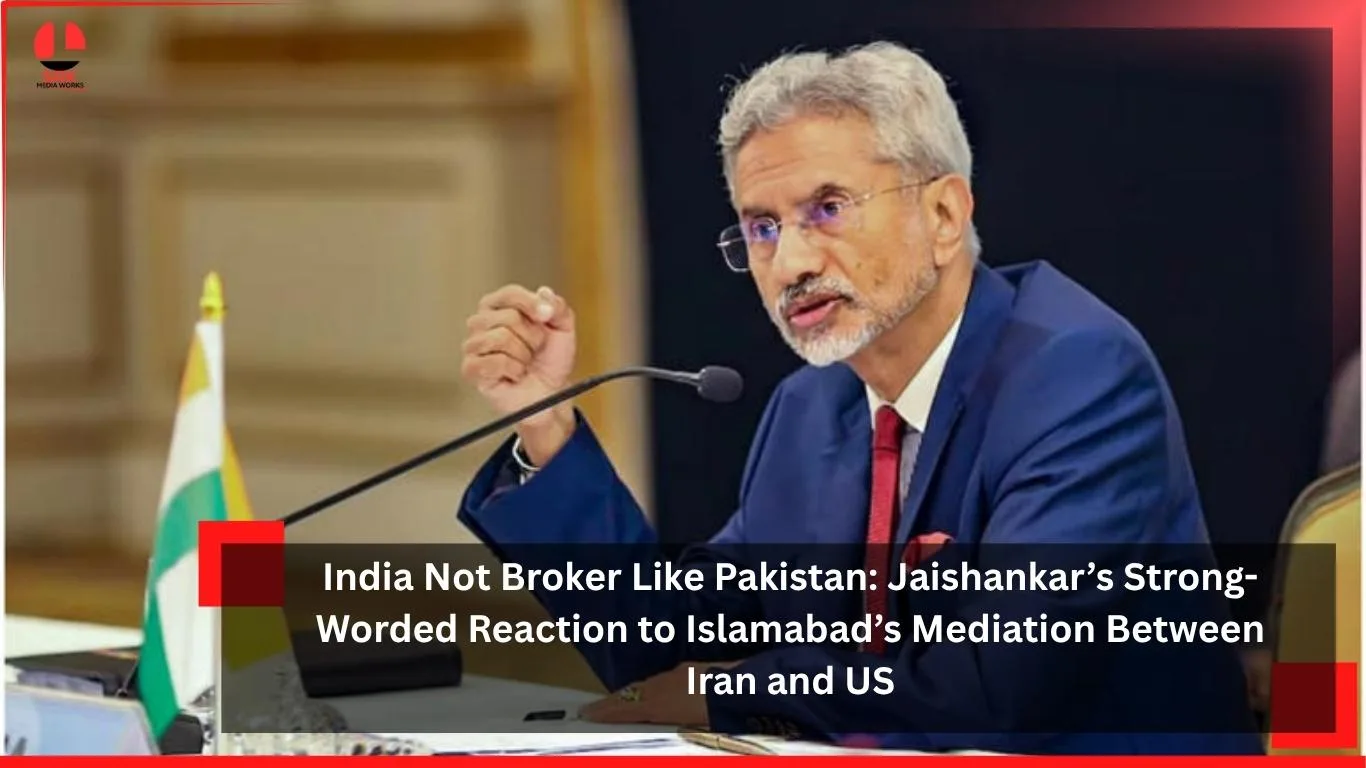
India’s External Affairs Minister S. Jaishankar has delivered a sharp response to Pakistan’s claims of mediating between the United States and Iran, asserting that India is “not a broker nation” and does not play the role of an intermediary in global conflicts. His remarks underline India’s foreign policy approach of pursuing strategic autonomy and engaging directly with nations rather than acting as a middleman.
Jaishankar’s Statement
Jaishankar’s strong words came in reaction to Islamabad’s announcement that it was facilitating dialogue between Washington and Tehran.
- India’s Position: Jaishankar clarified that India does not seek to mediate but instead focuses on building direct bilateral relations.
- Strategic Autonomy: India’s foreign policy is based on independent decision-making, not aligning with one bloc or acting as a broker.
- Contrast with Pakistan: By calling out Pakistan’s self-proclaimed role, Jaishankar highlighted the difference in India’s global standing and credibility.
India’s Foreign Policy Approach
India has consistently maintained that it is not a mediator but a stakeholder in global stability.
- Direct Engagement: India prefers direct dialogue with nations rather than third-party mediation.
- Global Credibility: India’s role in forums like G20, BRICS, and the UN emphasizes leadership, not brokerage.
- Strategic Partnerships: India balances relations with the US, Iran, Russia, and other powers without compromising autonomy.
- Non-Alignment Legacy: India’s foreign policy roots lie in non-alignment, avoiding entanglement in proxy roles.
Comparative Analysis of India and Pakistan’s Roles
| Country | Approach to Global Conflicts | Credibility | Outcome |
|---|---|---|---|
| India | Strategic autonomy, direct engagement | High | Recognized as global leader |
| Pakistan | Claims mediation roles | Questioned | Limited global influence |
Why Jaishankar’s Words Matter
- Diplomatic Clarity: Reinforces India’s stance of not being dragged into proxy diplomacy.
- Global Messaging: Sends a signal to both allies and rivals about India’s independent role.
- Domestic Assurance: Strengthens confidence in India’s foreign policy direction.
- Regional Balance: Highlights India’s difference from Pakistan in credibility and influence.
Sector-Wise Impact of Jaishankar’s Statement
| Sector | Impact | Outlook |
|---|---|---|
| Diplomacy | Reinforces India’s autonomy | Stronger global credibility |
| Media | Intense coverage | Wider debates on India-Pakistan contrast |
| Strategic Studies | Case study in foreign policy | Academic discussions |
| Public Opinion | Boosts national pride | Stronger support for government stance |
| Regional Politics | Highlights India’s leadership | Greater influence in South Asia |
India’s Relations with Iran and US
India has historically balanced ties with both Washington and Tehran.
- With Iran: Energy cooperation, Chabahar port development, and cultural ties.
- With US: Strategic defense partnerships, technology cooperation, and trade.
- Balancing Act: India manages relations without acting as a broker, ensuring national interests are prioritized.
Long-Term Implications
- Global Standing: India’s refusal to act as a broker strengthens its image as a sovereign power.
- Regional Dynamics: Reinforces India’s leadership role in South Asia.
- Strategic Autonomy: Ensures India remains independent in decision-making.
- Diplomatic Respect: Builds credibility in multilateral forums.
Conclusion
Jaishankar’s strong-worded reaction—stating that India is not a broker like Pakistan—marks a clear assertion of India’s foreign policy philosophy. By distancing itself from Islamabad’s claims of mediation between Iran and the US, India reinforces its role as a global leader that engages directly, prioritizes strategic autonomy, and commands respect in international diplomacy.
Disclaimer
This article is intended for informational purposes only and does not constitute diplomatic or political advice. The views expressed are based on reported statements and global developments as of March 2026. Readers should consider multiple perspectives before forming conclusions about international relations.