


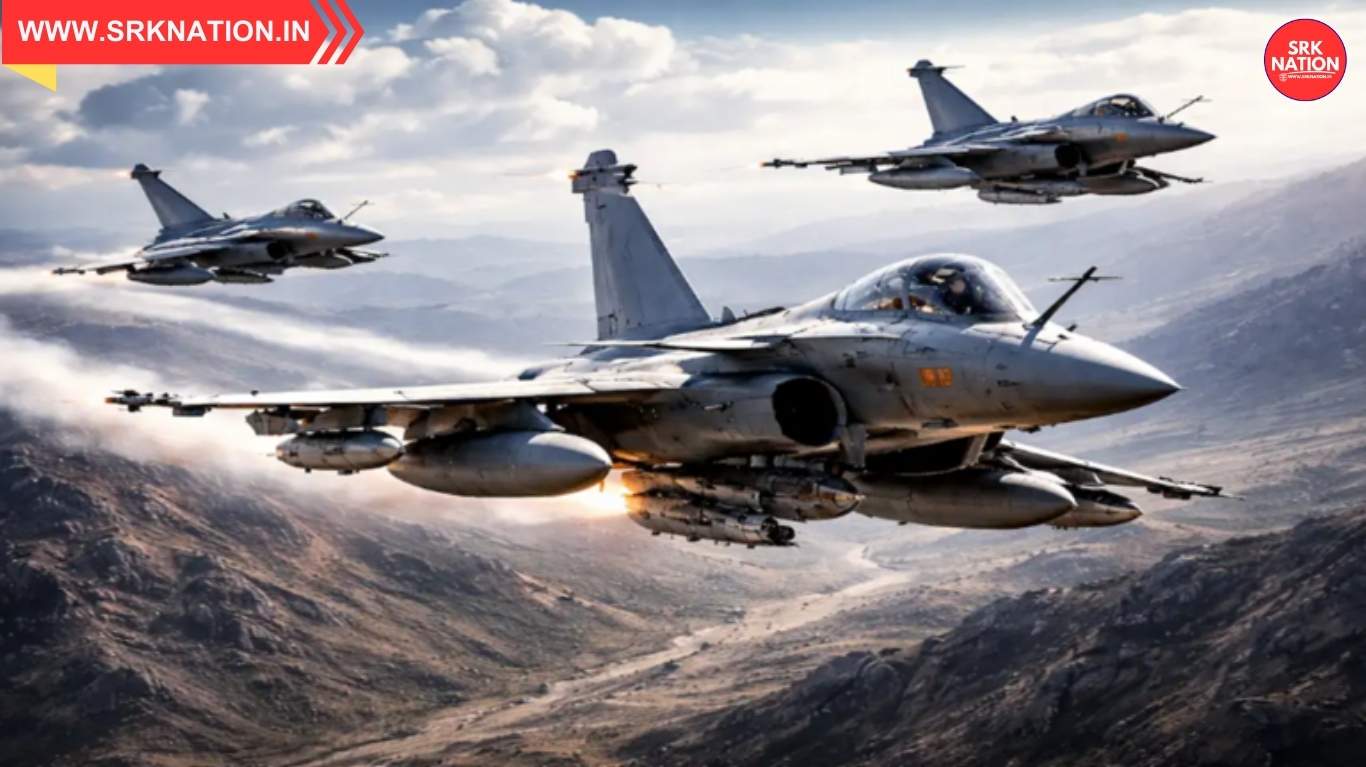
India has announced what is being described as the largest defence procurement since independence — a mega deal involving 114 Rafale fighter jets and Scalp missiles, valued at approximately Rs 3.25 lakh crore. This landmark agreement underscores India’s commitment to strengthening its air power and enhancing national security in the face of evolving regional and global challenges.
Background of the Rafale Deal
The Rafale fighter jet, manufactured by Dassault Aviation of France, is considered one of the most advanced multi-role combat aircraft in the world. India had earlier procured 36 Rafales, which were inducted into the Indian Air Force (IAF) between 2020 and 2022. The new deal for 114 Rafales marks a significant expansion of India’s air combat capabilities.
- Earlier Procurement: 36 Rafales inducted into IAF squadrons.
- New Agreement: 114 Rafales, making it the largest single acquisition of fighter jets by India.
- Missile Systems: Inclusion of Scalp cruise missiles, known for precision strikes.
Strategic Importance
The deal is not just about numbers; it represents a strategic leap for India’s defence preparedness.
- Air Superiority: Rafales are equipped with advanced radar, electronic warfare systems, and long-range missiles.
- Precision Strikes: Scalp missiles enhance India’s ability to conduct deep strikes with pinpoint accuracy.
- Regional Balance: Strengthens India’s position vis-à-vis regional adversaries.
- Global Partnerships: Reinforces India-France defence cooperation.
Financial Scope
At Rs 3.25 lakh crore, this is India’s most expensive defence deal ever.
| Component | Estimated Cost (Rs) | Significance |
|---|---|---|
| 114 Rafale Jets | ~2.5 lakh crore | Core air combat capability |
| Scalp Missiles | ~50,000 crore | Precision strike capability |
| Training & Logistics | ~25,000 crore | Operational readiness |
| Maintenance & Support | ~25,000 crore | Long-term sustainability |
This breakdown highlights the comprehensive nature of the deal, covering not just aircraft but also weapons, training, and support systems.
Comparative Defence Deals
| Country | Major Defence Deal | Value | Key Assets |
|---|---|---|---|
| India | Rafale + Scalp | Rs 3.25 lakh crore | 114 Rafales, Scalp missiles |
| USA | F-35 Program | $1.7 trillion (lifetime) | Stealth fighters |
| China | J-20 Development | Estimated $30 billion | Indigenous stealth jets |
| Pakistan | JF-17 Program | ~$3 billion | Jointly developed fighters |
India’s deal stands out as the largest single procurement since independence, reflecting its growing defence ambitions.
Impact on Indian Air Force
The induction of 114 Rafales will transform the IAF’s operational capabilities.
- Squadron Strength: India’s fighter squadron strength will rise significantly.
- Technology Upgrade: Rafales bring cutting-edge avionics and weapons.
- Interoperability: Enhances coordination with other platforms like Sukhoi-30 MKI and Tejas.
- Deterrence: Acts as a strong deterrent against potential adversaries.
Scalp Missiles: Game-Changer
The inclusion of Scalp missiles adds a new dimension to India’s strike capabilities.
- Range: Over 500 km, allowing deep penetration strikes.
- Accuracy: Precision targeting of high-value assets.
- Stealth: Designed to evade radar detection.
- Operational Flexibility: Can be launched from Rafale jets in varied combat scenarios.
Geopolitical Implications
India’s mega defence deal has significant geopolitical ramifications.
- France-India Relations: Strengthens bilateral ties and defence cooperation.
- Regional Security: Sends a strong message to adversaries in South Asia.
- Global Standing: Positions India as a major defence power with advanced capabilities.
- Strategic Autonomy: Reduces dependence on other nations for critical defence needs.
Industry and Economic Impact
Beyond defence, the deal will have ripple effects on India’s economy and industry.
- Make in India: Potential for local assembly and manufacturing of components.
- Employment: Thousands of jobs in defence and aerospace sectors.
- Technology Transfer: Access to advanced aviation technologies.
- Boost to Defence Sector: Encourages indigenous defence production and innovation.
Challenges and Criticisms
While the deal is historic, it is not without challenges.
- Cost Concerns: Rs 3.25 lakh crore is a massive expenditure.
- Operational Integration: Ensuring seamless integration with existing platforms.
- Maintenance: Long-term upkeep of advanced aircraft is resource-intensive.
- Political Debate: Defence deals often spark debates over transparency and necessity.
Conclusion
India’s acquisition of 114 Rafales and Scalp missiles marks a watershed moment in its defence history. At Rs 3.25 lakh crore, it is the biggest defence deal since independence, symbolizing India’s determination to secure its skies and enhance its strike capabilities.
This deal not only strengthens the Indian Air Force but also boosts India’s global standing as a major military power. While challenges remain, the strategic benefits far outweigh the concerns, making this a defining chapter in India’s defence modernization journey.
Disclaimer
This article is based on publicly available information and analysis of India’s defence procurement. It is intended for informational purposes only and does not represent official government statements or classified details. Readers should view this as a balanced overview of India’s defence deal and its implications.