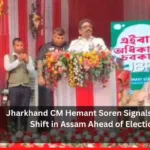

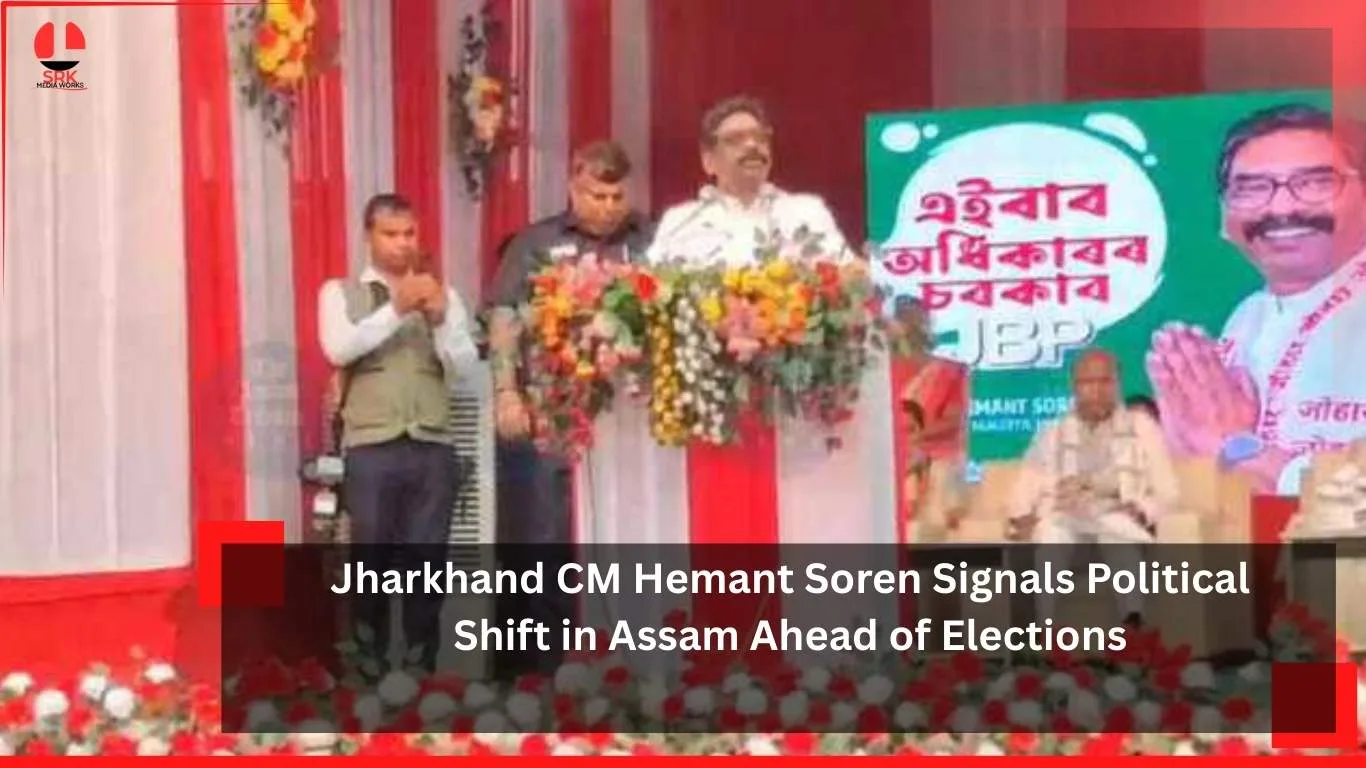
In a surprising political development, Jharkhand Chief Minister Hemant Soren has indicated a possible shift in Assam’s political landscape ahead of the upcoming elections. His remarks, delivered during a public meeting and later amplified through party channels, suggest that regional alliances and opposition strategies may undergo significant changes as the state prepares for polls.
Context of Hemant Soren’s Statement
Hemant Soren, a prominent leader of the Jharkhand Mukti Morcha (JMM), has increasingly positioned himself as a voice for regional empowerment. His comments in Assam were interpreted as a signal of broader opposition coordination, particularly in the northeastern states where political dynamics are often shaped by ethnic identities, regional aspirations, and coalition politics.
Assam’s Political Landscape
Assam has historically witnessed multi-party contests, with national parties competing alongside strong regional outfits. The upcoming elections are expected to be highly competitive, with issues such as:
- Ethnic Identity and Autonomy
- Economic Development and Employment
- Flood Management and Infrastructure
- Cultural Preservation
Soren’s intervention adds a new dimension, suggesting that alliances across state boundaries could influence outcomes.
Comparative Analysis of Regional Leaders’ Influence
| Leader | State | Influence in Assam Elections | Strategic Role |
|---|---|---|---|
| Hemant Soren | Jharkhand | Signals opposition unity | Advocating regional empowerment |
| Himanta Biswa Sarma | Assam | Incumbent leadership | Focus on governance and development |
| Mamata Banerjee | West Bengal | Limited but symbolic support | Opposition coordination in the east |
| Akhilesh Yadav | Uttar Pradesh | Indirect influence | National opposition alignment |
This comparison shows how leaders from outside Assam can shape narratives and strategies within the state.
Analytical Perspective
From an analytical standpoint, Hemant Soren’s remarks reflect the growing importance of inter-state political coordination. Opposition parties are increasingly aware that regional voices can amplify national strategies, especially in states where coalition politics is decisive. His intervention also signals that the northeastern states are becoming more central to national political discourse.
Key Themes Emerging
| Theme | Explanation |
|---|---|
| Regional Empowerment | Soren’s remarks highlight the role of regional leaders in shaping national politics. |
| Opposition Coordination | Suggests possible alliances across states to challenge incumbents. |
| Assam’s Strategic Role | The state’s elections are crucial for both regional and national parties. |
| Political Realignment | Signals potential shifts in voter sentiment and party strategies. |
Public and Political Reactions
- Opposition Parties: Welcomed Soren’s statement as a sign of unity.
- Ruling Party Leaders: Dismissed the remarks, emphasizing their governance record.
- Citizens and Analysts: Mixed reactions, with some seeing it as symbolic and others as a serious strategic move.
- Social Media: Discussions highlighted the novelty of a Jharkhand leader influencing Assam’s political narrative.
Broader Implications
The episode underscores the interconnectedness of Indian politics. Leaders from one state increasingly influence debates in another, reflecting the nationalization of regional issues. For Assam, Soren’s remarks may not directly alter voter behavior but could contribute to shaping opposition strategies and media narratives.
Conclusion
Hemant Soren’s signal of a political shift in Assam ahead of elections is a reminder of the fluid nature of Indian politics. His intervention reflects broader trends of opposition coordination, regional empowerment, and strategic realignment. As Assam heads into a crucial electoral contest, the role of leaders like Soren will be closely watched for their ability to influence narratives and alliances beyond their home states.
Disclaimer
This article is a journalistic analysis based on publicly available information and political statements. It is intended for informational purposes only and does not represent endorsement of any political party or leader. Readers should interpret the content as part of ongoing democratic discourse rather than a definitive prediction of electoral outcomes.