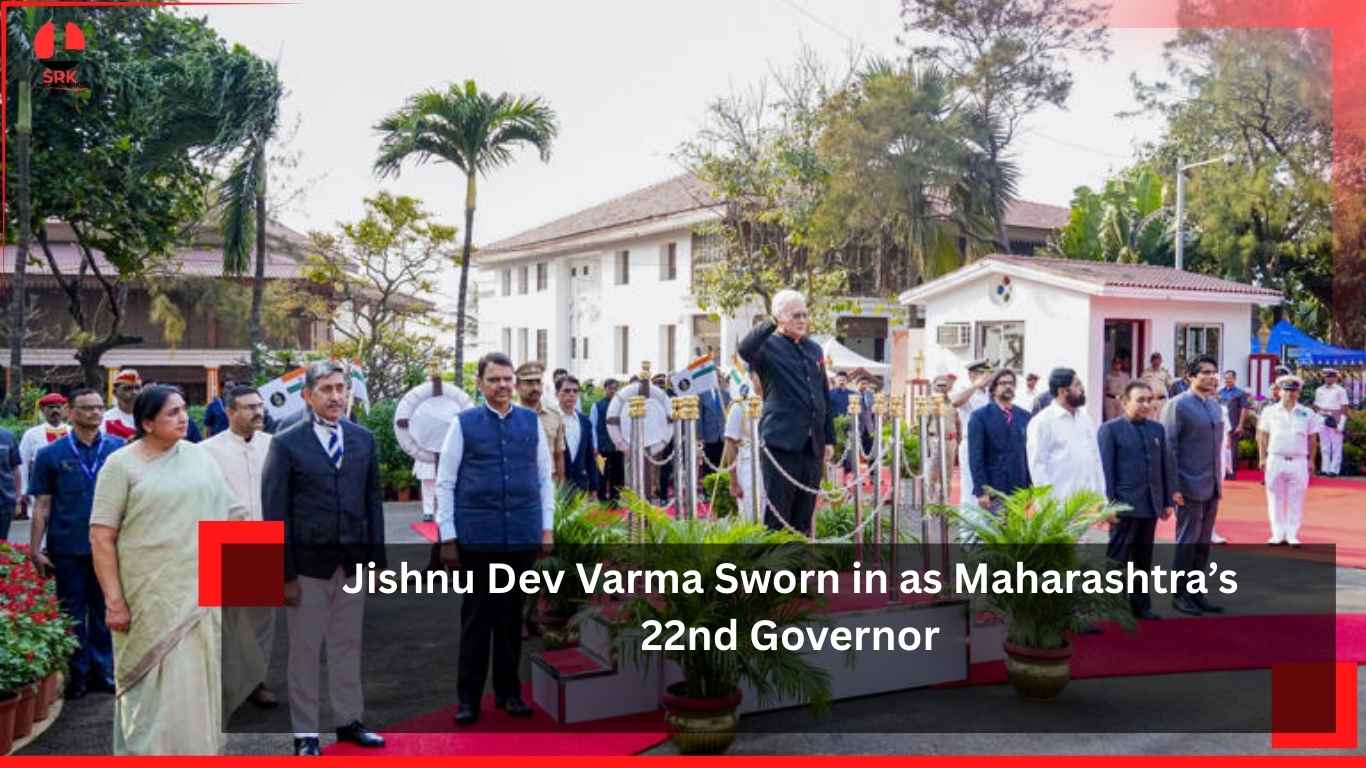
In a significant political development, Jishnu Dev Varma has been sworn in as the 22nd Governor of Maharashtra, marking a new chapter in the state’s constitutional leadership. The swearing-in ceremony was held with full protocol and attended by senior leaders, dignitaries, and officials. His appointment comes at a crucial time when Maharashtra continues to play a pivotal role in India’s political, economic, and cultural landscape.
Background of Jishnu Dev Varma
Jishnu Dev Varma, known for his administrative acumen and political experience, has held several important positions in the past. His career reflects a blend of governance, policy-making, and public service. As Governor, he is expected to bring a balanced approach to constitutional responsibilities, ensuring smooth coordination between the state government and the central administration.
Role of the Governor in Maharashtra
The Governor of Maharashtra holds a constitutional position with responsibilities that include:
- Upholding the provisions of the Constitution.
- Acting as a bridge between the state and the central government.
- Overseeing legislative processes and giving assent to bills.
- Ensuring law and order during political transitions.
- Representing the state at official functions and ceremonial occasions.
Given Maharashtra’s importance as India’s financial capital and a hub of industrial activity, the Governor’s role carries added significance.
Comparative Analysis of Governors in Maharashtra
| Governor Name | Tenure Period | Key Contributions |
|---|---|---|
| Jishnu Dev Varma | 2026–Present | Focus on constitutional balance, governance |
| Bhagat Singh Koshyari | 2019–2023 | Oversaw political transition, coalition era |
| C. Vidyasagar Rao | 2014–2019 | Strengthened state-centre coordination |
| S.M. Krishna | 2004–2008 | Promoted economic and cultural initiatives |
This comparison highlights how each Governor has played a unique role in shaping Maharashtra’s governance.
Public and Political Reactions
The appointment of Jishnu Dev Varma has drawn attention from political circles and the public alike. Leaders across party lines have expressed optimism that his tenure will bring stability and constitutional propriety. Citizens expect the Governor to act as a neutral authority, ensuring that democratic processes are upheld.
Analytical Perspective
From an analytical standpoint, Jishnu Dev Varma’s appointment reflects the central government’s emphasis on experienced leadership in key states. Maharashtra, being a politically sensitive and economically vital state, requires a Governor who can balance diverse interests while maintaining constitutional integrity.
Key Themes Emerging
| Theme | Explanation |
|---|---|
| Constitutional Balance | Governor’s role ensures smooth functioning of democracy. |
| Political Neutrality | Expected to act as a non-partisan authority. |
| State-Centre Relations | Strengthening coordination between Maharashtra and the Union government. |
| Symbolic Leadership | Representing the state in ceremonial and cultural functions. |
Future Outlook
Under Jishnu Dev Varma’s leadership, Maharashtra is expected to witness:
- Enhanced cooperation between the state and central government.
- Greater emphasis on constitutional propriety in legislative matters.
- Strengthened focus on governance and administrative efficiency.
- Continued promotion of Maharashtra’s cultural and economic identity.
Conclusion
The swearing-in of Jishnu Dev Varma as Maharashtra’s 22nd Governor is a landmark moment in the state’s political journey. His tenure is expected to reinforce constitutional values, ensure political stability, and strengthen the relationship between the state and the Union government. As Maharashtra continues to be a driving force in India’s growth story, the Governor’s role will remain central to its democratic and administrative framework.
Disclaimer
This article is a journalistic analysis based on publicly available information and official announcements. It is intended for informational purposes only and does not represent endorsement of any political party or leader. Readers should interpret the content as part of ongoing political developments rather than a definitive evaluation.