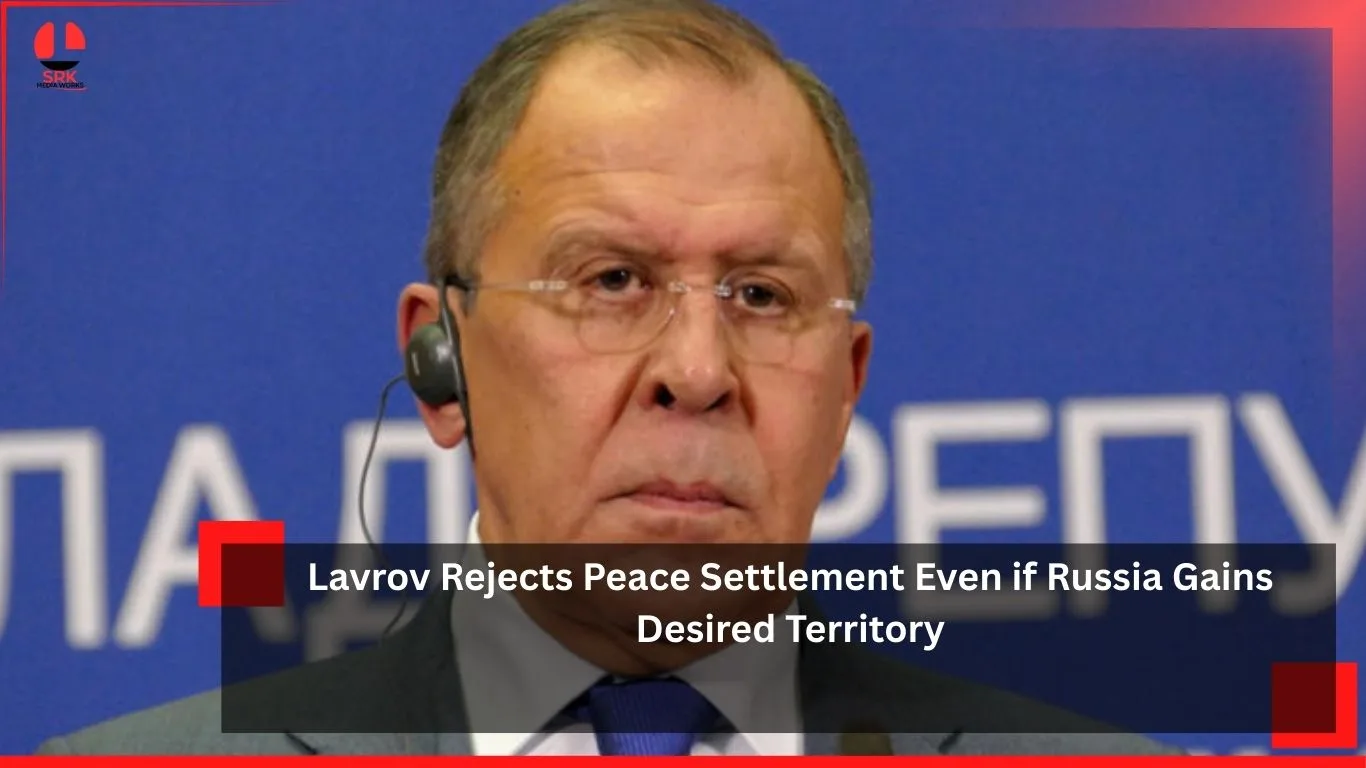
Russian Foreign Minister Sergey Lavrov has firmly rejected the idea of any peace settlement in the ongoing conflict, even if such an agreement grants Russia the territory it has long sought. His statement underscores Moscow’s uncompromising stance and highlights that the dispute is not merely about land but about broader geopolitical ambitions, sovereignty, and the balance of power in Europe.
Background of the Statement
Lavrov’s remarks come at a time when international mediators have been exploring frameworks for negotiations. Proposals have included territorial compromises, ceasefires, and phased agreements. However, Lavrov’s rejection of these options signals that Russia’s objectives extend beyond territorial control.
For Moscow, the conflict is about reshaping the global order, resisting Western influence, and ensuring long-term dominance in Eastern Europe. This position complicates diplomatic efforts and raises concerns about prolonged instability.
Why This Matters
Peace settlements typically hinge on territorial concessions, ceasefire agreements, or political guarantees. Lavrov’s outright rejection of these frameworks indicates that Russia’s goals are far more expansive.
This stance suggests that even significant concessions may not lead to peace, raising fears of a drawn-out conflict, humanitarian crises, and destabilization of Europe’s security architecture.
Key Highlights of Lavrov’s Position
| Aspect | Details |
|---|---|
| Statement | Rejects peace settlement even with territorial gains |
| Implication | Russia seeks more than land |
| Strategic Goal | Reshaping global order, resisting Western influence |
| Diplomatic Impact | Complicates negotiations |
| Regional Effect | Prolonged instability in Eastern Europe |
Comparative Analysis of Peace Efforts
| Year | Proposal | Russia’s Response | Outcome |
|---|---|---|---|
| 2014 | Minsk Agreements | Partial acceptance, later violations | Continued conflict |
| 2020 | Ceasefire proposals | Limited compliance | Escalation resumed |
| 2024 | Territorial compromise talks | Rejected | No settlement |
| 2026 | Current settlement proposals | Rejected outright | Prolonged war likely |
This comparison illustrates a consistent pattern of rejection or violation of peace frameworks, reinforcing concerns about Russia’s long-term intentions.
Strategic Goals Behind the Rejection
Lavrov’s rejection of peace settlements reflects several strategic goals:
- Global Influence: Russia seeks to challenge Western dominance and reshape international institutions.
- Security Buffer: Maintaining control over contested regions provides strategic depth.
- Political Messaging: Demonstrating resolve to domestic and international audiences.
- Long-Term Leverage: Keeping negotiations open-ended ensures bargaining power.
Expert Analysis
Military and political analysts argue that Lavrov’s stance indicates Russia views the conflict as existential rather than territorial. Conventional peace frameworks are unlikely to succeed because they do not address Russia’s broader ambitions.
Experts caution that this position could lead to indefinite conflict, with devastating humanitarian consequences and global economic repercussions.
Potential Challenges and Risks
- Diplomatic Deadlock: Negotiations may stall indefinitely.
- Humanitarian Crisis: Civilian populations face worsening conditions.
- Regional Instability: Neighboring countries may be drawn into the conflict.
- Global Security Risks: Prolonged war undermines international stability.
Broader Impact on Global Politics
Lavrov’s rejection of peace settlements has implications beyond Eastern Europe. It signals a shift in global politics, where traditional negotiation frameworks may no longer suffice.
The stance challenges Western-led diplomacy and raises questions about the future of multilateral institutions. It also underscores the risk of prolonged geopolitical fragmentation.
Analytical Breakdown of Stakeholders
| Stakeholder | Position | Impact |
|---|---|---|
| Russia | Rejects peace settlement | Prolonged conflict |
| Western Nations | Push for negotiations | Diplomatic frustration |
| Ukraine | Seeks sovereignty | Continued resistance |
| International Community | Divided | Calls for dialogue vs. sanctions |
| Global Markets | Concerned | Economic volatility |
Conclusion
Lavrov’s rejection of peace settlements, even if they grant Russia desired territory, highlights the depth of Moscow’s ambitions. The conflict is not simply about borders but about global influence, sovereignty, and reshaping the international order.
This uncompromising stance complicates diplomatic efforts and raises fears of prolonged instability. The coming months will be critical in determining whether the conflict escalates further or if new frameworks can emerge to address Russia’s broader goals.
Disclaimer
This article is intended for informational purposes only and does not constitute political or strategic advice. The content is based on publicly available information and analysis at the time of writing. Readers should consult multiple perspectives and sources to form a comprehensive understanding of the situation.