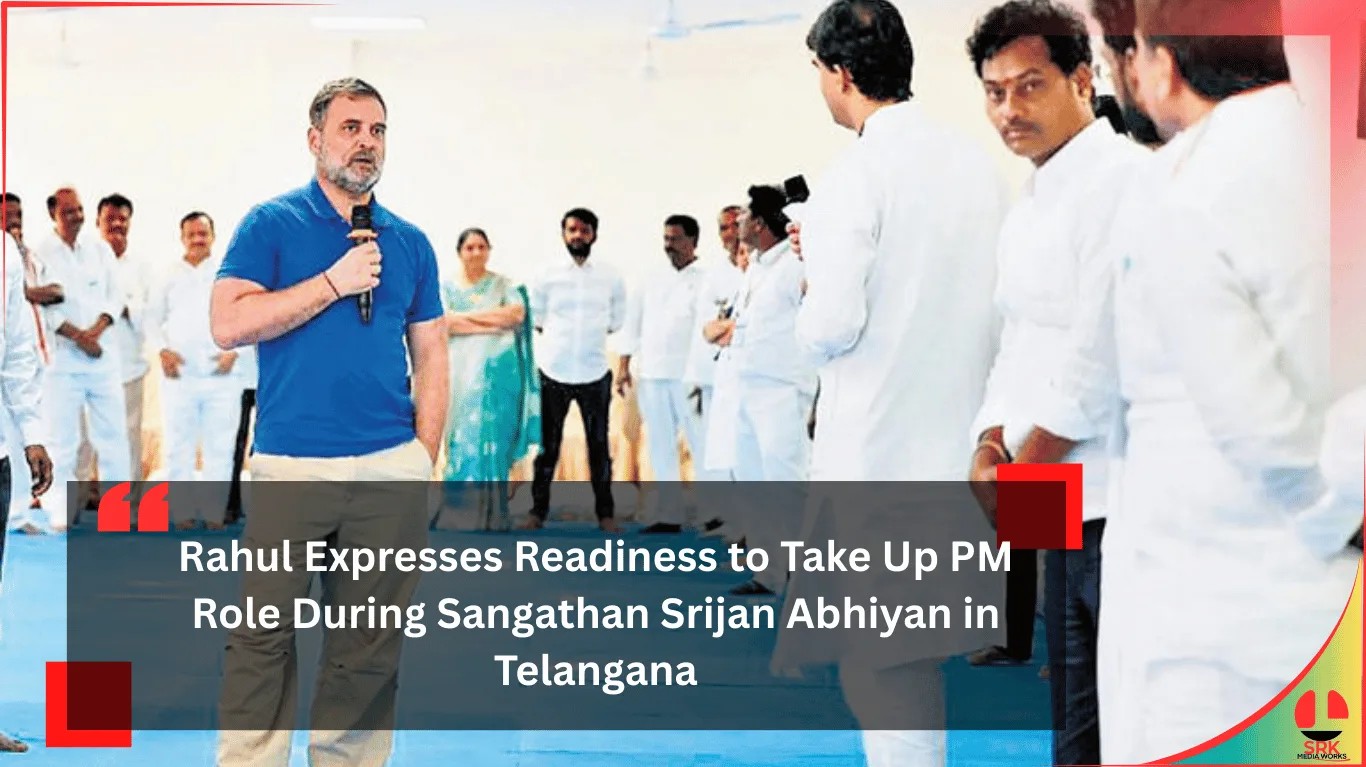

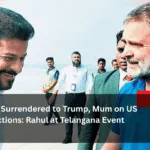

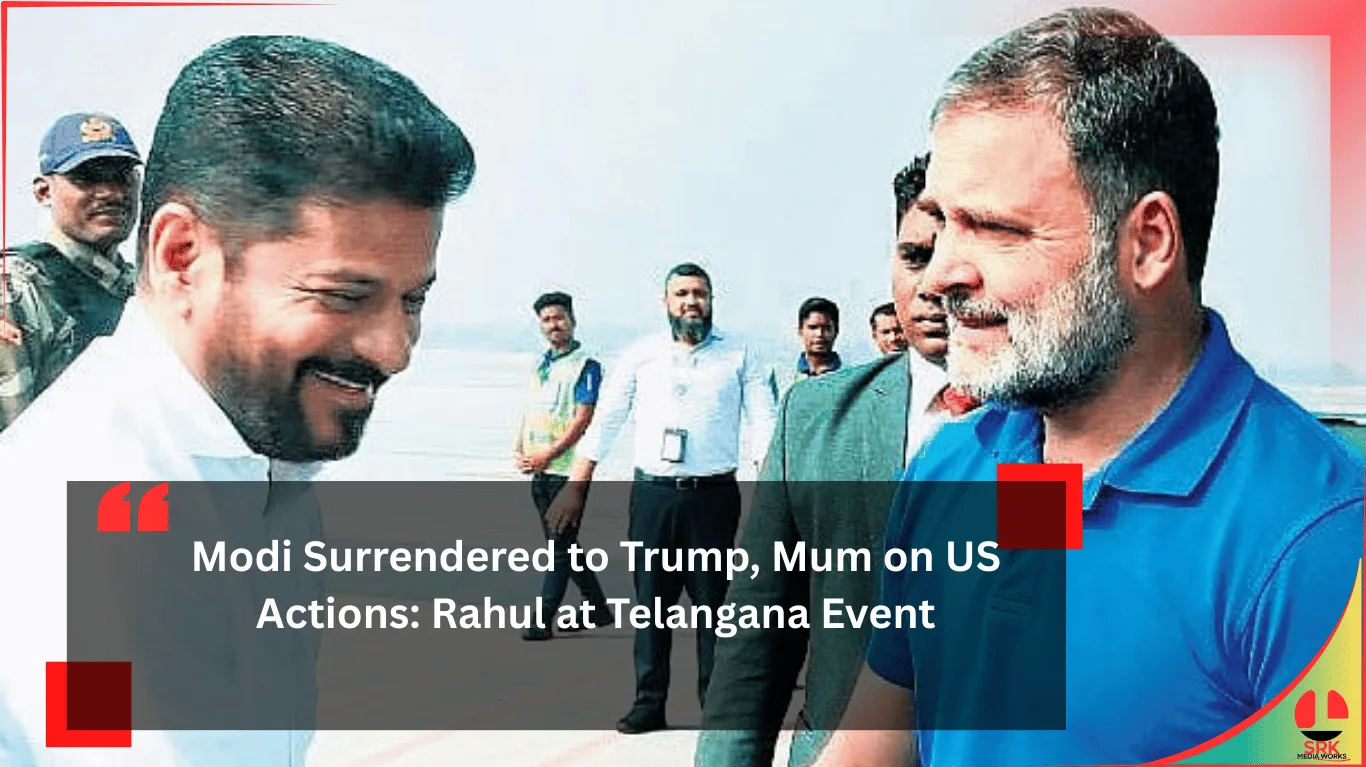
Congress leader Rahul Gandhi launched a sharp attack on Prime Minister Narendra Modi during a political event in Telangana, accusing him of “surrendering” to former US President Donald Trump and remaining silent on critical US actions that impacted India. His remarks, delivered as part of the party’s outreach campaign, have stirred intense debate across political circles and media platforms, highlighting the deepening rivalry between the Congress and BJP.
Context of Rahul Gandhi’s Statement
Rahul Gandhi made the comments while addressing party workers and supporters in Telangana. The event was part of Congress’s broader effort to strengthen its organizational base in the state and prepare for upcoming elections. Gandhi’s criticism of Modi focused on India’s foreign policy stance during Trump’s presidency, alleging that Modi failed to assert India’s interests when confronted with US decisions on trade, defense, and global diplomacy.
Key Highlights
- Rahul Gandhi’s Charge: Modi “surrendered” to Trump and remained silent on US actions.
- Political Context: Statement made during Congress’s Telangana outreach campaign.
- Public Reaction: Supporters applauded Gandhi’s assertiveness, while BJP leaders dismissed the remarks as baseless.
- Media Coverage: Extensive reporting across national and regional outlets, sparking debates on India’s foreign policy.
Comparative Analysis of Political Narratives
| Leader/Party | Narrative on US Relations | Public Perception | Political Impact |
|---|---|---|---|
| Rahul Gandhi (Congress) | Modi surrendered to Trump, weak foreign policy | Divided – supporters agree, critics dismiss | Positions Congress as challenger |
| Narendra Modi (BJP) | Assertive global diplomacy, strong ties with US | Widely seen as proactive | Consolidates BJP’s global image |
| Regional Parties | Focus on domestic issues | Limited national impact | Reinforces local priorities |
Pivot Analysis of Political Sentiment
| Sentiment Category | Impact on Congress | Impact on BJP | Impact on Public Discourse |
|---|---|---|---|
| Supporter Morale | Boosted – Gandhi seen as outspoken | Defensive – BJP counters criticism | Sparks debate on foreign policy |
| Media Coverage | Extensive – highlights Gandhi’s attack | Balanced – BJP’s rebuttal covered | Keeps foreign policy in spotlight |
| Opposition Unity | May strengthen alliances | BJP consolidates base | Shapes narrative of leadership |
| Voter Perception | Mixed – some see Gandhi as bold, others doubt credibility | Modi seen as strong leader | Divides opinion along party lines |
Challenges Ahead for Congress
Rahul Gandhi’s remarks, while energizing supporters, also present challenges:
- Credibility: Convincing voters that Congress offers a viable foreign policy alternative.
- Unity: Ensuring internal cohesion within the party.
- Electoral Strategy: Translating criticism into a winning narrative against BJP’s dominance.
- Opposition Pressure: Countering BJP’s portrayal of Modi as a global statesman.
Opportunities for Congress
Despite challenges, Gandhi’s statement opens opportunities:
- Youth Engagement: Positioning Congress as bold and assertive.
- Policy Debate: Shifting focus to foreign policy and India’s global standing.
- Alliance Building: Strengthening ties with regional parties by projecting national leadership.
- Visibility: Keeping Gandhi in the spotlight as a prime challenger.
Broader Implications
Rahul Gandhi’s attack on Modi has implications beyond Telangana:
- National Politics: Reinforces Congress’s attempt to project Gandhi as a national leader.
- Foreign Policy Debate: Brings India’s stance on US relations into public discourse.
- Electoral Dynamics: Shapes narratives ahead of national elections, influencing voter perceptions.
Conclusion
Rahul Gandhi’s statement at the Telangana event — accusing Modi of surrendering to Trump and remaining silent on US actions — reflects Congress’s strategy of positioning itself as a bold alternative to BJP. While the remarks have energized supporters and sparked debate, they also highlight the challenges Congress faces in convincing voters of its credibility. The episode underscores the centrality of foreign policy in India’s political discourse and sets the stage for further confrontations between the two major parties.
Disclaimer
This article is a journalistic analysis based on publicly available information and political developments. It does not endorse or oppose any political party or leader. Readers are encouraged to interpret the content as informative coverage and verify facts independently before forming opinions.