

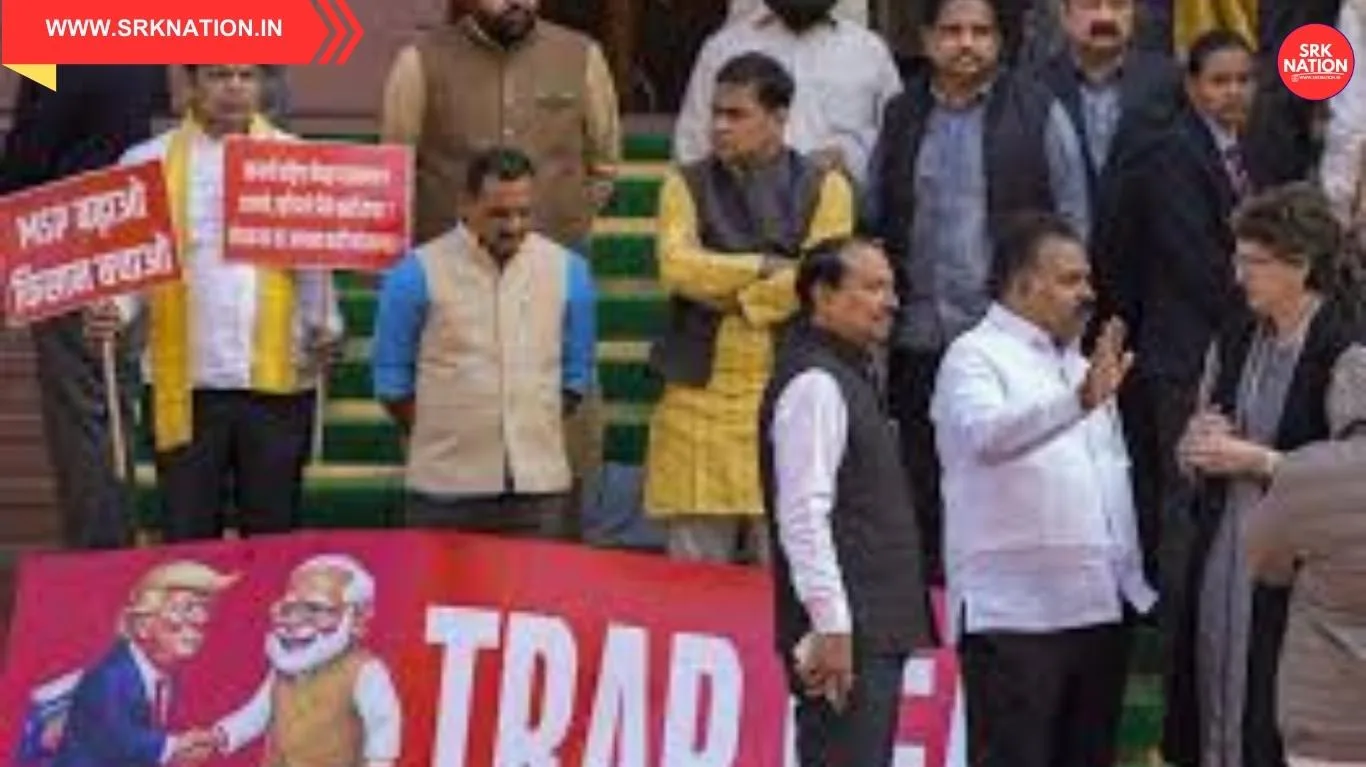
The recently signed India–US interim trade deal between Prime Minister Narendra Modi and US President Donald Trump has ignited sharp political and intellectual debate in India. Critics argue that the agreement undermines the idea of swaraj (self-rule) envisioned by Dadabhai Naoroji and Mahatma Gandhi, by conceding ground on critical sectors such as agriculture, digital trade, and data sovereignty. The deal, hailed by some as pragmatic, is being described by others as skewed in favor of US interests, raising concerns about India’s economic independence and long-term sovereignty.
Key Highlights of the Trade Deal
- Digital Trade Concessions: India reportedly agreed to relax rules on data localization, giving US firms greater control over digital trade.
- Agriculture Sector Impact: Concessions on farm imports and subsidies have raised fears of undermining Indian farmers.
- Industrial Concerns: Critics claim the deal compromises India’s manufacturing competitiveness.
- Political Fallout: Opposition leaders, including Rahul Gandhi, accused Modi of “surrendering national interests” and “selling Mother India.”
Comparative Analysis: Swaraj Vision vs Trade Deal
| Dimension | Swaraj (Naoroji & Gandhi) | Modi–Trump Trade Deal | Impact |
|---|---|---|---|
| Economic Independence | Self-reliance, local industry | Concessions to US firms | Weakens autonomy |
| Agriculture | Protection of farmers, village economy | Greater US access to Indian markets | Farmer vulnerability |
| Digital Sovereignty | Control over data, indigenous systems | Relaxed data localization | Loss of digital control |
| Trade Balance | Fair exchange, equitable trade | Skewed towards US interests | Trade imbalance risk |
| National Integrity | Swaraj as unity and independence | External influence on policy | Sovereignty concerns |
Historical Context
- Dadabhai Naoroji: India’s first economist, who exposed the “drain of wealth” under colonial rule, emphasized economic independence as central to swaraj.
- Mahatma Gandhi: Advocated self-reliance through village industries, khadi, and protection of farmers, warning against dependence on foreign powers.
- Current Debate: Critics argue that the Modi–Trump deal echoes colonial-era imbalances, where India’s economic policies are dictated externally.
Political Reactions
- Opposition Parties: Congress leaders and other opposition MPs staged protests in Parliament, calling the deal anti-farmer and anti-industry.
- Supporters of the Deal: Government officials argue that the agreement opens new opportunities for trade and investment, strengthening India–US ties.
- Public Sentiment: Mixed reactions, with urban industry leaders welcoming digital trade concessions, while farmer unions express deep concern.
Analytical Perspective
The Modi–Trump trade deal highlights the tension between globalization and sovereignty. While India seeks deeper integration into global trade networks, concessions in critical sectors raise questions about long-term independence. The debate underscores whether India is moving away from the swaraj ideal of self-reliance towards a model of dependency on external powers.
For India, the challenge lies in balancing strategic partnerships with global powers while safeguarding domestic interests. The deal may bring short-term gains in investment and technology, but risks eroding the foundational principles of swaraj that shaped India’s freedom struggle.
Disclaimer
This article is a synthesized news analysis based on publicly available reports and political commentary. It is intended for informational purposes only and does not represent official government statements. Readers are advised to consult verified sources for formal details on the India–US trade deal.