
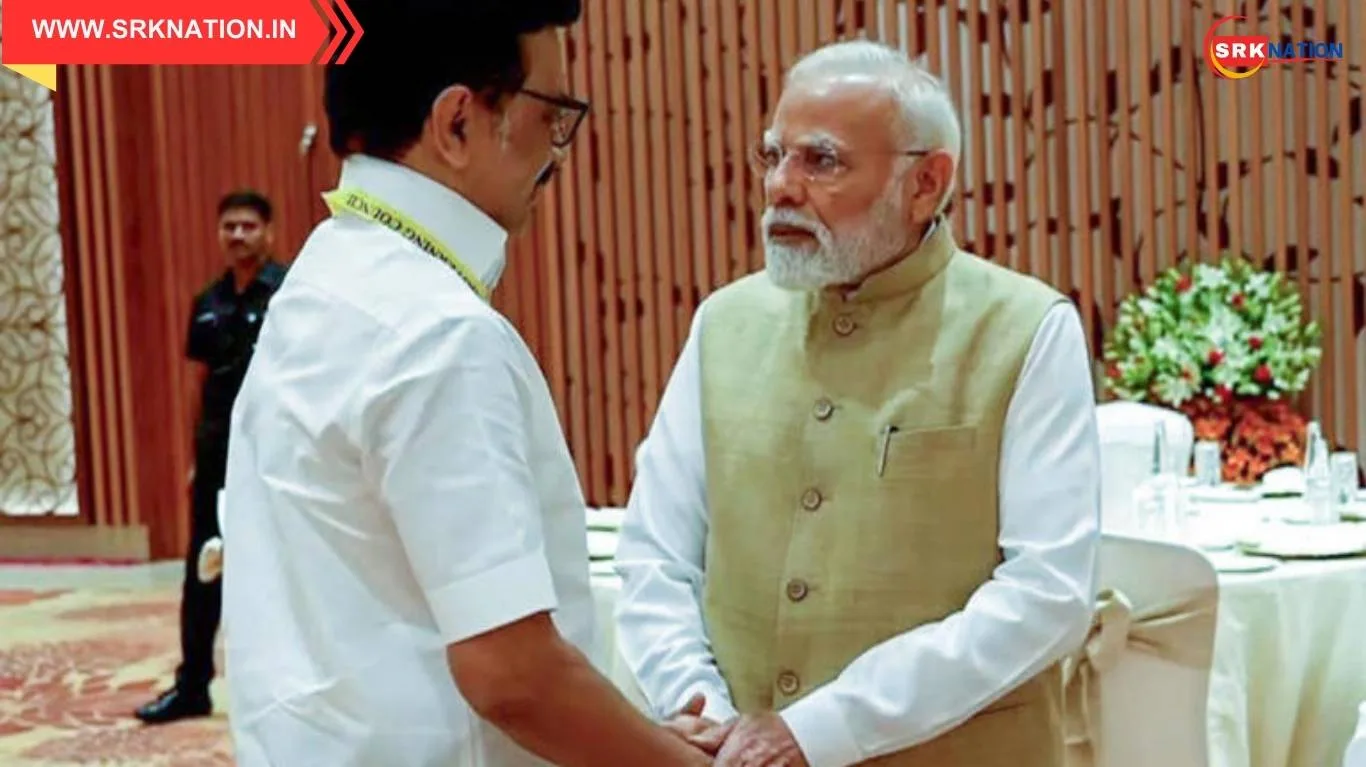
Tamil Nadu Chief Minister MK Stalin has strongly countered Prime Minister Narendra Modi’s recent remarks suggesting that Tamil Nadu is “not safe for women.” In a pointed response beginning with “Mr Prime Minister”, Stalin defended the state’s record on women’s safety and empowerment, accusing the BJP of misrepresenting facts for political gain.
Background of the Exchange
- PM Modi, during a rally, claimed that Tamil Nadu was unsafe for women, sparking controversy.
- Stalin responded by highlighting Tamil Nadu’s achievements in women’s education, healthcare, and employment.
- The exchange reflects the intensifying political battle between the BJP and DMK ahead of elections.
- Women’s safety has become a central theme in the political discourse, with both parties seeking to shape public perception.
Key Highlights
| Indicator | Details |
|---|---|
| Leaders in Focus | PM Narendra Modi, CM MK Stalin |
| PM’s Remark | Tamil Nadu “not safe for women” |
| Stalin’s Response | “Mr Prime Minister” – defense of state’s record |
| Political Context | BJP vs DMK rivalry |
| Broader Implication | Women’s safety as electoral issue |
PM Modi vs MK Stalin Narratives
| Factor | PM Modi | MK Stalin | Implication |
|---|---|---|---|
| Women’s Safety Claim | Tamil Nadu unsafe | State record strong | Contrasting narratives |
| Political Strategy | Criticism of DMK governance | Defense and counter-attack | Heated rivalry |
| Public Sentiment | Concern for safety | Pride in achievements | Divided electorate |
| Media Coverage | Amplifies PM’s remark | Highlights Stalin’s rebuttal | National attention |
| Long-Term Outlook | BJP seeks inroads | DMK defends legacy | Electoral competition |
Why This Story Matters
- Electoral Strategy: Women’s safety is a powerful issue in campaigns.
- Public Perception: Shapes how voters view governance in Tamil Nadu.
- Media Attention: Amplifies the rivalry between BJP and DMK.
- Policy Debate: Raises questions about actual safety measures and achievements.
- Future Outlook: Sets the tone for election narratives in Tamil Nadu.
MK Stalin’s Perspective
- Highlighted Tamil Nadu’s achievements in women’s education, healthcare, and employment.
- Pointed to schemes supporting women’s self-help groups and financial independence.
- Accused PM Modi of misrepresenting facts and ignoring Tamil Nadu’s progress.
- Emphasized that Tamil Nadu remains one of India’s most progressive states for women.
PM Modi’s Position
- Raised concerns about women’s safety in Tamil Nadu.
- Framed the issue as a governance failure under DMK.
- Positioned BJP as a party committed to women’s empowerment nationally.
Expert Opinions
- Political Analysts: See the exchange as part of BJP’s strategy to gain traction in Tamil Nadu.
- Social Scientists: Note that women’s safety is often politicized in electoral campaigns.
- Critics: Argue that both parties must focus on concrete policy solutions.
- Supporters: Applaud leaders for addressing women’s issues directly.
Challenges Ahead
- Public Trust: Convincing voters of genuine commitment to women’s safety.
- Policy Implementation: Ensuring schemes translate into real-world impact.
- Electoral Strategy: Balancing rhetoric with substance.
- Media Scrutiny: Managing coverage that amplifies controversies.
- Opposition Pressure: Navigating counter-attacks effectively.
Opportunities
- Policy Innovation: Introducing new measures for women’s safety.
- Public Engagement: Building trust through dialogue with women’s groups.
- Electoral Mobilization: Using women’s empowerment as a campaign theme.
- Media Leverage: Highlighting achievements to counter criticism.
- Regional Leadership: Positioning Tamil Nadu as a model for women’s progress.
Broader Context of Tamil Nadu Politics
- Tamil Nadu remains a stronghold for DMK, with BJP seeking to expand influence.
- Women’s issues have historically played a role in shaping electoral outcomes.
- The exchange reflects the intensity of competition ahead of elections.
- Governance achievements and failures are central to the political narrative.
Sectoral Breakdown of Impact
| Sector | Impact | Strategic Importance |
|---|---|---|
| Politics | Intensified rivalry | Electoral competition |
| Society | Focus on women’s safety | Public welfare |
| Media | Amplified coverage | Narrative shaping |
| Governance | Policy scrutiny | Accountability |
| Culture | Symbolic language | Political tradition |
Media Coverage
- Headlines highlight PM Modi’s remark and Stalin’s sharp rebuttal.
- Analysts debate the effectiveness of personal and policy-driven narratives.
- Coverage emphasizes women’s safety as a central electoral issue.
- The story resonates across political, social, and cultural platforms.
Conclusion
The exchange between PM Narendra Modi and CM MK Stalin, centered on the “Tamil Nadu not safe for women” remark, reflects the intensity of political rivalry in the state. While Modi sought to question DMK’s governance, Stalin countered by defending Tamil Nadu’s record and achievements. The episode underscores how women’s safety and empowerment have become central themes in electoral politics, shaping narratives and influencing voter sentiment.
Disclaimer
This article is intended for informational purposes only and does not constitute political or professional advice. Statements, policies, and outcomes are subject to change based on evolving circumstances. Readers are encouraged to follow official updates for accurate information. The author and publisher are not responsible for any decisions made based on this article.