




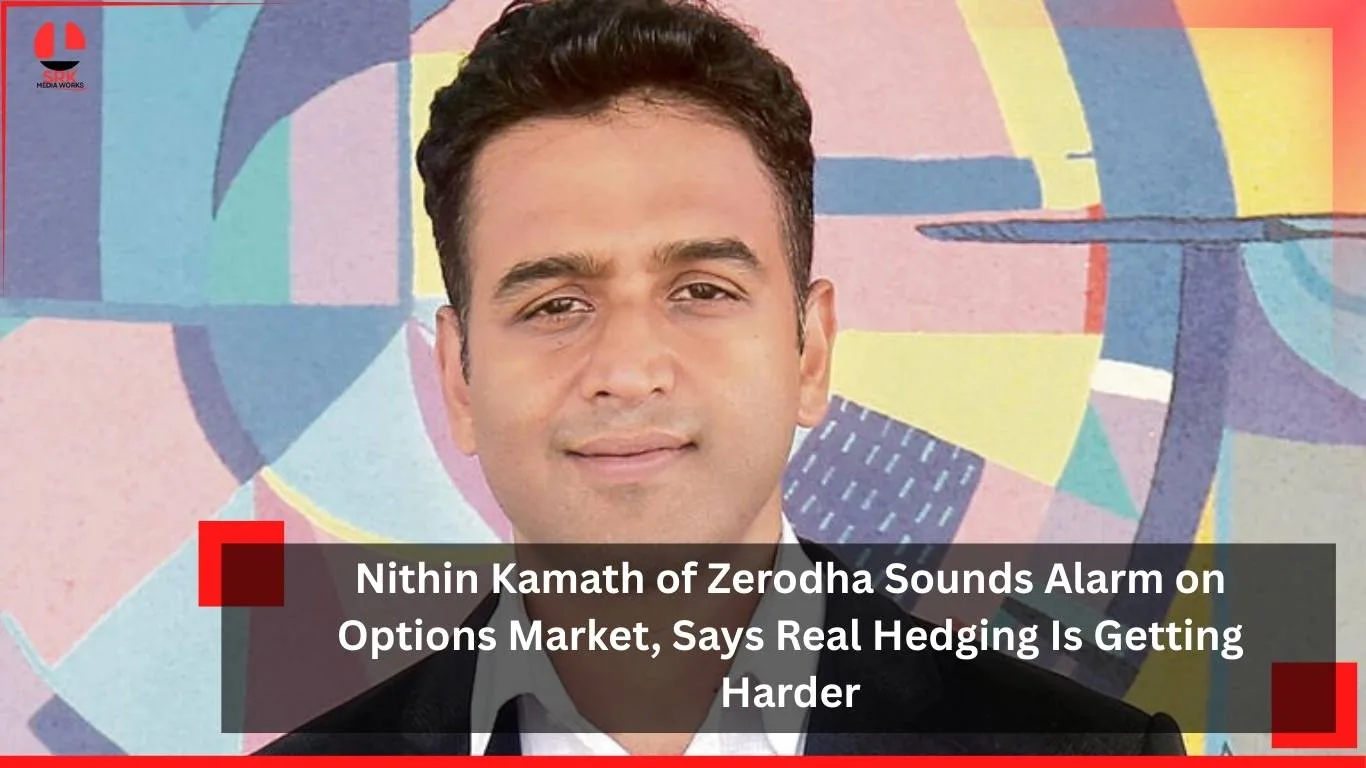
Zerodha’s co-founder and CEO, Nithin Kamath, has raised serious concerns about the state of India’s options market, warning that genuine hedging is becoming increasingly difficult. His remarks have sparked widespread debate among traders, investors, and regulators, highlighting the challenges of balancing speculation with risk management in one of the fastest-growing segments of India’s financial markets.
Background of the Options Market in India
The options market has seen exponential growth in recent years, driven by retail participation and the rise of online trading platforms. While this growth has democratized access to financial instruments, it has also led to concerns about excessive speculation, lack of understanding among retail traders, and systemic risks.
Nithin Kamath’s Concerns
Kamath’s statement underscores several key issues:
- Hedging difficulties: Genuine hedging strategies are being overshadowed by speculative trading.
- Retail dominance: A large portion of options trading is driven by retail investors who may not fully understand the risks.
- Liquidity challenges: Despite high volumes, liquidity in certain contracts remains thin, making effective hedging harder.
- Systemic risk: Excessive speculation could destabilize markets during periods of volatility.
Growth of Options Trading in India
| Year | Options Volume (Contracts in Millions) | % Growth |
|---|---|---|
| 2022 | 1,200 | 15% |
| 2023 | 1,500 | 25% |
| 2024 | 1,950 | 30% |
| 2025 | 2,400 | 23% |
| 2026 | 2,800 (projected) | 17% |
This data illustrates the rapid expansion of options trading, raising questions about sustainability and risk management.
Comparative Analysis of Hedging Practices
| Market | Hedging Effectiveness | Key Challenges |
|---|---|---|
| India | Declining | Retail speculation, liquidity gaps |
| USA | Strong | Complex derivatives, institutional dominance |
| Europe | Moderate | Regulatory constraints, limited retail participation |
| Japan | Stable | Conservative trading culture |
India’s options market stands out for its retail-driven growth, which complicates traditional hedging strategies.
Industry Reactions
- Traders: Some agree with Kamath, noting difficulties in executing effective hedges.
- Analysts: Warn that unchecked speculation could lead to market instability.
- Regulators: May consider stricter rules to ensure hedging remains viable.
Retail Participation and Risks
Retail investors often enter the options market seeking quick profits, but many lack the knowledge to manage risks effectively. This trend has led to:
- Increased volatility in certain contracts.
- Higher chances of retail losses.
- Reduced effectiveness of hedging for institutional players.
Possible Solutions
Experts suggest:
- Enhanced investor education to improve understanding of options.
- Regulatory reforms to balance speculation and hedging.
- Liquidity support measures to strengthen key contracts.
- Encouraging institutional participation to stabilize markets.
Global Context
Globally, options markets thrive when speculation and hedging coexist in balance. India’s challenge lies in ensuring that retail enthusiasm does not undermine the fundamental purpose of derivatives—risk management.
Conclusion
Nithin Kamath’s warning about the difficulties of real hedging in India’s options market is a timely reminder of the need for caution. While retail participation has fueled growth, it has also introduced risks that could destabilize the system. The future of India’s options market will depend on how regulators, institutions, and traders respond to these challenges, ensuring that speculation does not overshadow the core purpose of hedging.
Disclaimer
This article is a synthesized news-style analysis created for informational and educational purposes. It does not represent official statements from Zerodha or regulatory authorities. Readers are encouraged to consult verified financial reports and expert opinions for a complete understanding of the options market and hedging challenges.