




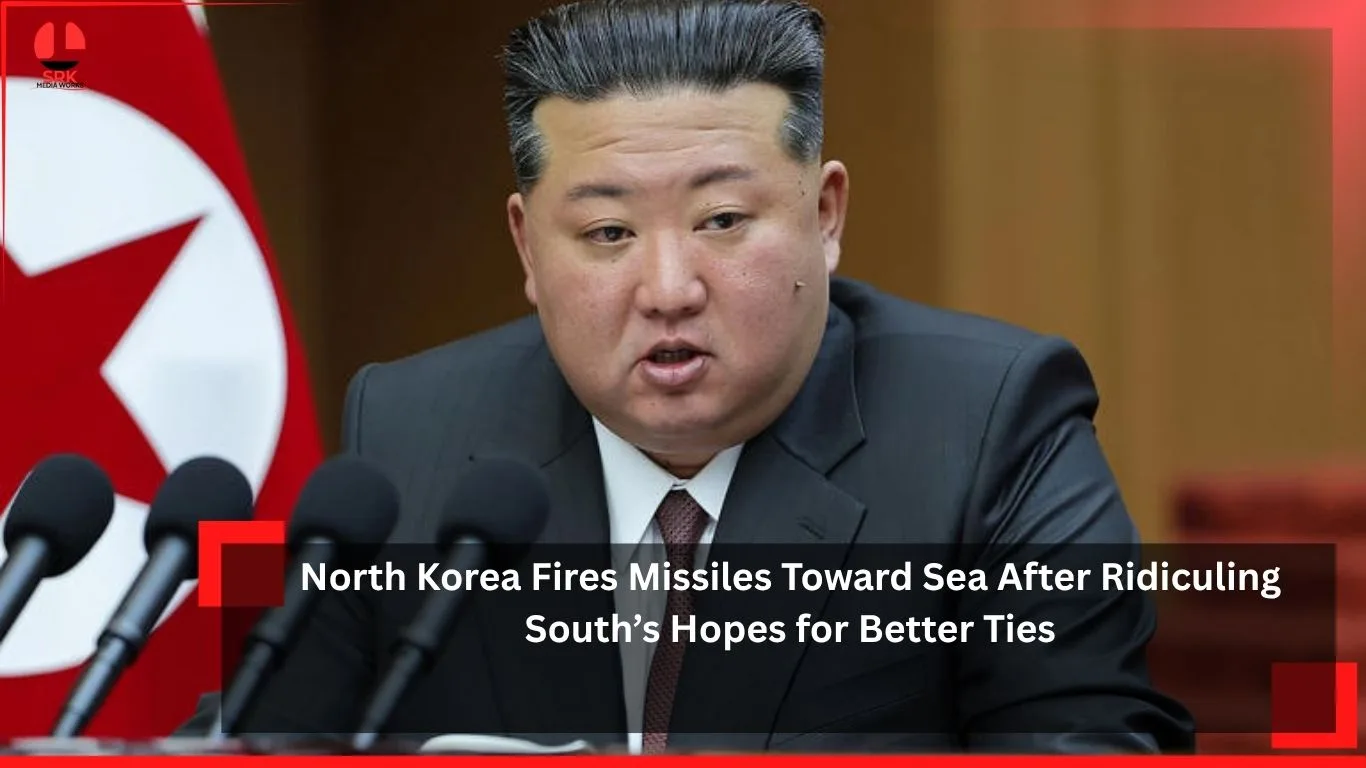
North Korea has once again escalated tensions on the Korean Peninsula by firing multiple missiles toward the sea, shortly after mocking South Korea’s renewed calls for dialogue and improved relations. This latest provocation underscores Pyongyang’s strategy of combining military displays with harsh rhetoric, signaling its unwillingness to engage in reconciliation efforts despite Seoul’s overtures.
Background of the Incident
South Korea recently expressed hopes for better ties with the North, emphasizing dialogue, economic cooperation, and peace-building measures. However, Pyongyang dismissed these overtures as “naïve” and “unrealistic,” ridiculing Seoul’s attempts to restart talks. Within hours of these remarks, North Korea launched missiles into the sea, reinforcing its message of defiance.
North Korea’s Strategy
North Korea’s missile launches serve multiple purposes:
- Demonstration of Power: Showcasing military capabilities to both domestic and international audiences.
- Deterrence: Sending a warning to South Korea, the US, and allies.
- Negotiation Tactic: Using provocations to gain leverage in future talks.
- Internal Messaging: Reinforcing regime strength to maintain domestic control.
Comparative Analysis: South vs. North
| Dimension | South Korea’s Position | North Korea’s Position |
|---|---|---|
| Diplomacy | Advocates dialogue, peace talks | Rejects overtures, ridicules efforts |
| Military | Defensive posture, alliance with US | Offensive displays, missile launches |
| Public Messaging | Hopeful, cooperative | Aggressive, mocking |
| Global Perception | Seen as peace-seeking | Seen as provocative |
Pivot Analysis: Dialogue vs. Provocation
| Factor | Dialogue Approach | Provocation Approach |
|---|---|---|
| Regional Stability | Promotes peace, reduces tensions | Heightens risk of conflict |
| Global Support | Gains backing from allies | Draws condemnation |
| Domestic Impact | Builds trust in leadership | Reinforces regime control |
| Future Outlook | Potential for talks | Continued isolation |
Regional and Global Reactions
- South Korea: Condemned the launches, calling them reckless and counterproductive.
- United States: Reaffirmed commitment to defending South Korea and Japan, urging Pyongyang to return to talks.
- Japan: Expressed concern over missile activity near its waters, strengthening defense readiness.
- China and Russia: Called for restraint, urging both sides to avoid escalation.
Why North Korea Ridicules Dialogue
North Korea often dismisses South Korea’s peace overtures for several reasons:
- Distrust: Belief that Seoul’s initiatives are influenced by Washington.
- Leverage: Prefers to negotiate from a position of strength.
- Domestic Politics: Maintaining a narrative of defiance against external pressure.
- Strategic Timing: Using provocations to influence global diplomatic agendas.
Implications for the Korean Peninsula
The missile launches highlight the fragile state of inter-Korean relations. Key implications include:
- Security Risks: Increased threat perception in South Korea and Japan.
- Diplomatic Challenges: Reduced chances of immediate dialogue.
- Military Readiness: Heightened alert levels among US and South Korean forces.
- Global Concern: Renewed fears of instability in Northeast Asia.
Future Outlook
The future of inter-Korean relations remains uncertain. Possible scenarios include:
- Continued Provocations: North Korea may persist with missile tests to assert dominance.
- Conditional Dialogue: Talks may resume only if Pyongyang perceives strategic benefits.
- Regional Cooperation: South Korea, the US, and Japan may strengthen trilateral defense ties.
- Global Mediation: China and Russia may attempt to broker restraint.
Conclusion
North Korea’s decision to fire missiles toward the sea after ridiculing South Korea’s hopes for better ties reflects its ongoing strategy of defiance and provocation. While Seoul continues to advocate dialogue and reconciliation, Pyongyang’s actions highlight the deep mistrust and strategic divergence between the two Koreas. The incident underscores the fragile balance on the peninsula, where peace remains elusive and tensions continue to dominate the narrative.
Disclaimer
This article is an analytical overview based on geopolitical assessments and publicly available information. It does not endorse or criticize any nation or political leader. The content is intended for informational and educational purposes only, and readers should consider multiple perspectives before forming conclusions.