

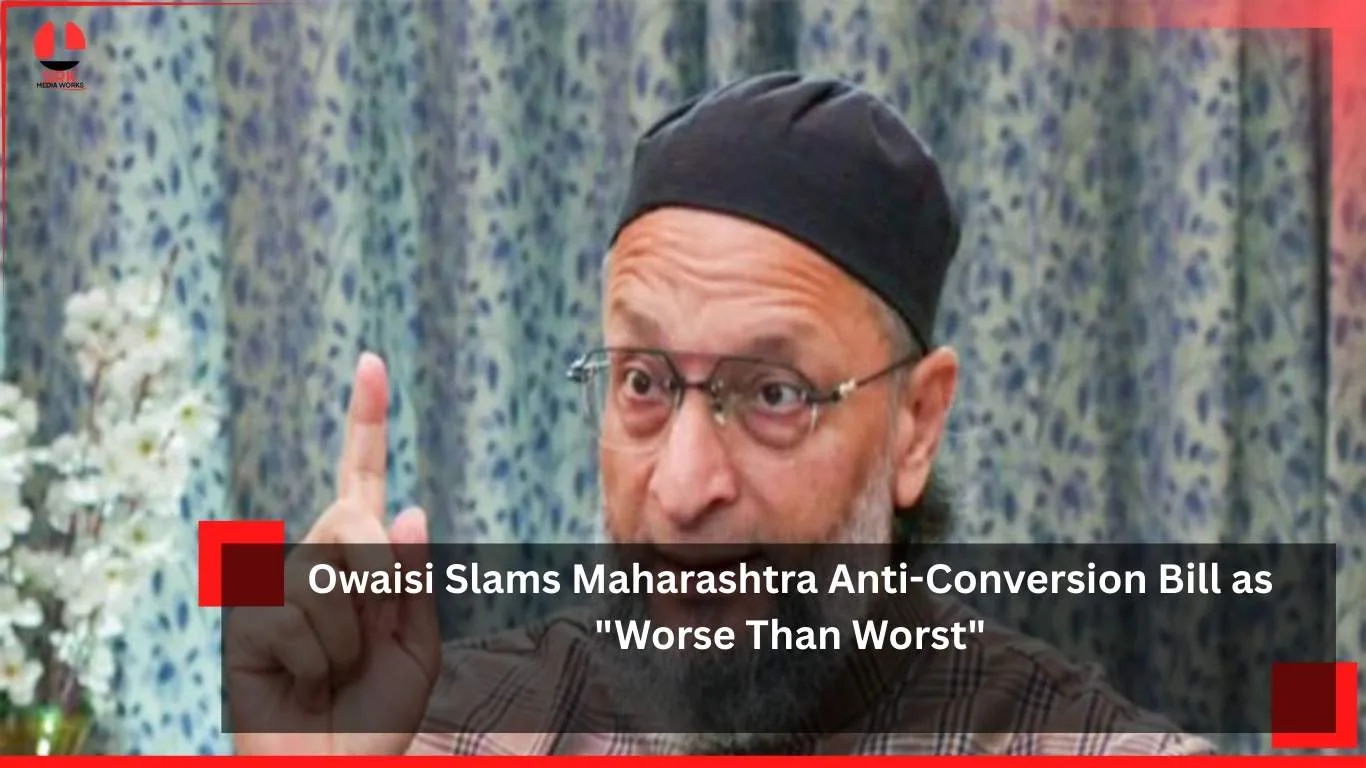
The political discourse in Maharashtra has intensified after AIMIM chief Asaduddin Owaisi strongly criticized the state’s proposed anti-conversion bill, calling it “worse than worst.” His remarks have sparked a heated debate across political circles, civil society, and legal experts, with many questioning the implications of such legislation on fundamental rights and religious freedoms.
Understanding the Anti-Conversion Bill
The Maharashtra government has introduced a bill aimed at curbing religious conversions allegedly carried out through coercion, inducement, or fraudulent means. The bill proposes stringent penalties, including imprisonment and fines, for individuals found guilty of violating its provisions.
Supporters of the bill argue that it is necessary to protect vulnerable communities from exploitation. Critics, however, see it as an infringement on personal liberty and a violation of constitutional rights guaranteed under Article 25, which ensures freedom of religion.
Owaisi’s Criticism
Asaduddin Owaisi, known for his outspoken views on issues of minority rights, condemned the bill in strong terms. He described it as “worse than worst,” suggesting that it goes beyond existing anti-conversion laws in other states and poses a grave threat to democratic values.
Owaisi’s criticism centers on several key points:
- Violation of Fundamental Rights: He argues that the bill undermines the constitutional right to freely practice and propagate religion.
- Targeting Minorities: According to him, the legislation disproportionately affects minority communities, creating an atmosphere of fear and mistrust.
- Political Motives: Owaisi believes the bill is politically motivated, designed to polarize society and consolidate certain vote banks.
Political Reactions
The bill has triggered diverse reactions across the political spectrum:
| Political Party/Leader | Reaction Type | Key Observations |
|---|---|---|
| AIMIM (Owaisi) | Strong Opposition | Called it “worse than worst” |
| BJP (Ruling Party) | Supportive | Claims it protects vulnerable communities |
| Congress | Critical | Warns of misuse and violation of rights |
| Regional Parties | Mixed | Some cautious, others openly opposed |
This distribution of reactions highlights the polarized nature of the debate, with ruling parties defending the bill and opposition leaders raising concerns about its broader implications.
Legal and Constitutional Concerns
Legal experts have pointed out several issues with the bill:
- Ambiguity in Definitions: Terms like “inducement” and “fraudulent conversion” are open to interpretation, which could lead to misuse.
- Burden of Proof: The bill places the burden of proof on the accused, which contradicts established legal principles.
- Conflict with Fundamental Rights: The legislation may conflict with constitutional guarantees of freedom of religion and personal liberty.
Social Implications
Beyond the legal framework, the bill has significant social implications:
- Community Relations: It could strain relations between religious communities, fostering mistrust.
- Freedom of Choice: Individuals may feel restricted in their ability to make personal decisions about faith.
- Civil Society Response: NGOs and activists have expressed concern that the bill could be used to harass minority groups.
Comparative Analysis with Other States
Several Indian states, including Uttar Pradesh, Madhya Pradesh, and Gujarat, have enacted similar anti-conversion laws. However, critics argue that Maharashtra’s proposed bill is more stringent.
| State | Year Introduced | Key Features | Criticism |
|---|---|---|---|
| Uttar Pradesh | 2020 | Criminalizes conversions by force | Alleged misuse against minorities |
| Madhya Pradesh | 2021 | Requires prior approval for conversion | Seen as restrictive and unconstitutional |
| Gujarat | 2021 | Stringent penalties for violations | Criticized for vague definitions |
| Maharashtra | 2026 (Proposed) | Stronger penalties, broader scope | Called “worse than worst” by Owaisi |
This comparison shows that Maharashtra’s bill is perceived as harsher than those in other states, raising concerns about its potential impact.
Public Sentiment
Public opinion on the bill is divided. While some support it as a measure to protect vulnerable communities, others see it as an attack on personal freedoms. Social media platforms have been flooded with debates, with hashtags both supporting and opposing the legislation trending simultaneously.
International Perspective
International observers and human rights organizations are also monitoring the situation. They argue that such laws could tarnish India’s image as a secular democracy and raise questions about its commitment to protecting minority rights.
Conclusion
The Maharashtra anti-conversion bill has become a flashpoint in Indian politics, with Owaisi’s sharp criticism amplifying concerns about its implications. Whether the bill will be passed in its current form remains uncertain, but the debate it has sparked highlights the ongoing tension between legislative measures and constitutional freedoms.
Disclaimer
This article is based on available information and political analysis. It does not confirm or deny legislative outcomes and should not be interpreted as legal advice. Readers are encouraged to follow official government notifications and credible sources for verified updates.