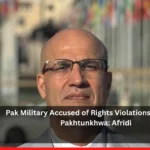


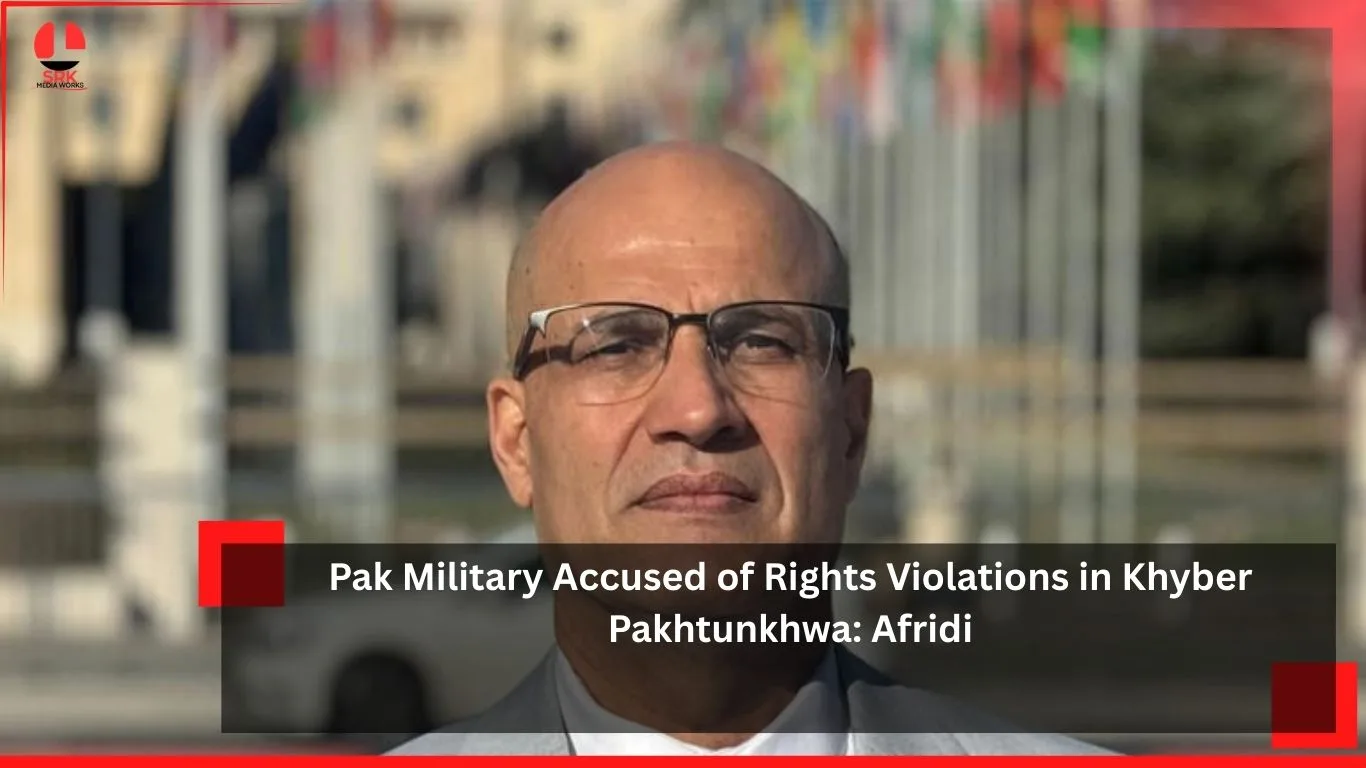
Concerns over human rights in Pakistan’s Khyber Pakhtunkhwa province have intensified after political leader Shahid Afridi accused the military of committing violations against civilians. His remarks have reignited debates about the balance between security operations and fundamental rights in a region long plagued by insurgency and instability.
Background of the Allegations
Khyber Pakhtunkhwa, bordering Afghanistan, has historically been a hotspot for militancy and counterinsurgency operations. The military has maintained that its presence is essential to ensure peace and stability. However, Afridi’s accusations suggest that civilians are suffering from arbitrary detentions, harassment, and restrictions on movement.
Local communities have repeatedly voiced concerns about heavy-handed tactics, and Afridi’s statement adds political weight to these grievances. His remarks have drawn attention from civil society groups and international observers who have long monitored the situation.
Why Afridi’s Statement Matters
Afridi is not only a public figure but also a voice with influence across political and social spheres. His accusations amplify the concerns of residents who often lack platforms to express their experiences.
By publicly raising the issue, Afridi has forced policymakers, human rights organizations, and international stakeholders to confront the tension between national security and civil liberties.
Key Highlights of the Allegations
| Aspect | Details |
|---|---|
| Region | Khyber Pakhtunkhwa |
| Accusations | Arbitrary detentions, harassment, restrictions |
| Source | Shahid Afridi |
| Military Position | Operations aimed at security |
| Impact | Civilian distress, political debate |
Comparative Analysis of Rights Concerns in Conflict Zones
| Region | Allegations | Military Justification | Outcome |
|---|---|---|---|
| Khyber Pakhtunkhwa | Detentions, harassment | Counterinsurgency | Ongoing debate |
| Balochistan | Disappearances, protests | Security operations | International concern |
| Kashmir | Restrictions, curfews | National security | Global scrutiny |
| Tribal Areas | Civilian displacement | Anti-terror campaigns | Humanitarian issues |
This comparison shows that rights concerns in conflict zones often stem from the tension between military objectives and civilian welfare.
Public Reactions
- Supporters of Afridi: Applauded his courage in speaking out against powerful institutions.
- Critics: Questioned his motives, suggesting political opportunism.
- Neutral Voices: Called for independent investigations to verify claims.
Analytical Breakdown of Stakeholders
| Stakeholder | Position | Impact |
|---|---|---|
| Shahid Afridi | Accuses military of violations | Amplifies civilian concerns |
| Military | Denies wrongdoing | Maintains security narrative |
| Civilians | Report distress | Demand accountability |
| Human Rights Groups | Call for transparency | Push for investigations |
| International Community | Observes closely | Potential diplomatic pressure |
Broader Impact on Society
The allegations highlight the ongoing struggle to balance security with human rights in Pakistan. They raise questions about accountability, transparency, and the role of civil society in conflict zones.
Afridi’s statement may encourage more open discussions about rights, challenging narratives that prioritize security over civilian welfare. It also underscores the importance of independent monitoring and reporting in regions affected by military operations.
Conclusion
The accusations of rights violations in Khyber Pakhtunkhwa have reignited debates about the role of the military in conflict zones. Shahid Afridi’s statement has brought civilian concerns to the forefront, demanding accountability and transparency.
As Pakistan continues to grapple with insurgency and instability, the challenge lies in ensuring that security operations do not come at the expense of fundamental rights. The coming months will be critical in determining whether these allegations lead to meaningful reforms or remain part of a recurring cycle of controversy.
Disclaimer
This article is intended for informational purposes only and does not constitute legal or political advice. The content is based on publicly available information and analysis at the time of writing. Readers are encouraged to consider multiple perspectives before forming conclusions on sensitive issues.