

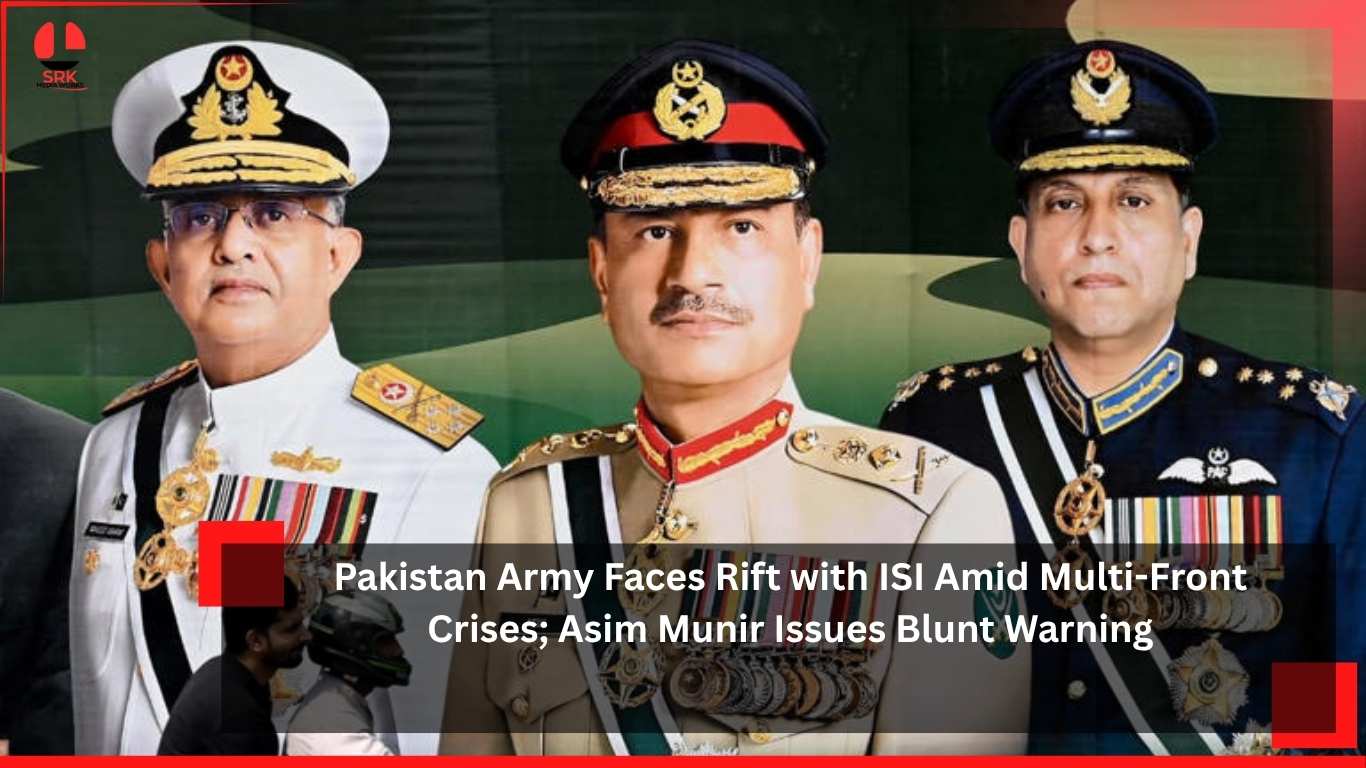
The political and security landscape of Pakistan has once again been shaken by reports of a widening rift between the Pakistan Army and its premier intelligence agency, the Inter-Services Intelligence (ISI). At the center of this storm stands Chief of Army Staff (COAS) General Asim Munir, who has reportedly issued a blunt warning to both internal and external stakeholders as the country grapples with multiple crises. This development comes at a time when Pakistan is facing economic instability, political turbulence, and rising security threats from militant groups, making the alleged discord between the two most powerful institutions particularly alarming.
Background of the Rift
The Pakistan Army and ISI have historically operated in close coordination, often shaping the country’s political and security narratives. However, recent reports suggest that tensions have emerged over strategic decision-making, political interference, and the handling of internal dissent. General Asim Munir, who assumed command in late 2022, has sought to reassert the army’s dominance and streamline its role, while ISI’s involvement in political maneuvering has reportedly created friction.
Asim Munir’s Warning
General Munir’s warning is said to be directed not only at political actors but also at elements within the establishment who may be undermining institutional unity. His message emphasized discipline, loyalty, and the need for cohesion at a time when Pakistan is facing:
- Economic crisis: Inflation, dwindling foreign reserves, and IMF negotiations.
- Political instability: Power struggles between ruling coalitions and opposition parties.
- Security threats: Escalating militant attacks in Khyber Pakhtunkhwa and Balochistan.
Munir’s stance reflects his determination to prevent fragmentation within the military-intelligence nexus, which has historically been the backbone of Pakistan’s governance structure.
Multi-Front Crises Facing Pakistan
1. Economic Challenges
Pakistan’s economy is under severe strain, with rising inflation and unemployment. The IMF bailout conditions have added pressure on the government to implement austerity measures, which in turn fuel public discontent.
2. Political Turbulence
The ongoing confrontation between the government and opposition parties has paralyzed legislative processes. Allegations of ISI’s involvement in political engineering have further complicated the situation, raising questions about institutional neutrality.
3. Security Concerns
Militant groups have intensified attacks, targeting both civilians and security forces. The resurgence of terrorism has forced the army to launch new operations, but coordination issues between military and intelligence wings have reportedly hampered effectiveness.
Comparative Analysis of Army and ISI Roles
| Institution | Primary Role | Current Challenges | Public Perception |
|---|---|---|---|
| Pakistan Army | National defense, internal stability | Managing political neutrality, counter-terrorism | Seen as dominant but under scrutiny |
| ISI | Intelligence gathering, covert operations | Alleged political interference, coordination with army | Viewed as powerful but controversial |
Crisis Impact Assessment
| Crisis Type | Short-Term Impact | Long-Term Risk |
|---|---|---|
| Economic | Inflation, protests | Sovereign default, weakened state |
| Political | Governance paralysis | Institutional breakdown |
| Security | Rising attacks | Regional instability |
Implications of the Rift
The alleged rift between the army and ISI could have far-reaching consequences:
- Governance paralysis: If institutions fail to coordinate, political instability may worsen.
- Security lapses: Lack of unity could embolden militant groups.
- Foreign relations: Allies and adversaries alike may exploit Pakistan’s internal divisions.
- Public trust erosion: Citizens may lose confidence in the state’s ability to manage crises.
Asim Munir’s Leadership Style
General Munir is known for his strict discipline and emphasis on institutional integrity. His warning signals a shift toward reasserting military control over intelligence operations, potentially curbing ISI’s political role. This could reshape Pakistan’s civil-military balance, though it risks deepening internal tensions.
Historical Context
Pakistan has witnessed similar rifts in the past, particularly during transitions of power or major national crises. The army and ISI have occasionally clashed over policy directions, but such disputes were often resolved behind closed doors. The current situation appears more public, reflecting the gravity of Pakistan’s challenges.
Public and Political Reactions
Political parties have reacted cautiously, with some welcoming Munir’s emphasis on discipline while others criticize the army’s continued involvement in politics. Civil society voices have urged transparency and accountability, warning that institutional rifts could destabilize the country further.
Regional and International Dimensions
Pakistan’s internal discord has implications beyond its borders:
- India: May view instability as an opportunity to strengthen its regional position.
- China: Concerned about the impact on CPEC projects.
- United States: Watches closely due to counter-terrorism interests.
- Afghanistan: Instability could spill over, affecting border security.
Future Outlook
The coming months will be critical in determining whether General Munir’s warning leads to greater cohesion or deepens the rift. Pakistan’s ability to navigate economic reforms, political reconciliation, and security operations will depend heavily on the unity of its institutions.
Analytical Summary
The reported rift between the Pakistan Army and ISI amid multi-front crises underscores the fragility of Pakistan’s governance structure. General Asim Munir’s blunt warning reflects both the urgency of the situation and his determination to restore discipline. Whether this results in institutional harmony or further discord remains to be seen, but the stakes for Pakistan’s stability are undeniably high.
Disclaimer
This article is based on publicly available reports and analytical perspectives. It does not claim to represent official statements from the Pakistan Army, ISI, or government authorities. The content is intended for informational purposes only and should not be construed as definitive or authoritative on sensitive national security matters.