

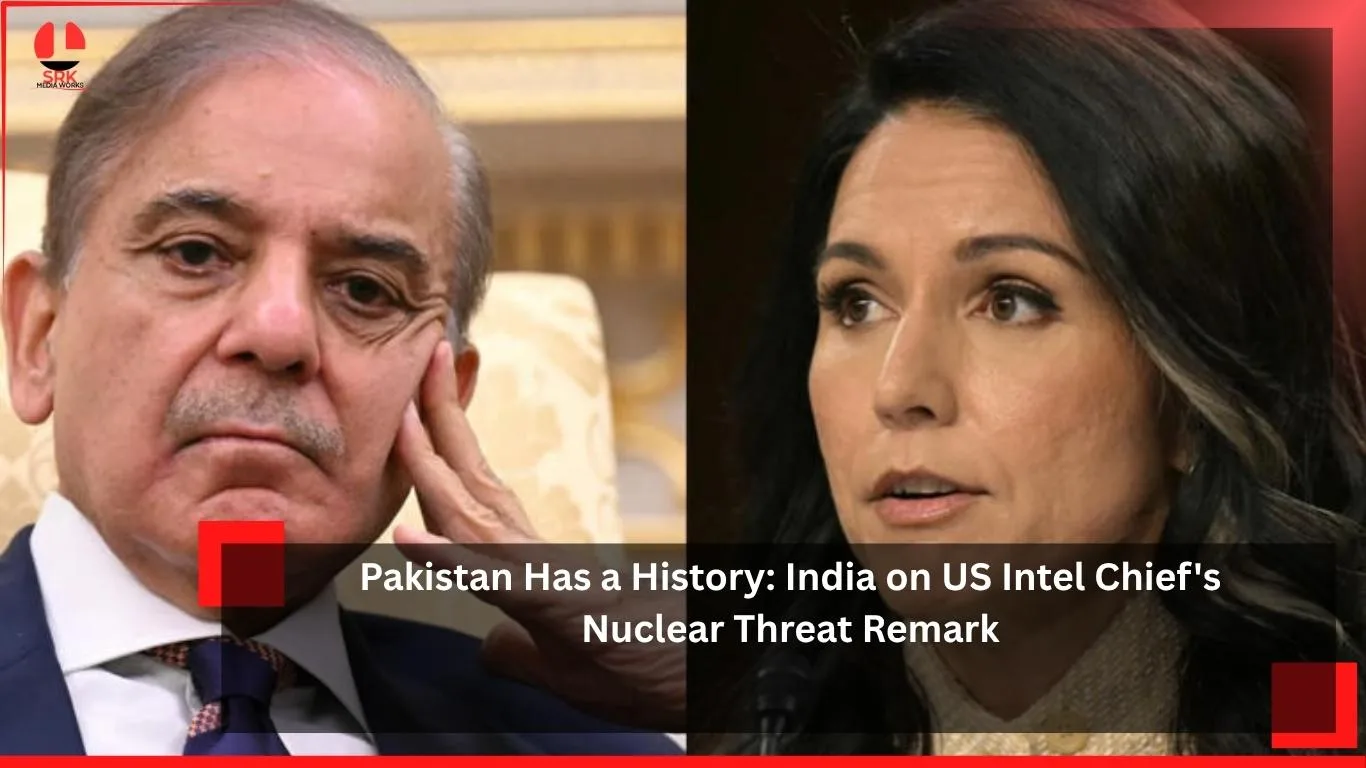
India has responded strongly to recent remarks made by the US intelligence chief regarding Pakistan’s nuclear threat, emphasizing that Pakistan has a long history of irresponsible behavior with its nuclear arsenal. The statement has reignited debates over South Asia’s security dynamics, nuclear stability, and the role of international powers in managing regional tensions. India’s reaction underscores its concerns about Pakistan’s track record and the risks posed by nuclear weapons in volatile political environments.
Background of the Controversy
The US intelligence chief’s remarks highlighted Pakistan’s nuclear capabilities as a potential global threat, citing instability and the possibility of misuse. India quickly pointed out that Pakistan’s history of nuclear brinkmanship, coupled with its support for cross-border militancy, makes the threat credible and dangerous.
India’s response reflects its longstanding position that Pakistan’s nuclear program has often been used as a shield for aggressive policies, rather than a deterrent for peace.
India’s Perspective
India’s officials stressed that Pakistan has repeatedly demonstrated irresponsible behavior, including:
- Nuclear proliferation links: Past allegations of sharing nuclear technology with other states.
- Terrorism shielded by nuclear deterrence: Use of nuclear weapons as a cover for supporting militant groups.
- Political instability: Frequent changes in leadership and military dominance raise concerns about nuclear command and control.
Comparative Analysis of Nuclear Postures
| Country | Nuclear Policy | Global Perception | Risk Factor |
|---|---|---|---|
| India | No First Use (NFU) | Responsible, restrained | Low |
| Pakistan | First Use possible | Risk-prone, unstable | High |
| US | Strategic deterrence | Global enforcer | Moderate |
| China | NFU declared | Expanding arsenal | Moderate |
Regional Security Concerns
South Asia remains one of the most volatile nuclear regions in the world. The India-Pakistan rivalry, combined with external influences, creates a dangerous mix. The US intelligence chief’s remarks highlight the global concern that instability in Pakistan could lead to catastrophic consequences.
Historical Context
Pakistan’s nuclear program has been controversial since its inception. India recalls several instances where Pakistan’s nuclear posture was used to escalate tensions:
- Kargil War (1999): Nuclear threats were implied during the conflict.
- Cross-border terrorism: Pakistan’s nuclear arsenal often cited as a deterrent against Indian retaliation.
- International proliferation concerns: Past links to illicit nuclear networks.
Global Reactions
The remarks have drawn attention from multiple stakeholders:
- United States: Concerned about nuclear security in Pakistan.
- India: Emphasizing Pakistan’s history of misuse.
- China: Watching closely due to regional balance.
- International community: Calls for stronger safeguards and monitoring.
Crisis Impact Assessment
| Crisis Type | Short-Term Impact | Long-Term Risk |
|---|---|---|
| Nuclear threat | Heightened tensions | Regional instability |
| Terrorism | Increased attacks | Global security concerns |
| Political instability | Weak governance | Nuclear command risks |
India’s Strategic Response
India has reiterated its commitment to responsible nuclear behavior, highlighting its No First Use policy and strong command-and-control systems. By contrasting its record with Pakistan’s, India seeks to reassure the international community while pressing for greater scrutiny of Pakistan’s nuclear program.
Analytical Summary
India’s sharp response to the US intelligence chief’s nuclear threat remark underscores its longstanding concerns about Pakistan’s nuclear history. By pointing to Pakistan’s record of instability, proliferation, and misuse, India aims to highlight the risks posed to regional and global security. The controversy has reignited debates about nuclear responsibility, deterrence, and the role of international powers in ensuring stability in South Asia.
Disclaimer
This article is based on publicly available reports and analytical perspectives. It does not represent official statements from the governments of India, Pakistan, or the United States. The content is intended for informational purposes only and should not be construed as definitive or authoritative on sensitive geopolitical matters.