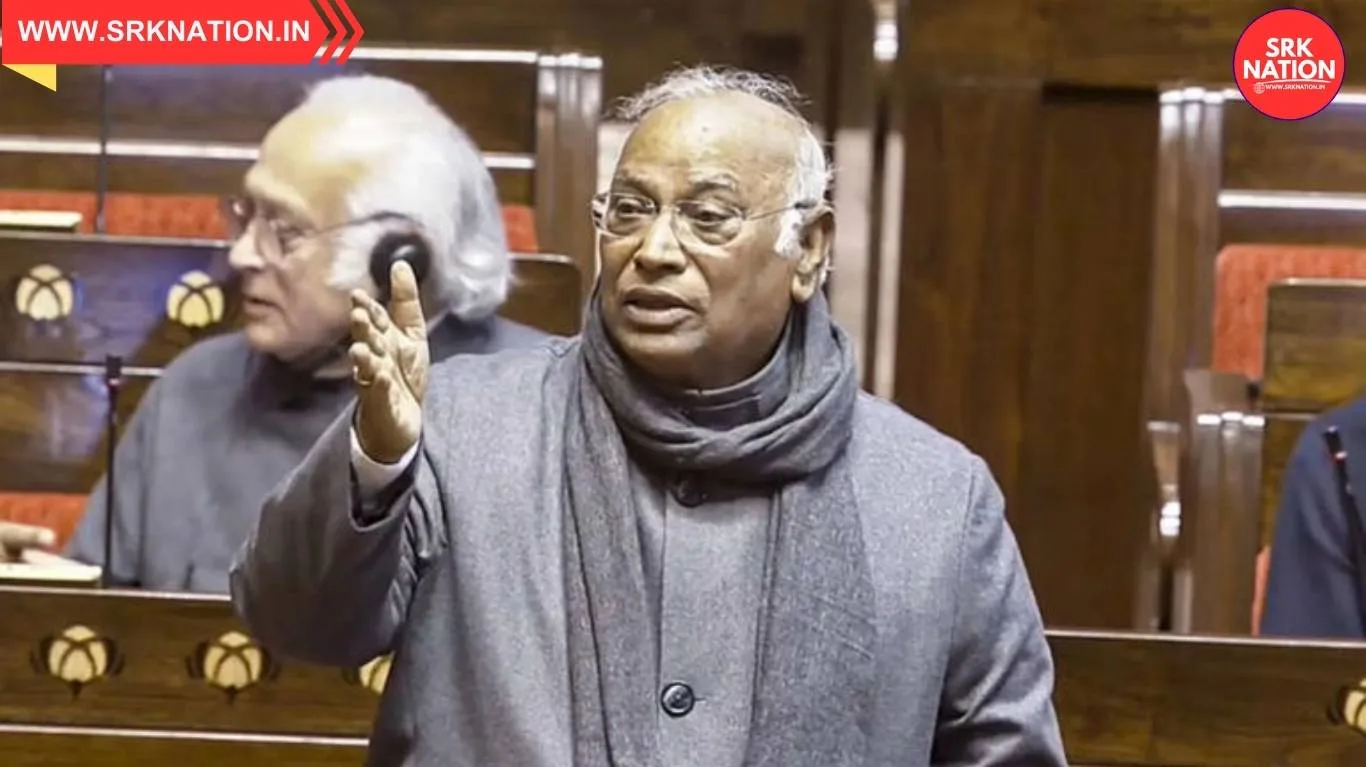
Congress President Mallikarjun Kharge has launched a sharp attack on Prime Minister Narendra Modi, alleging that the PM “does not have the courage to answer questions posed to him.” Kharge’s remarks came during a press briefing where he criticized the government’s handling of key national issues and accused Modi of avoiding accountability in Parliament.
Background of the Statement
Kharge’s comments were made in the context of ongoing debates in Parliament and public discourse. The Congress leader accused the Prime Minister of sidestepping questions related to governance, economic challenges, unemployment, and social issues. He claimed that Modi prefers delivering speeches outside Parliament rather than engaging in direct debates with opposition leaders.
Key Points of Kharge’s Criticism
- Avoidance of Accountability: Kharge alleged that Modi avoids answering tough questions in Parliament.
- Focus on Speeches: He claimed the PM prefers public rallies and televised addresses over parliamentary debate.
- Economic Concerns: Kharge highlighted unemployment, inflation, and farmer distress as issues left unanswered.
- Democratic Responsibility: He emphasized that the Prime Minister must respond directly to the people’s representatives.
Analysis of the Political Debate
| Factor | Traditional Expectation | Current Scenario (2026) | Outcome Observed |
|---|---|---|---|
| Parliamentary Role | PM engages in debate | Modi accused of avoiding questions | Opposition criticism |
| Public Perception | PM accountable to citizens | Seen as focusing on speeches | Divided opinion |
| Opposition Strategy | Raise issues in Parliament | Direct attack on PM’s silence | Political escalation |
| Governance Impact | Transparent communication | Questions remain unanswered | Accountability concerns |
| Electoral Impact | Debate shapes voter views | Opposition framing PM as evasive | Potential influence |
Comparative Analysis of Political Accountability
| Leader | Approach to Parliament | Public Perception | Opposition View |
|---|---|---|---|
| Narendra Modi | Focus on speeches, limited Q&A | Strong mass connect | Accused of avoiding debate |
| Mallikarjun Kharge | Aggressive questioning | Seen as vocal critic | Positions Congress as watchdog |
| Rahul Gandhi | Direct criticism in rallies | Mixed reception | Consistent opposition stance |
| Regional Leaders | Active in state assemblies | Local accountability | Limited national impact |
Public and Political Reaction
Kharge’s remarks have sparked debate across political circles:
- Congress Supporters: Applauded Kharge for holding the government accountable.
- BJP Leaders: Dismissed the criticism, arguing that Modi engages with the public through multiple platforms.
- Neutral Observers: Noted that the exchange reflects the deepening polarization in Indian politics.
Broader Implications
The criticism underscores the tension between government and opposition in India’s parliamentary democracy. It raises questions about:
- The role of Parliament as a forum for accountability.
- The balance between public speeches and parliamentary debate.
- The impact of political communication strategies on voter perception.
Future Outlook
As India heads toward upcoming elections, such exchanges are likely to intensify. Opposition leaders will continue to frame Modi as evasive, while the BJP will emphasize his mass connect and governance record. The debate over accountability and courage in answering questions may become a recurring theme in political campaigns.
Conclusion
Mallikarjun Kharge’s statement that PM Modi “does not have the courage to answer questions posed to him” highlights the opposition’s strategy of framing the Prime Minister as evasive in Parliament. While supporters see Modi’s communication style as effective, critics argue that democratic accountability requires direct engagement with lawmakers. The clash reflects the broader contest over narrative, governance, and political responsibility in India’s democracy.
Disclaimer
This article is intended for informational and analytical purposes only. It summarizes political statements and debates in India. It does not constitute endorsement, political opinion, or professional consultation. Readers are encouraged to verify facts independently and follow official parliamentary records for accurate information.