

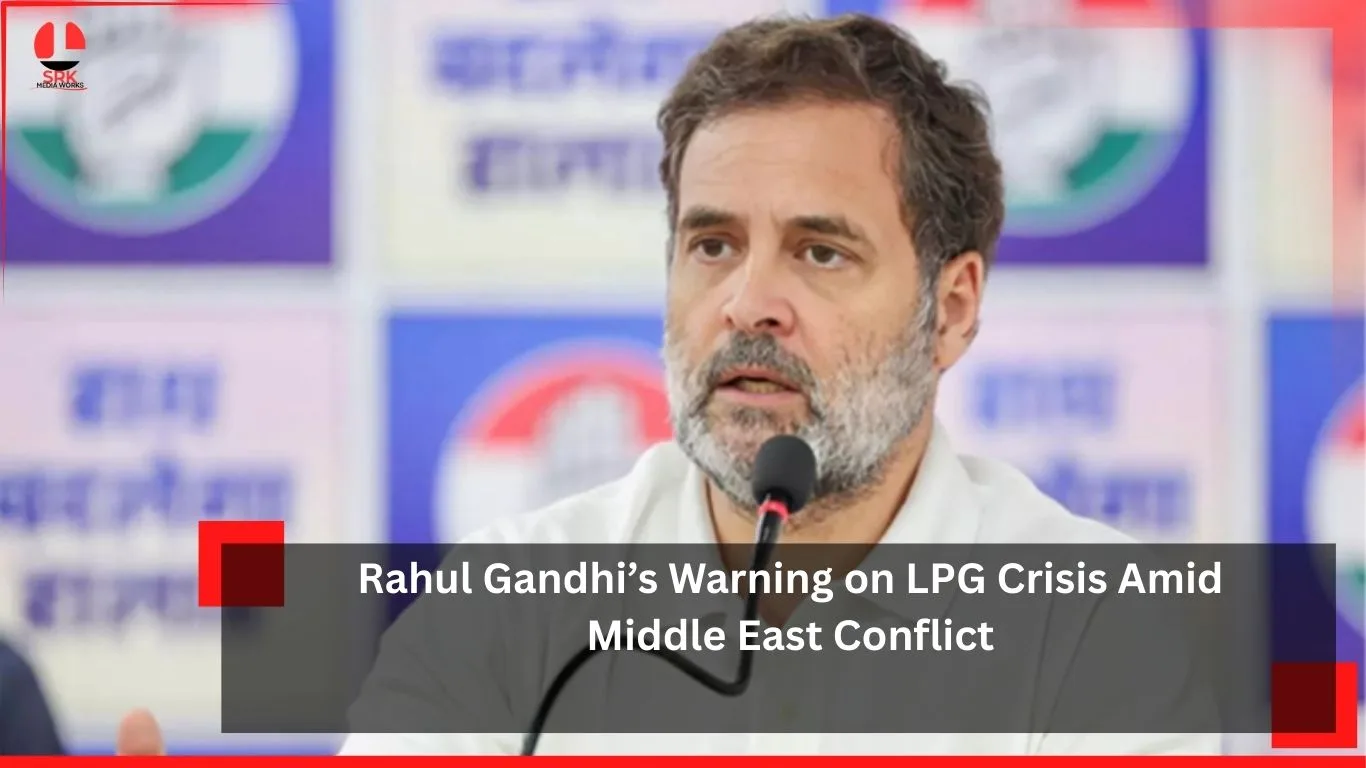
India is bracing for a potential energy shock as the Middle East conflict disrupts global LPG supplies. Congress leader Rahul Gandhi has sounded an alarm, cautioning that the crisis could escalate into a major economic and social challenge. His remarks underline the urgency of addressing India’s heavy dependence on imported LPG and the vulnerability of households and industries to global disruptions.
Background: Middle East Conflict and Energy Supply
The Middle East remains the world’s primary hub for oil and LPG exports. Escalating tensions have disrupted shipping routes, raised insurance costs, and created uncertainty in supply chains. For India, which imports nearly 60% of its LPG requirements from the Gulf region, this situation poses a serious risk to energy security.
Rahul Gandhi’s Concerns
Rahul Gandhi’s statement highlights:
- The financial strain on middle-class families already coping with inflation.
- The impact on rural households, where LPG adoption has been central to welfare schemes.
- The risk to industries reliant on LPG as a fuel source.
- The need for urgent government action to diversify supply chains and stabilize domestic prices.
Household LPG Price Trends
LPG is a lifeline for millions of households. Rising prices force families to either cut consumption or revert to traditional fuels, which carry health and environmental risks.
| Year | Average LPG Price (INR per cylinder) | % Increase |
|---|---|---|
| 2022 | 950 | 5% |
| 2023 | 1050 | 10% |
| 2024 | 1150 | 9% |
| 2025 | 1250 | 8% |
| 2026 | 1450 (projected) | 16% |
Industrial Impact
Industries such as ceramics, glass, and food processing rely heavily on LPG. Rising costs can lead to:
- Higher production expenses.
- Reduced competitiveness in global markets.
- Potential layoffs if companies fail to absorb the shock.
Government’s Response
The government has initiated measures including:
- Exploring alternative suppliers in Africa and Southeast Asia.
- Negotiating long-term contracts to stabilize prices.
- Promoting domestic production and biogas adoption.
Critics argue these steps may not be enough to counter the immediate crisis.
Comparative Analysis of LPG Dependence
India’s vulnerability becomes clear when compared globally.
| Region | % Dependence on Imported LPG | Key Suppliers |
|---|---|---|
| India | 60% | Middle East |
| China | 45% | Middle East, Africa |
| Europe | 30% | North Sea, Middle East |
| USA | 10% | Domestic Production |
Political Dimension
Rahul Gandhi’s warning is both economic and political. By focusing on the LPG crisis, he is pressing the government to act decisively while resonating with households directly affected by rising costs. This issue could influence public opinion and political discourse in the months ahead.
Possible Solutions
Experts suggest:
- Diversifying supply chains to reduce dependence on the Middle East.
- Investing in renewable energy to offset fossil fuel reliance.
- Expanding domestic LPG production through refineries and natural gas projects.
- Adjusting subsidies to protect vulnerable households.
Social Consequences
If the crisis worsens:
- Rural households may revert to biomass fuels, increasing indoor pollution.
- Urban families may face tighter budgets, reducing disposable income.
- Women, often primary users of LPG in households, may bear the brunt of the crisis.
Global Ripple Effect
The LPG crisis is not limited to India. Countries across Asia and Africa are experiencing similar challenges. The interconnected nature of global energy markets means disruptions in one region quickly spread worldwide.
Conclusion
Rahul Gandhi’s warning underscores the seriousness of the LPG crisis amid Middle East conflict. While government measures are underway, the situation demands urgent attention, strategic planning, and long-term diversification of energy sources. The coming months will reveal whether India can shield its citizens from the worst effects of global energy instability.
Disclaimer
This article is a synthesized news-style analysis created for informational and educational purposes. It does not represent official government statements or political endorsements. Readers are encouraged to consult multiple sources and verified reports for a comprehensive understanding of the LPG crisis and related geopolitical developments.