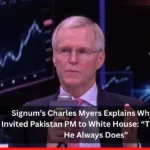

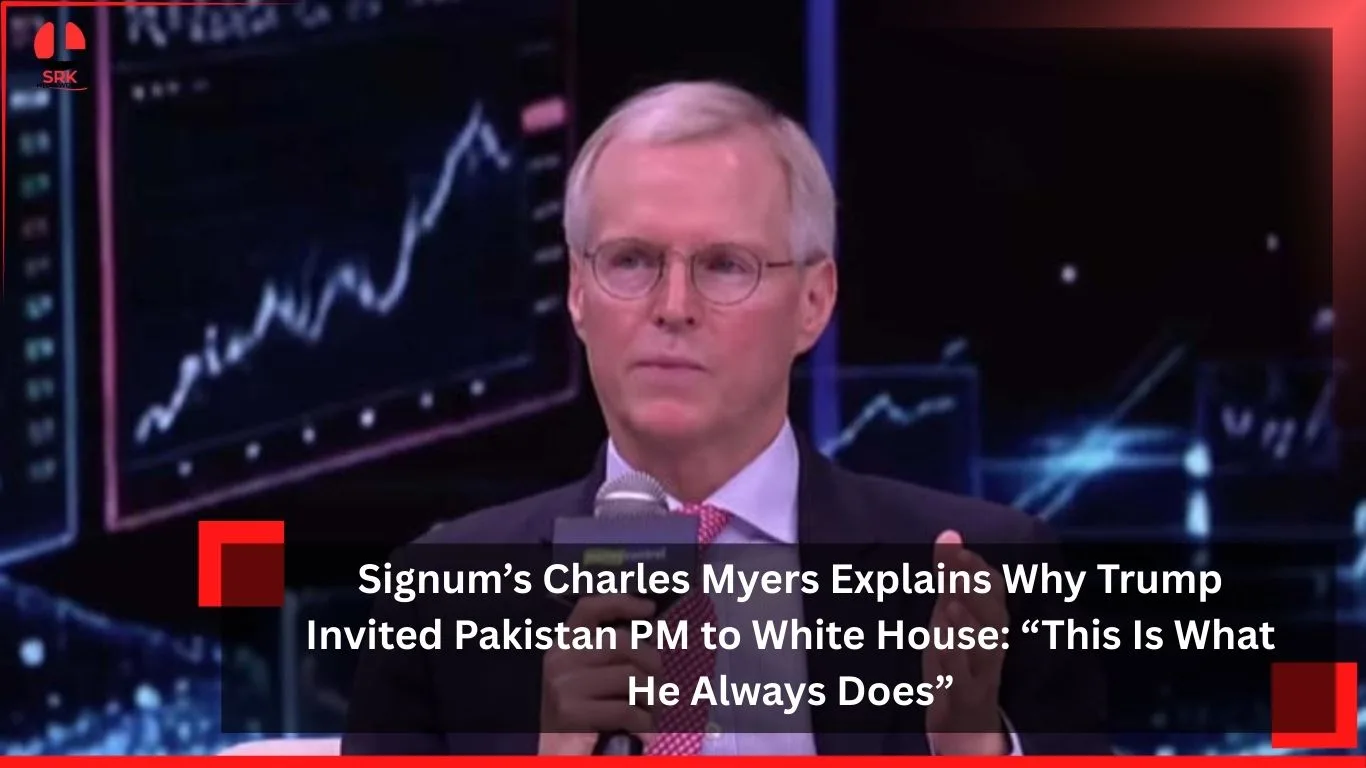
A recent statement by Charles Myers, Chairman of Signum Global Advisors, has reignited debate over former U.S. President Donald Trump’s diplomatic style. Myers, in his analysis, explained why Trump invited the Prime Minister of Pakistan to the White House, remarking, “This is what he always does.” The comment sheds light on Trump’s unconventional approach to foreign policy and his tendency to surprise both allies and critics with sudden diplomatic gestures.
Background of the Meeting
The invitation of Pakistan’s Prime Minister to the White House was seen as a bold move, given the complex U.S.-Pakistan relationship. Historically, ties between Washington and Islamabad have oscillated between cooperation and tension, particularly over issues such as:
- Counterterrorism cooperation
- Military aid and defense partnerships
- Regional stability in South Asia
- U.S. relations with India and Afghanistan
Trump’s decision to extend the invitation was interpreted by many as part of his broader strategy of keeping global leaders off balance and asserting his personal style of diplomacy.
Charles Myers’ Perspective
Charles Myers emphasized that Trump’s actions were consistent with his pattern of unpredictability. According to Myers:
- Personal Diplomacy: Trump often bypassed traditional diplomatic channels, preferring direct engagement.
- Media Strategy: Invitations and meetings were frequently designed to generate headlines.
- Negotiation Tactics: By engaging leaders with whom the U.S. had strained relations, Trump sought leverage in broader negotiations.
- Pattern of Surprise: Myers noted that Trump’s approach was less about long-term planning and more about immediate impact.
Comparative Analysis of Diplomatic Styles
| Leader/Approach | Style of Engagement | Impact on Global Relations |
|---|---|---|
| Donald Trump | Unpredictable, media-driven | Short-term headlines, mixed long-term results |
| Traditional Diplomats | Structured, protocol-based | Stability, gradual progress |
| Charles Myers’ View | Trump thrives on disruption | Creates uncertainty but draws attention |
Reactions to the Invitation
The invitation drew mixed reactions across political and diplomatic circles:
- Supporters argued that engaging Pakistan was necessary to address regional challenges.
- Critics claimed the move undermined U.S. credibility and confused allies.
- Media Analysts highlighted Trump’s tendency to prioritize optics over substance.
- Regional Observers in South Asia noted the potential impact on India-U.S. relations.
Pivot Analysis of Themes
| Theme | Frequency in Coverage | Public Resonance |
|---|---|---|
| Trump’s unpredictability | High | Strong interest |
| U.S.-Pakistan relations | Medium | Regional focus |
| Impact on India | Medium | Concerned reactions |
| Myers’ commentary | High | Analytical depth |
Strategic Implications
Trump’s invitation carried several strategic implications:
- For Pakistan: A chance to strengthen ties with Washington and gain international legitimacy.
- For India: Concerns about U.S. balancing between New Delhi and Islamabad.
- For U.S. Diplomacy: Reinforcement of Trump’s image as a leader who defies norms.
- For Global Politics: A reminder of how personal diplomacy can reshape narratives.
Challenges of Trump’s Approach
While Trump’s style drew attention, it also posed challenges:
- Lack of Consistency: Sudden moves often left diplomats scrambling.
- Mixed Outcomes: Some meetings produced symbolic gestures but little substance.
- Regional Sensitivities: South Asia’s delicate balance made such invitations controversial.
- Institutional Strain: Traditional diplomatic institutions struggled to adapt.
Conclusion
Charles Myers’ remark that Trump’s invitation to Pakistan’s Prime Minister was “what he always does” encapsulates the essence of Trump’s foreign policy style—unpredictable, headline-driven, and disruptive. While such gestures captured global attention, their long-term impact on U.S. diplomacy remains debated. The episode highlights the tension between traditional diplomacy and Trump’s personalized approach, leaving analysts and policymakers to assess whether unpredictability is a strength or a liability in international relations.
Disclaimer
This article is an analytical overview of Charles Myers’ commentary on Donald Trump’s diplomatic style. It is intended for informational purposes only and does not endorse or oppose any political leader or party. Readers are encouraged to consider multiple perspectives before forming conclusions.