


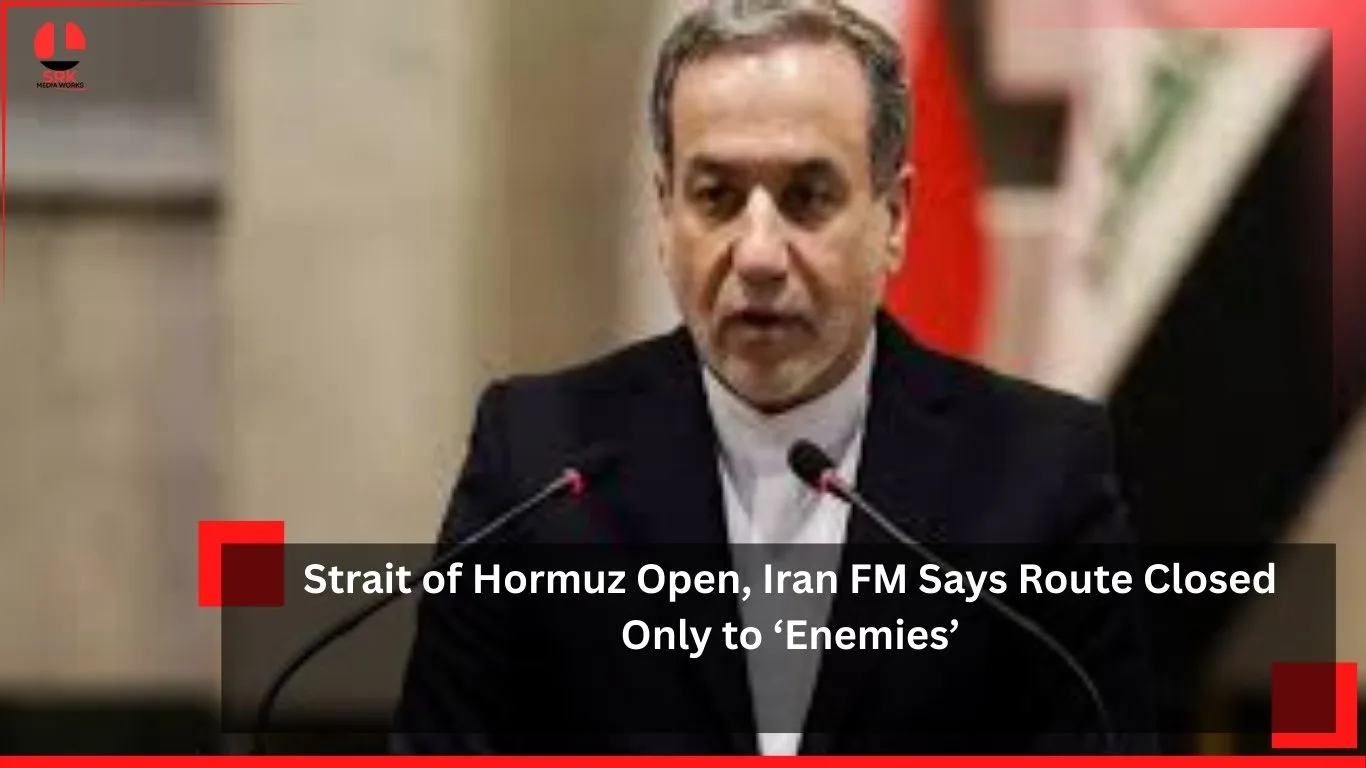
The Strait of Hormuz, one of the world’s most critical oil shipping routes, has once again become the focal point of global geopolitical debate. Iran’s Foreign Minister recently clarified that the strait remains open for international trade and energy transport, but emphasized that it could be closed to what he termed “enemies.” This statement has sparked widespread discussion about the future of global energy security, maritime trade, and regional stability in the Middle East.
Strategic Importance of the Strait of Hormuz
The Strait of Hormuz is a narrow waterway connecting the Persian Gulf with the Gulf of Oman and the Arabian Sea. It is considered the most important chokepoint for global oil transportation.
- Oil Transit: Nearly one-fifth of the world’s oil passes through this strait.
- Global Dependency: Countries in Asia, Europe, and North America rely heavily on uninterrupted oil flow through Hormuz.
- Geopolitical Leverage: Iran’s geographical control over the strait gives it significant influence in global energy politics.
Iran’s Position
Iran’s Foreign Minister stated that while the strait remains open for peaceful trade, hostile nations could face restrictions. This is seen as a warning to countries aligned against Iran’s policies in the region.
- Selective Closure: Iran insists the strait is not universally closed, only to adversaries.
- Diplomatic Message: The statement is aimed at asserting Iran’s sovereignty and strategic leverage.
- Energy Politics: By controlling access, Iran signals its ability to influence global oil prices and supply chains.
Global Reactions
The announcement has triggered mixed reactions across the world.
- Energy Markets: Traders expressed concern about potential disruptions, leading to fluctuations in oil prices.
- Western Nations: Countries like the US and its allies criticized Iran’s stance, calling it a threat to free navigation.
- Regional Neighbors: Gulf states expressed worry about instability but also emphasized the need for diplomatic dialogue.
Comparative Analysis of Stakeholder Views
| Stakeholder | Position on Strait of Hormuz | Concerns Raised |
|---|---|---|
| Iran | Open for peaceful trade, closed to enemies | Sovereignty, security, leverage |
| US & Allies | Must remain open for all | Free navigation, global trade |
| Gulf States | Seek stability and dialogue | Regional security, oil exports |
| Energy Markets | Sensitive to disruptions | Price volatility, supply chain risks |
Historical Context
The Strait of Hormuz has often been at the center of geopolitical tensions.
- 1980s Tanker War: During the Iran-Iraq war, oil tankers were frequently attacked.
- US-Iran Tensions: Naval confrontations have occurred repeatedly over freedom of navigation.
- Sanctions Era: Iran has occasionally threatened closure in response to Western sanctions.
Pivot Analysis of Strategic Approaches
| Strategy Focus | Iran’s Approach | Global Approach |
|---|---|---|
| Energy Control | Use strait as leverage | Maintain free flow of oil |
| Diplomacy | Assert sovereignty | Push for international agreements |
| Security | Restrict “enemies” | Deploy naval forces for protection |
| Trade Impact | Selective closure | Ensure uninterrupted global supply |
Economic Implications
The Strait of Hormuz is not just a geopolitical hotspot but also an economic lifeline.
- Oil Prices: Even minor disruptions can cause global oil prices to spike.
- Shipping Costs: Insurance premiums for vessels increase during times of tension.
- Global Supply Chains: Countries dependent on Gulf oil face risks of shortages.
Security Concerns
The possibility of selective closure raises questions about maritime security.
- Naval Presence: The US and allied forces maintain a strong naval presence to ensure free passage.
- Risk of Escalation: Any confrontation could escalate into broader regional conflict.
- Civilian Shipping: Commercial vessels face uncertainty and potential delays.
Diplomatic Pathways
Despite tensions, diplomatic solutions remain possible.
- Regional Dialogue: Gulf Cooperation Council (GCC) states could mediate.
- International Agreements: UN-led initiatives may ensure freedom of navigation.
- Confidence-Building Measures: Transparency in maritime operations could reduce mistrust.
Conclusion
Iran’s statement that the Strait of Hormuz remains open but could be closed to “enemies” highlights the fragile balance between sovereignty and global trade. The strait’s importance as a global energy artery means that any disruption has far-reaching consequences. While Iran asserts its right to control access, the international community insists on free navigation. The coming months will determine whether diplomacy or confrontation defines the future of this vital waterway.
Disclaimer
This article is a geopolitical analysis based on publicly available information and statements from political leaders. It does not endorse any government or policy. Readers are encouraged to consider multiple perspectives and verify facts independently before forming conclusions.