





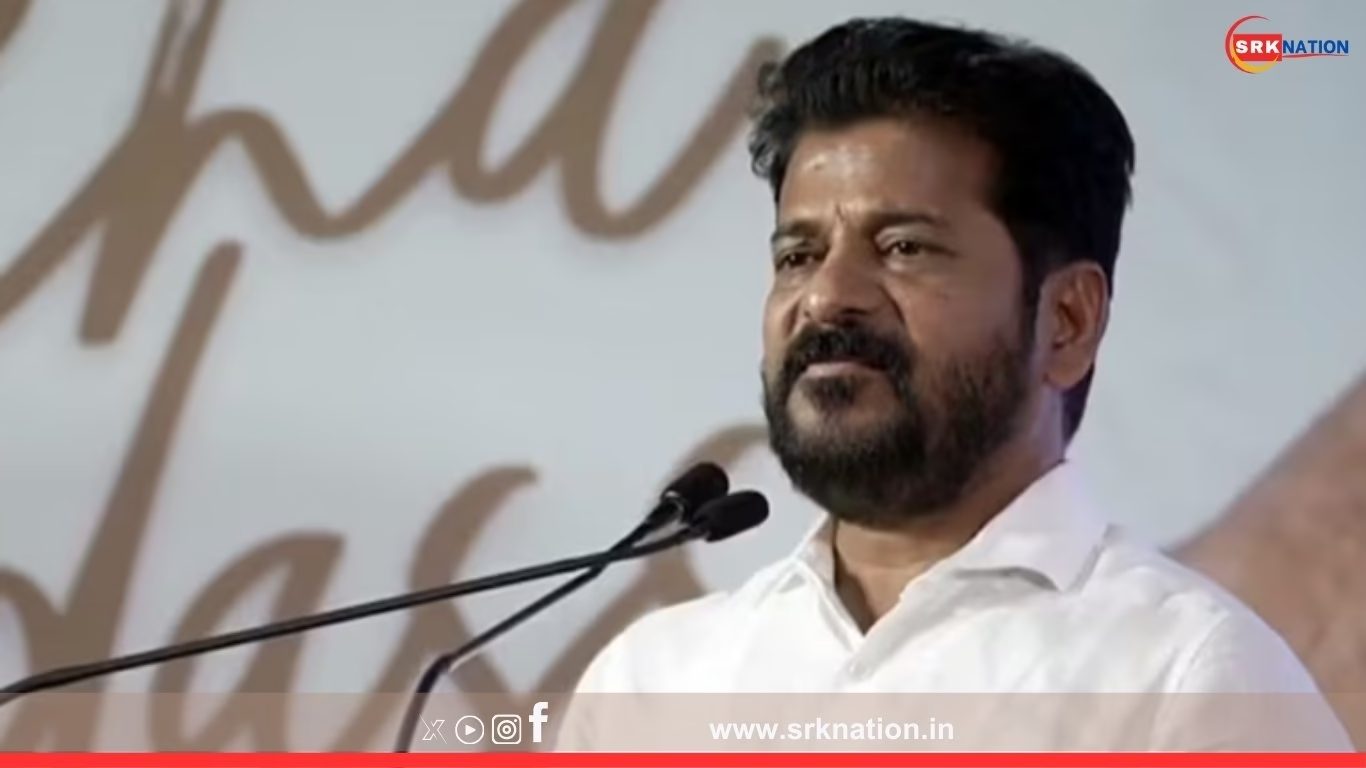
In a candid admission that has sent shockwaves through the education and employment sectors, Telangana Chief Minister Anumula Revanth Reddy has acknowledged that nearly 90% of engineering graduates in the state remain unemployed. Speaking at a high-level review meeting with bureaucrats, academics, and education stakeholders, the Chief Minister announced a sweeping overhaul of the state’s education system, framing it as the most powerful tool for poverty eradication and economic transformation.
The announcement comes amid growing concerns over the disconnect between academic degrees and employable skills, with over 1.1 lakh engineering students graduating annually and only a fraction securing jobs. Reddy’s reform blueprint, part of the broader “TelanganaRising 2047” vision, aims to realign education with market demands, global standards, and inclusive growth.
Telangana’s Engineering Employment Crisis: A Snapshot
| Metric | Value |
|---|---|
| Annual Engineering Graduates | 1.1 lakh+ |
| Employment Rate Post-Graduation | <10% |
| Private School Enrollment | 34 lakh students |
| Government School Enrollment | 18 lakh students |
| Education Department Annual Budget | ₹21,000 crore |
| Budget Spent on Salaries | 98% |
The Chief Minister emphasized that despite significant budgetary allocations, the system has failed to deliver employable outcomes, with most funds consumed by salaries and little left for infrastructure, innovation, or reform.
Core Pillars of the Education Overhaul
| Reform Area | Key Initiatives |
|---|---|
| School Education | Start from nursery level, bridge gaps from Class 1 to 12 |
| Teacher Recruitment & Transfers | Improve teacher-student ratio, streamline promotions |
| Vocational Training | Upgrade ITIs into Advanced Technology Centres |
| Higher Education | Revamp Osmania and Kakatiya Universities |
| Skills Integration | Launch Young India Skills University |
| Infrastructure Development | Create Telangana Education Corporation for capital investment |
| Policy Framework | Draft new Telangana Education Policy aligned with global standards |
Reddy’s plan includes a structural diagnosis of failure, acknowledging that paper credentials without practical expertise cannot sustain a modern economy. He called for a shift from rote learning to skill-based, experiential education.
Disparities in School Education
The Chief Minister highlighted the growing divide between private and government schools, noting that early childhood education begins in private institutions with nursery and LKG, while government schools start from Class 1. This gap leads to long-term disengagement from the public system.
| School Type | Enrollment | Starting Grade |
|---|---|---|
| Private Schools | 34 lakh | Nursery/LKG |
| Government Schools | 18 lakh | Class 1 |
Parents reportedly hesitate to transition children back to government schools due to perceived quality differences, structured learning, and individual attention.
Higher Education: From Legacy to Relevance
Reddy lamented the decline of once-prestigious institutions like Osmania and Kakatiya Universities, which played a pivotal role in shaping Telangana’s intellectual landscape. He pledged to restore their relevance by aligning curricula with global benchmarks and industry needs.
| University | Reform Focus |
|---|---|
| Osmania University | Curriculum modernization, faculty development |
| Kakatiya University | Research funding, international collaborations |
The overhaul will also include partnerships with global institutions and integration of emerging technologies into mainstream education.
Skills and Employment: Bridging the Gap
To address the employability crisis, the government has launched the Young India Skills University, designed to offer vocational and technological training that meets industry standards.
| Skills Initiative | Objective |
|---|---|
| Young India Skills University | Industry-ready graduates |
| ITI Upgrades | Advanced Technology Centres |
| Corporate Partnerships | Internships, apprenticeships |
| Career Counseling | Job readiness and placement support |
The reforms aim to create a pipeline of skilled youth capable of contributing to sectors like manufacturing, IT, green energy, and logistics.
Financial Reforms and Policy Advocacy
Reddy has urged the Union Finance Ministry to exempt education loans and infrastructure investments from the Fiscal Responsibility and Budget Management (FRBM) Act, allowing greater flexibility in funding reforms.
| Financial Reform Proposal | Purpose |
|---|---|
| FRBM Exemption for Education | Boost capital investment |
| Telangana Education Corporation | Mobilize funds for infrastructure |
He stressed that education should be treated as a strategic investment, not just a social obligation.
Stakeholder Engagement and Political Will
The review meeting included senior leaders, vice-chancellors, education secretaries, and policy experts. Reddy assured that he is prepared to face any political challenge to implement reforms that benefit students and society.
| Stakeholders Present | Role |
|---|---|
| K. Kesava Rao, Akunuri Murali | Policy advisors |
| Ramakrishna Rao | Chief Secretary |
| Yogita Rana | Education Secretary |
| Prof. Bala Kishta Reddy | Higher Education Council Chair |
| University VCs | Reform implementation |
The Chief Minister’s inclusive approach aims to build consensus and ensure accountability across departments.
Vision for TelanganaRising 2047
Reddy’s education overhaul is a cornerstone of the TelanganaRising 2047 vision, which seeks to transform the state into a knowledge-driven, globally competitive economy.
| Vision Element | Education Role |
|---|---|
| Poverty Eradication | Skill-based employment |
| Social Equity | Access to quality education |
| Economic Growth | Industry-ready workforce |
| Global Competitiveness | International standard curricula |
He reiterated that “except education, there is no weapon for poverty alleviation now,” signaling a shift from welfare-based governance to empowerment through learning.
Conclusion: A Bold Reset for Telangana’s Future
Telangana’s education overhaul, spearheaded by CM Revanth Reddy, is a bold attempt to address the state’s deep-rooted job crisis and systemic inefficiencies. By prioritizing employability, skill integration, and institutional reform, the government aims to equip 73 lakh youth with the tools to thrive in a rapidly changing economy.
As the state prepares to roll out its new education policy, all eyes will be on its ability to translate vision into action—and ensure that the next generation of graduates are not just qualified, but truly employable.
—
Disclaimer: This article is based on publicly available government statements, verified news reports, and policy documents. It is intended for informational purposes only and does not constitute financial or educational advice. All figures and plans are subject to change based on official updates.
Thanks for sharing. I read many of your blog posts, cool, your blog is very good.