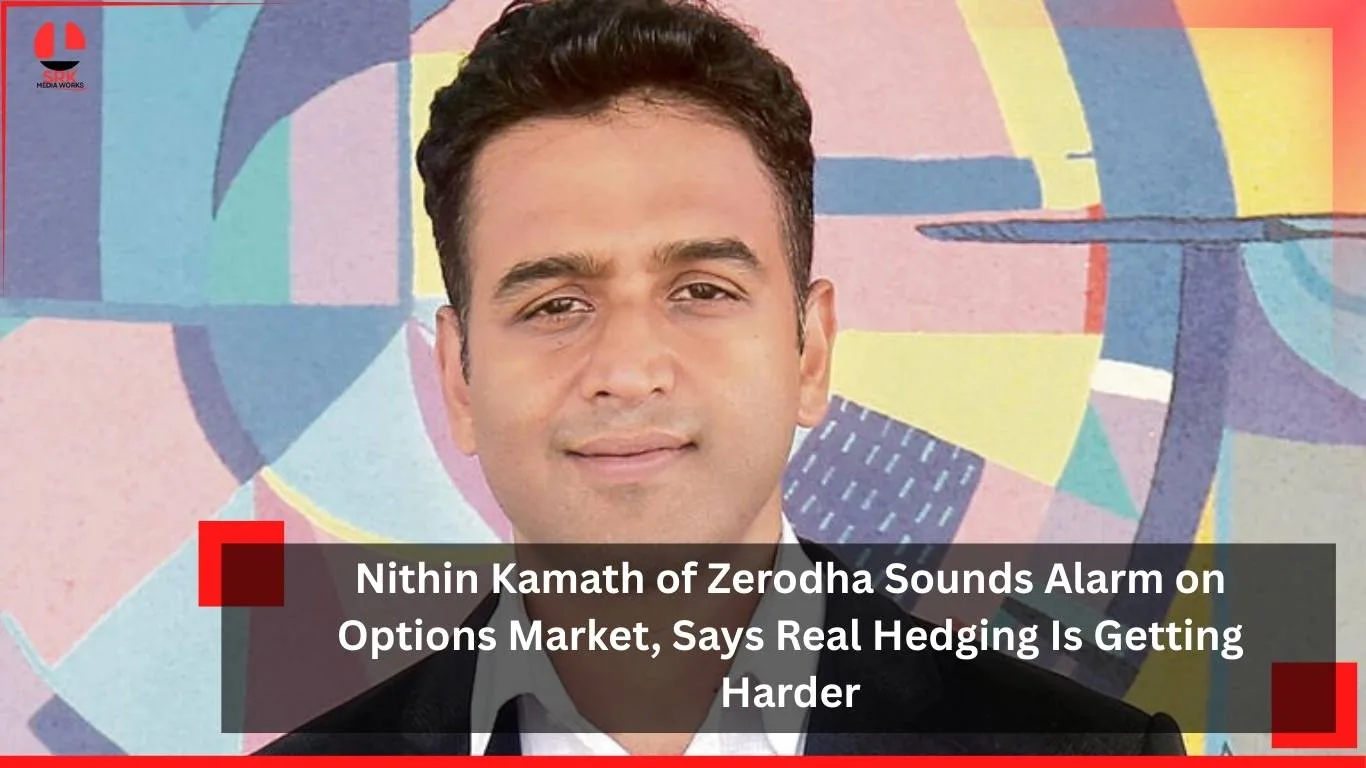






The Indian stock market has witnessed unprecedented growth in recent years, with millions of new investors entering the equity space. However, Nithin Kamath, founder and CEO of Zerodha, India’s largest retail brokerage, has raised a red flag about a silent but significant threat: the absence of a comprehensive risk model for retail investors. His warning comes at a time when market participation is booming, valuations are soaring, and speculative trading is becoming increasingly common.
Background of Kamath’s Warning
- Zerodha has been at the forefront of democratizing stock market access in India, enabling millions of first-time investors to trade with ease.
- Kamath has consistently emphasized the importance of financial literacy and risk management.
- His latest statement highlights that while access has improved, risk frameworks for retail investors remain inadequate.
- The absence of structured risk models could expose investors to severe losses during market downturns.
Key Highlights
| Indicator | Details |
|---|---|
| Speaker | Nithin Kamath, CEO of Zerodha |
| Issue | Lack of risk model in Indian stock market |
| Silent Threat | Retail investors exposed to volatility |
| Broader Impact | Potential systemic risks if unchecked |
| Public Sentiment | Concern among analysts, mixed awareness among retail investors |
Current Market Scenario vs Risk Model Needs
| Factor | Current Scenario | Risk Model Needs | Implication |
|---|---|---|---|
| Retail Participation | Record highs, millions of new investors | Structured risk frameworks | Prevent retail losses |
| Market Volatility | High, driven by global and domestic factors | Stress testing models | Stability in downturns |
| Financial Literacy | Limited among new investors | Education-driven risk awareness | Sustainable participation |
| Regulatory Oversight | Focused on compliance | Broader risk modeling | Stronger investor protection |
| Systemic Risk | Rising due to speculation | Mitigation through models | Long-term stability |
Why This Story Matters
- Investor Protection: Highlights the urgent need for risk frameworks to safeguard retail investors.
- Market Stability: Prevents systemic risks that could destabilize the financial system.
- Financial Literacy: Reinforces the importance of educating new investors.
- Policy Debate: Sparks discussions on regulatory reforms and risk management.
- Future Outlook: Shapes the trajectory of India’s capital markets.
The Silent Threat Explained
- Retail investors often enter markets during bullish phases, driven by optimism and herd behavior.
- Without risk models, they lack tools to assess downside scenarios.
- Speculative trading, margin exposure, and lack of diversification amplify risks.
- In the event of a sharp correction, retail investors could face disproportionate losses.
Kamath’s Perspective
- Kamath emphasized that risk management is as important as access.
- He noted that while platforms like Zerodha have simplified trading, the responsibility of educating investors remains critical.
- He called for collaborative efforts between regulators, brokers, and financial institutions to build risk frameworks.
- Kamath’s warning is not just about individual losses but about systemic vulnerabilities in the broader market.
Expert Opinions
- Economists: Stress that risk models are essential to prevent retail panic during downturns.
- Regulators: Highlight ongoing efforts but acknowledge gaps in retail risk frameworks.
- Market Analysts: Note that speculative trading without risk models could destabilize valuations.
- Critics: Warn that democratization without education could backfire.
Challenges Ahead
- Investor Awareness: Ensuring retail investors understand risks.
- Regulatory Frameworks: Expanding oversight beyond compliance to risk modeling.
- Market Volatility: Managing risks in a globally interconnected economy.
- Technology Integration: Building digital tools for risk assessment.
- Systemic Stability: Preventing retail-driven instability in capital markets.
Opportunities for Reform
- Risk Education Programs: Nationwide initiatives to educate investors.
- Digital Risk Tools: Platforms integrating risk calculators and stress tests.
- Regulatory Innovation: SEBI introducing mandatory risk frameworks.
- Broker Collaboration: Industry-wide efforts to standardize risk models.
- Global Best Practices: Learning from mature markets with established risk frameworks.
Broader Context of Indian Stock Market
- India’s stock market has become one of the fastest-growing globally.
- Retail participation has surged, driven by digital platforms and low-cost trading.
- Valuations remain high, raising concerns about sustainability.
- The absence of risk models contrasts with global markets where frameworks are more established.
Sectoral Breakdown of Impact
| Sector | Impact | Strategic Importance |
|---|---|---|
| Retail Investors | Exposed to volatility | Need for protection |
| Brokers | Responsibility to educate | Industry credibility |
| Regulators | Pressure to innovate | Market stability |
| Technology Platforms | Opportunity to build tools | Investor engagement |
| Economy | Prevent systemic risks | Long-term growth |
Media Coverage
- Headlines emphasize Kamath’s warning about the silent threat.
- Analysts debate whether retail investors are adequately prepared.
- Coverage highlights the need for regulatory reforms and risk education.
- The story continues to dominate discussions in financial and policy circles.
Conclusion
Nithin Kamath’s statement that “there is no risk model” for retail investors in the Indian stock market serves as a wake-up call. While democratization of access has empowered millions, the absence of structured risk frameworks poses a silent but significant threat. The challenge lies in balancing access with education, ensuring that retail investors are protected from volatility while sustaining market growth. The future of India’s capital markets depends on building robust risk models that safeguard investors and strengthen systemic stability.
Disclaimer
This article is intended for informational purposes only and does not constitute financial or investment advice. Market conditions, regulatory decisions, and investor behavior are subject to change based on evolving circumstances. Readers are encouraged to follow official updates for accurate information. The author and publisher are not responsible for any decisions made based on this article.