
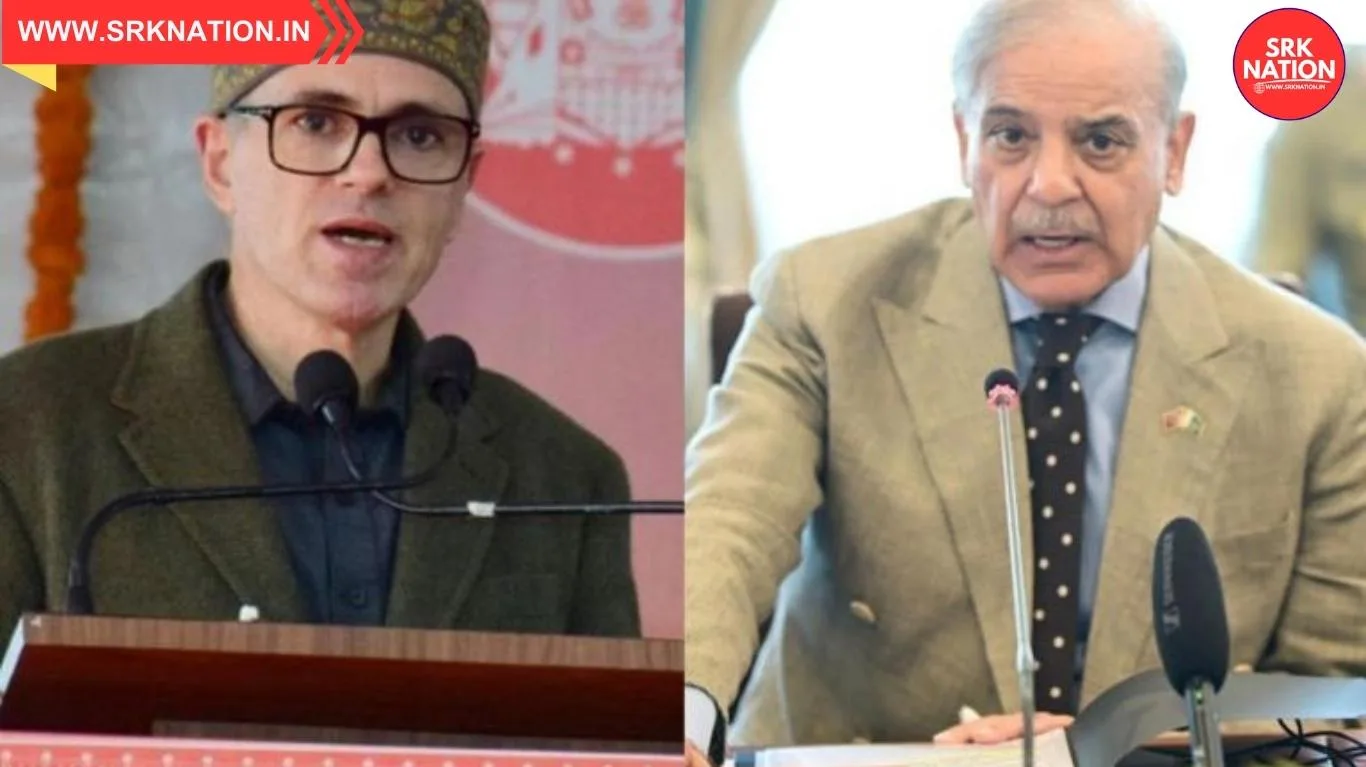
National Conference leader and former Jammu & Kashmir Chief Minister Omar Abdullah has strongly responded to remarks made by Pakistan’s Prime Minister regarding Kashmir. Abdullah asserted that Pakistan should first focus on managing its own internal challenges before commenting on India’s affairs, stating bluntly: “They can’t handle what they already have.” His sharp rebuttal has reignited the debate over cross-border rhetoric and the political sensitivities surrounding Kashmir.
Background of the Controversy
The controversy began when Pakistan’s Prime Minister made a statement criticizing India’s policies in Jammu & Kashmir, calling for international attention on the issue. Omar Abdullah, known for his outspoken views, quickly countered the remarks, emphasizing that Pakistan’s internal instability undermines its credibility on Kashmir.
Omar Abdullah’s Key Points
- Domestic Instability in Pakistan: Abdullah highlighted Pakistan’s economic crisis, political turmoil, and security challenges.
- Focus on Internal Issues: He argued that Pakistan should prioritize governance and stability rather than interfering in India’s matters.
- Kashmir’s Political Reality: Abdullah reiterated that Kashmir is an integral part of India and external commentary only complicates matters.
- Strong Rebuttal: His statement reflects frustration with repeated attempts by Pakistan to internationalize the Kashmir issue.
Analysis of the Exchange
| Factor | Traditional Expectation | Current Scenario (2026) | Outcome Observed |
|---|---|---|---|
| Pakistan’s Stance | Criticize India on Kashmir | PM comments reignite debate | Political tension |
| India’s Response | Diplomatic rebuttal | Omar Abdullah’s sharp counter | Strong domestic pushback |
| Public Sentiment | Divided views | Support for Abdullah’s stance | Nationalist sentiment |
| Regional Stability | Dialogue encouraged | Heated rhetoric dominates | Strained relations |
| Political Impact | Limited fallout | Amplified by media coverage | Intensified debate |
Comparative Analysis of Leaders’ Positions
| Leader | Statement Context | Public Perception | Impact |
|---|---|---|---|
| Pakistan PM | Criticized India’s Kashmir policy | Seen as interference | Escalated rhetoric |
| Omar Abdullah | Countered with sharp remarks | Applauded for strong rebuttal | Boosted domestic narrative |
| Indian Govt | Maintains Kashmir is integral | Reinforces sovereignty | Consistent stance |
| International Observers | Call for restraint | Concerned about tensions | Limited influence |
Public and Political Reaction
Abdullah’s remarks have drawn widespread attention:
- Supporters in India: Applauded his strong defense of sovereignty.
- Opposition Voices: Some criticized the rhetoric as unnecessary escalation.
- Media Coverage: Highlighted the sharpness of Abdullah’s words, framing them as a direct challenge to Pakistan’s narrative.
- Public Sentiment: Many citizens expressed agreement, pointing to Pakistan’s internal struggles as evidence of misplaced priorities.
Broader Implications
The exchange underscores the persistent volatility in India-Pakistan relations. Key implications include:
- Diplomatic Strain: Such remarks deepen mistrust between the two nations.
- Domestic Politics: Leaders in India use strong rebuttals to reinforce nationalist sentiment.
- International Perception: Global observers see the rhetoric as a sign of ongoing instability in South Asia.
Future Outlook
The Kashmir issue will likely remain a flashpoint in India-Pakistan relations. Omar Abdullah’s remarks reflect a broader frustration with repeated external commentary. Moving forward:
- Pakistan may continue raising Kashmir in international forums.
- Indian leaders will emphasize sovereignty and internal stability.
- Diplomatic channels may struggle to balance rhetoric with dialogue.
Conclusion
Omar Abdullah’s sharp response to Pakistan’s Prime Minister—“They can’t handle what they already have”—captures the intensity of political exchanges over Kashmir. His remarks highlight India’s frustration with Pakistan’s repeated attempts to internationalize the issue while facing its own domestic crises. The episode reinforces the deep-rooted tensions between the two nations and the enduring sensitivity of Kashmir in regional politics.
Disclaimer
This article is intended for informational and analytical purposes only. It summarizes political statements and debates related to India-Pakistan relations. It does not constitute endorsement, political opinion, or professional consultation. Readers are encouraged to verify facts independently and follow official updates for accurate information.