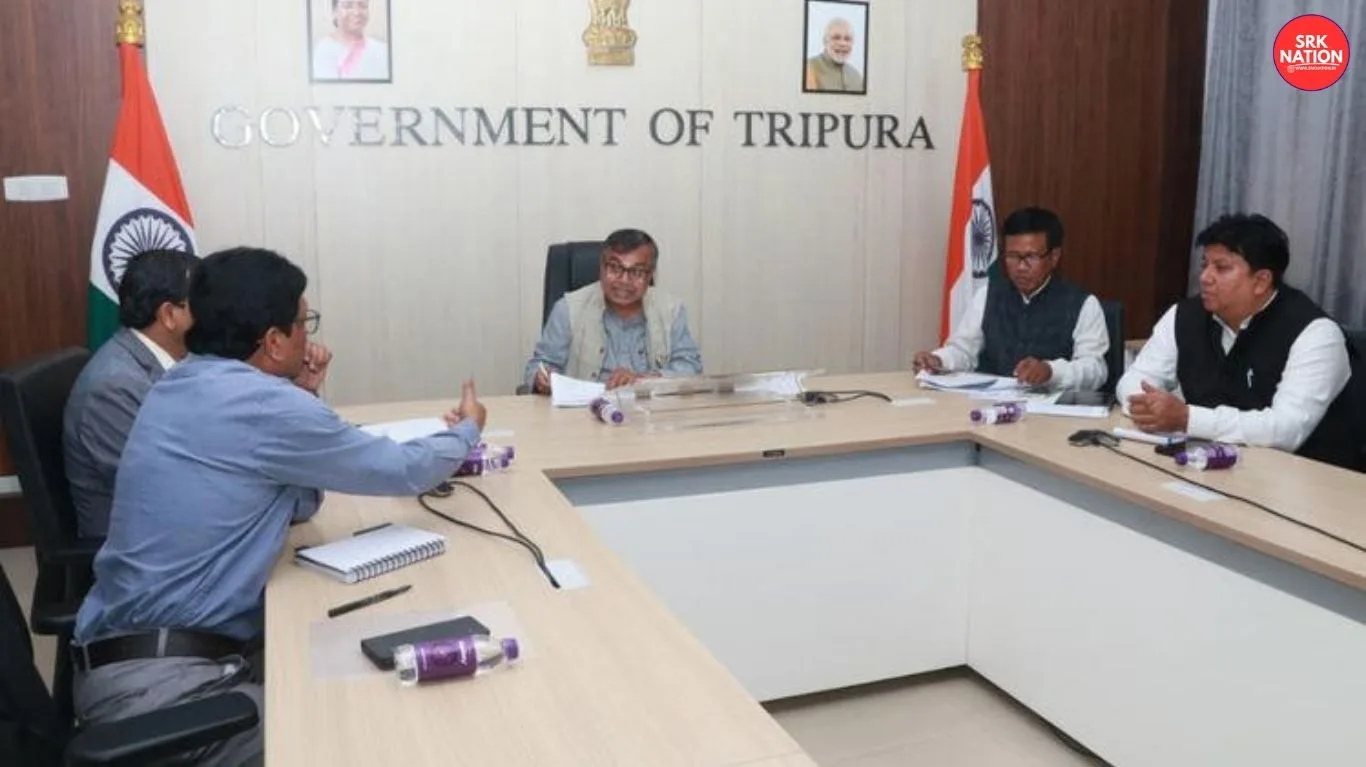






Tripura has reported significant progress in strengthening its internal security framework, with the state government confirming that over 70 per cent of security‑related directives issued by the Ministry of Home Affairs (MHA) have already been implemented. This marks one of the most substantial advancements in the state’s ongoing efforts to modernize policing, enhance border vigilance, and improve coordination among security agencies.
The update comes after a high‑level review meeting chaired by senior officials, where Tripura presented a detailed status report on compliance with national security guidelines. The directives cover a wide range of areas including intelligence sharing, infrastructure upgrades, counter‑insurgency preparedness, cyber‑security, border management, and community policing.
Officials noted that Tripura’s progress reflects the state’s commitment to maintaining peace and stability, especially given its strategic location along the India–Bangladesh international border, which spans over 850 km. The state has historically faced challenges related to cross‑border movement, smuggling, and insurgency, making security reforms a top priority.
🔐 What the 70% Implementation Means for Tripura
The state’s achievement indicates that Tripura is moving rapidly toward full compliance with national security standards. The directives implemented so far include:
- Modernization of police stations
- Installation of surveillance systems
- Strengthening of border outposts
- Upgradation of communication networks
- Enhanced coordination with central agencies
- Improved training for police and paramilitary forces
Officials emphasized that the remaining directives are in advanced stages of execution and will be completed within the stipulated timeline.
📊 Statistical Overview of Tripura’s Security Progress
| Category | Status |
|---|---|
| Total Directives Issued | 100% |
| Directives Implemented | 70%+ |
| Directives in Progress | 25% |
| Pending Directives | <5% |
| Key Focus Areas | Border security, cyber readiness, police modernization |
🔍Impact of Security Directive Implementation
| Factor | Impact on State Security | Impact on Citizens | Impact on Governance |
|---|---|---|---|
| Border Management | Reduced illegal movement | Safer border villages | Stronger national security |
| Police Modernization | Faster response times | Better law‑and‑order environment | Improved administrative efficiency |
| Surveillance Systems | Enhanced monitoring | Lower crime rates | Data‑driven policing |
| Cyber‑Security Measures | Protection from digital threats | Safer online transactions | Stronger digital governance |
| Inter‑Agency Coordination | Faster intelligence flow | Improved public safety | Streamlined operations |
🛡️ Key Security Measures Implemented in Tripura
1. Strengthening Border Security
Tripura shares a long and sensitive border with Bangladesh. To enhance vigilance, the state has:
- Upgraded border outposts
- Installed night‑vision equipment
- Increased joint patrols with BSF
- Strengthened fencing in vulnerable areas
These measures have significantly reduced cross‑border smuggling and illegal infiltration.
2. Police Modernization Initiatives
Tripura has invested heavily in modernizing its police force through:
- Smart policing tools
- GPS‑enabled patrol vehicles
- Digital FIR systems
- Upgraded forensic labs
- Training in counter‑insurgency and cybercrime
This has improved response times and boosted public confidence.
3. Enhanced Surveillance Infrastructure
The state has expanded its surveillance network by installing:
- CCTV cameras in urban and semi‑urban areas
- Drone‑based monitoring in sensitive zones
- Integrated command‑and‑control centers
These systems help detect suspicious activity and support real‑time decision‑making.
4. Cyber‑Security Strengthening
With rising cyber threats, Tripura has implemented:
- Cybercrime monitoring units
- Digital awareness programs
- Training for law enforcement in cyber forensics
- Secure data‑storage systems
This ensures better protection for citizens and government platforms.
5. Community Policing and Public Engagement
Tripura has adopted a people‑centric approach to security through:
- Village‑level awareness campaigns
- Youth engagement programs
- Anti‑drug initiatives
- Community policing committees
These efforts help build trust and encourage public participation in maintaining peace.
🌐 Why Tripura’s Progress Matters Nationally
Tripura’s rapid implementation of security directives is significant for several reasons:
1. Strategic Border State
Its proximity to Bangladesh makes it a crucial part of India’s eastern security grid.
2. Gateway to the Northeast
Tripura plays a key role in connectivity projects under the Act East Policy.
3. History of Insurgency
The state has made remarkable progress in reducing insurgent activity, and continued security reforms ensure long‑term stability.
4. Boost to Economic Development
Improved security attracts investment, tourism, and infrastructure development.
🧭 Challenges Ahead
Despite strong progress, Tripura still faces challenges that require sustained attention:
- Difficult terrain affecting border fencing
- Need for more advanced cyber‑security tools
- Upgradation of rural police infrastructure
- Continued vigilance against drug trafficking
- Strengthening coordination with neighboring states
Officials have assured that these challenges are being addressed through phased planning.
🚀 Future Plans for Tripura’s Security Enhancement
The state government has outlined several upcoming initiatives:
1. Completion of Remaining Directives
The remaining 25–30% of directives will be implemented within the next review cycle.
2. Expansion of Smart Policing
More districts will receive AI‑enabled surveillance and predictive policing tools.
3. Border Infrastructure Boost
Additional border outposts and integrated check posts will be established.
4. Cyber‑Security Command Center
A dedicated state‑level cyber‑security command center is in the pipeline.
5. Training and Capacity Building
More officers will receive specialized training in intelligence, counter‑terrorism, and digital crime.
📝 Conclusion
Tripura’s achievement of implementing over 70 per cent of national security directives marks a major milestone in the state’s journey toward enhanced safety, stability, and modernization. With strong political will, inter‑agency coordination, and community participation, Tripura is emerging as a model for security governance in the Northeast.
As the state continues to strengthen its border management, policing systems, and cyber‑security infrastructure, it is well‑positioned to ensure long‑term peace and development for its citizens. The remaining directives are expected to be completed soon, further solidifying Tripura’s commitment to national security and public welfare.
🛡️ Disclaimer
This article is based on publicly available information, official statements, and verified reports. It is intended solely for informational and editorial purposes, offering insights into Tripura’s progress on security directives and its broader implications for governance and public safety.