

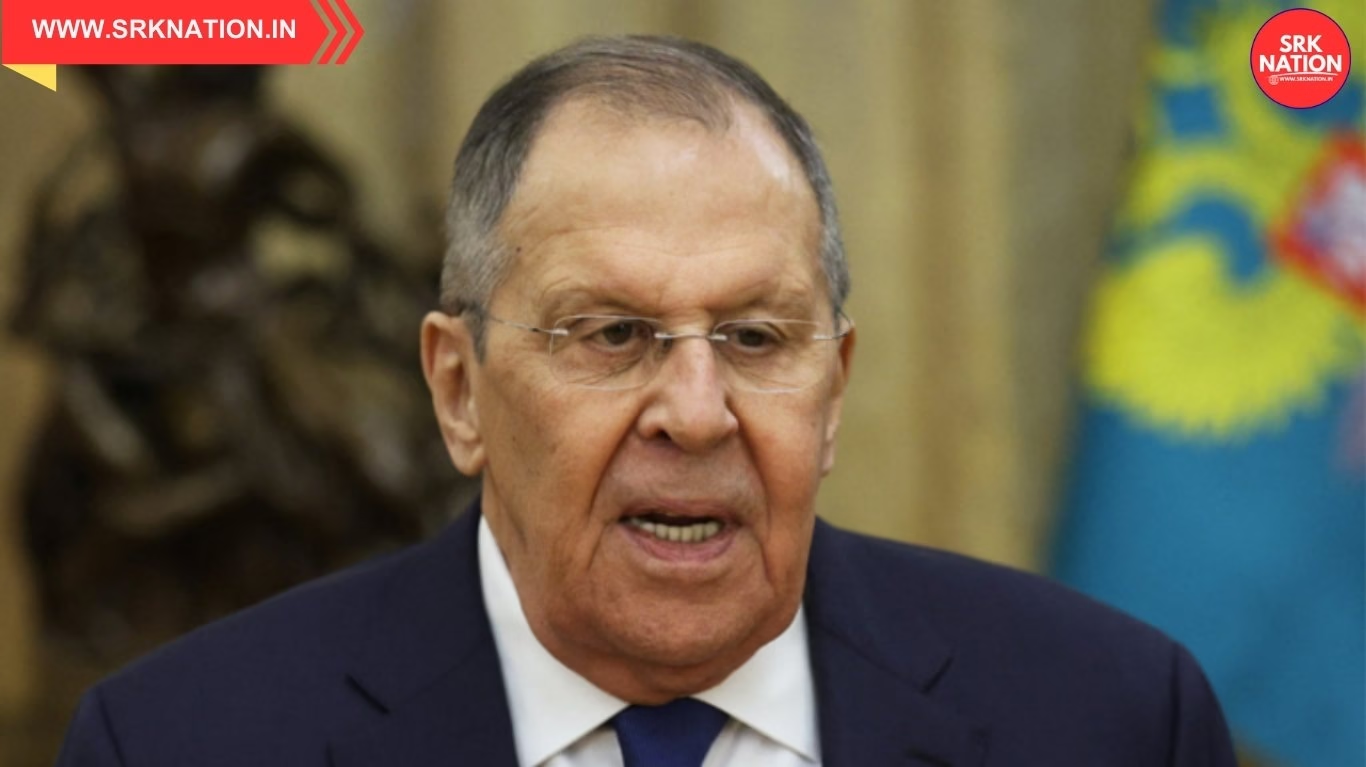
Russian Foreign Minister Sergey Lavrov has sharply criticized the United States for its continued sanctions and restrictions on Russian oil exports, accusing Washington of attempting to “ban India and other countries” from engaging in legitimate trade. Lavrov described the US measures as a “war against tankers”, claiming that the sanctions are designed to disrupt global energy flows and undermine Russia’s partnerships with major buyers such as India, China, and other Asian nations.
Key Highlights
- Lavrov’s Statement: Accused the US of targeting Russia’s oil trade and attempting to restrict countries like India from buying Russian crude.
- War Against Tankers: He described sanctions as an attack on shipping and logistics, calling them a direct assault on global trade.
- India’s Role: India has emerged as one of the largest buyers of Russian oil since 2022, benefiting from discounted crude.
- Global Energy Politics: The US sanctions aim to limit Russia’s revenues amid the Ukraine war, but Moscow insists its trade partners will not be dictated to.
- Diplomatic Tensions: Lavrov’s remarks highlight growing friction between Russia and the West over energy security and trade sovereignty.
Analysis of Lavrov’s Remarks
| Factor | US Position | Russia’s Counter | Outcome Expected |
|---|---|---|---|
| Oil Sanctions | Restrict Russian crude exports | Accused of “war against tankers” | Diplomatic clash |
| India’s Imports | Pressured to reduce Russian oil | Defended by Lavrov as legitimate | Continued trade |
| Global Energy Flow | Disrupted by sanctions | Russia seeks alternate buyers | Market volatility |
| Diplomatic Impact | US vs Russia tensions | Russia strengthens Asian ties | Strategic realignment |
| Public Sentiment | Western criticism | Russian narrative of sovereignty | Divided opinions |
Comparative Analysis of Oil Trade Dynamics
| Country | Russian Oil Imports | US Pressure Level | Current Status |
|---|---|---|---|
| India | High, discounted crude | Strong diplomatic pressure | Continues imports |
| China | Very high, long-term contracts | Moderate pressure | Expanding trade |
| Turkey | Significant imports | US monitoring | Balancing ties |
| EU Nations | Minimal post-sanctions | High pressure | Shifted to other suppliers |
| Brazil | Limited imports | Low pressure | Neutral stance |
Drivers Behind Lavrov’s Attack
- Energy Sovereignty: Russia insists nations should decide their own energy policies.
- India’s Strategic Role: Protecting India’s right to buy Russian crude without external interference.
- Global Trade Disruption: Sanctions seen as destabilizing shipping and tanker logistics.
- Revenue Protection: Oil exports remain Russia’s key source of income amid sanctions.
- Geopolitical Messaging: Positioning Russia as a defender of multipolar trade systems.
Public and Media Reaction
- Russian Media: Framed Lavrov’s remarks as a defense of sovereignty and global fairness.
- Western Analysts: Criticized Russia for attempting to bypass sanctions and undermine global norms.
- Indian Media: Highlighted India’s balancing act between discounted Russian oil and Western pressure.
- Global Observers: Noted the growing divide between Western sanctions regimes and Asian trade priorities.
Future Outlook
- India’s Position: Likely to continue importing Russian oil due to cost advantages.
- Russia’s Strategy: Strengthening ties with Asia, Africa, and Latin America to offset Western bans.
- US Pressure: Expected to intensify, targeting shipping companies and insurers.
- Global Energy Market: Volatility may persist as sanctions disrupt supply chains.
Challenges ahead:
- Balancing India’s energy needs with diplomatic relations.
- Managing tanker logistics under sanction threats.
- Addressing global energy security amid geopolitical tensions.
Conclusion
Sergey Lavrov’s fiery remarks accusing the US of “trying to ban India and others” from buying Russian oil underscore the deepening rift in global energy politics. By labeling sanctions as a “war against tankers”, Russia has positioned itself as a defender of sovereign trade rights against Western restrictions. For India and other Asian nations, the controversy highlights the delicate balance between securing affordable energy and navigating geopolitical pressures.
Disclaimer
This article is intended for informational and analytical purposes only. It summarizes publicly available updates on Sergey Lavrov’s remarks regarding US sanctions and global oil trade. It does not constitute financial advice, insider information, or professional consultation. Readers are encouraged to verify facts independently and consider multiple perspectives before forming conclusions.