



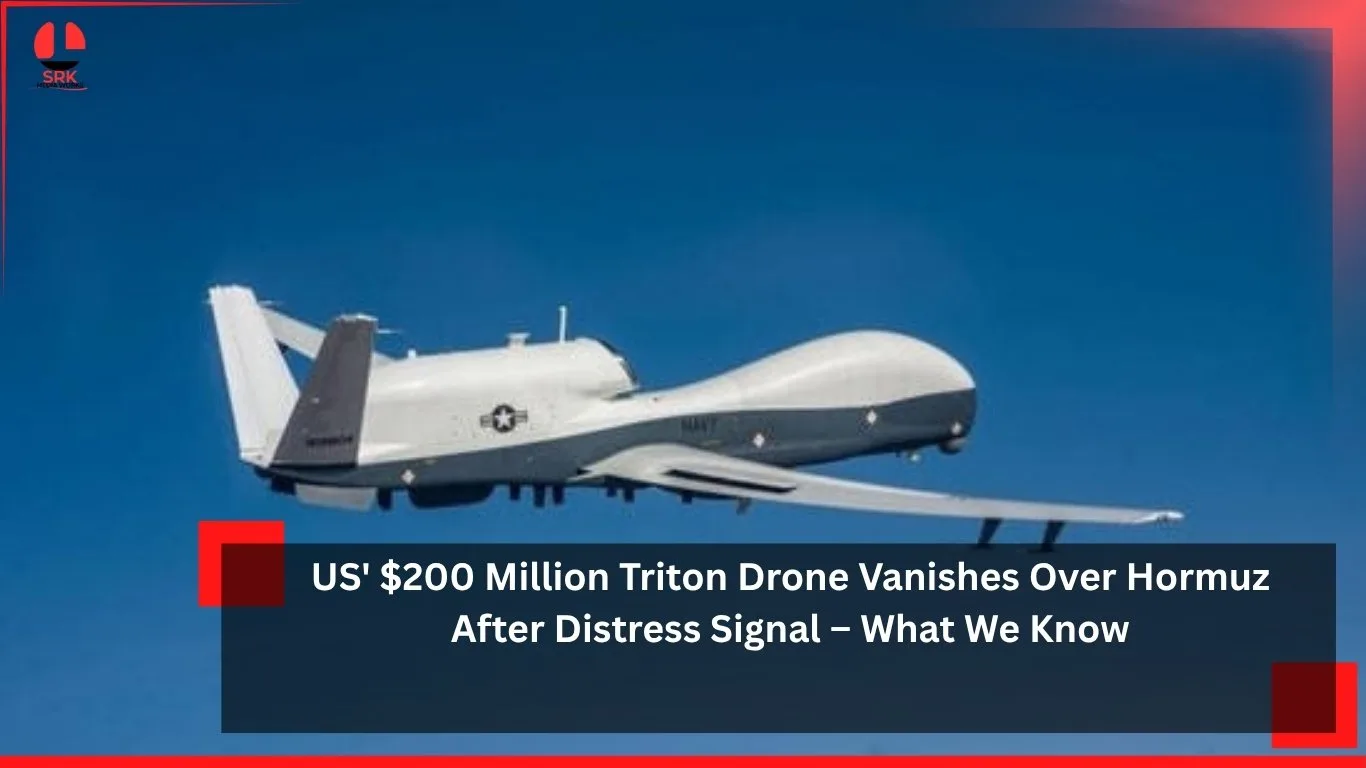
The disappearance of a US Navy MQ-4C Triton drone, valued at nearly $200 million, over the Strait of Hormuz has raised serious questions about regional security and technological vulnerabilities. Reports suggest the drone sent a distress signal before vanishing, sparking speculation about whether it was downed, hijacked, or suffered a technical failure.
The Incident
- Distress Signal: The Triton reportedly transmitted an emergency alert before communication was lost.
- Location: The disappearance occurred over the Strait of Hormuz, a critical global oil transit route.
- Uncertainty: No wreckage has been recovered, and the cause remains unclear.
About the MQ-4C Triton
The Triton is one of the most advanced surveillance drones in the US arsenal.
| Feature | Specification | Strategic Use |
|---|---|---|
| Cost | $200 million | High-value asset |
| Range | 15,000 km | Long-endurance missions |
| Altitude | 55,000 feet | Wide-area surveillance |
| Sensors | Advanced radar, EO/IR systems | Maritime monitoring |
Strategic Importance of Hormuz
The Strait of Hormuz is a vital chokepoint for global energy supplies.
- Oil Transit: Nearly 20% of global oil passes through Hormuz.
- Geopolitical Tensions: Frequent flashpoint between Iran, the US, and Gulf states.
- Military Presence: US and allied forces maintain surveillance to secure shipping lanes.
Possible Scenarios
- Technical Failure: Malfunction in systems leading to loss of control.
- Hostile Action: Potential interception or attack by regional adversaries.
- Cyber Intrusion: Speculation about hacking or electronic warfare.
Political Reactions
- US Officials: Expressed concern but withheld confirmation of hostile involvement.
- Iran’s Response: Denied involvement, but tensions remain high.
- Global Allies: Called for restraint and investigation.
Economic Implications
The incident has triggered volatility in global energy markets.
| Factor | Immediate Impact | Long-Term Effect |
|---|---|---|
| Oil Prices | Spiked briefly | Dependent on investigation outcome |
| Shipping Insurance | Increased rates | Higher costs for global trade |
| Market Confidence | Shaken | Renewed focus on Gulf security |
Comparative Pivot Analysis
| Dimension | Incident Impact | US Position | Global View |
|---|---|---|---|
| Military | Loss of asset | Investigation ongoing | Concern over vulnerability |
| Political | Heightened tensions | Calls for restraint | Diplomatic caution |
| Economic | Oil price volatility | Monitoring markets | Global trade concerns |
| Social | Public anxiety | National security debate | Fear of escalation |
Global Security Concerns
- Drone Vulnerability: Raises questions about resilience of high-value assets.
- Regional Instability: Incident adds pressure to fragile Iran-US ceasefire.
- Future Strategy: US may reassess deployment of drones in contested zones.
Conclusion
The vanishing of the $200 million Triton drone over Hormuz after a distress signal underscores the fragility of regional security and the risks of deploying advanced technology in volatile environments. While investigations continue, the incident has already impacted global oil markets and heightened geopolitical tensions. The outcome will shape future US military strategy and international diplomacy in the Gulf.
Disclaimer
This article is based on available information and geopolitical analysis. It does not represent official government positions or verified intelligence. Readers are advised to treat the content as an overview of claims and perspectives, and to consult multiple sources before drawing conclusions about sensitive international developments.